Join Our Lunch & Learn: How Agentic AI Will Transform Industrial Operations | Register Now →
.svg)
May 4, 2026
5 Mins
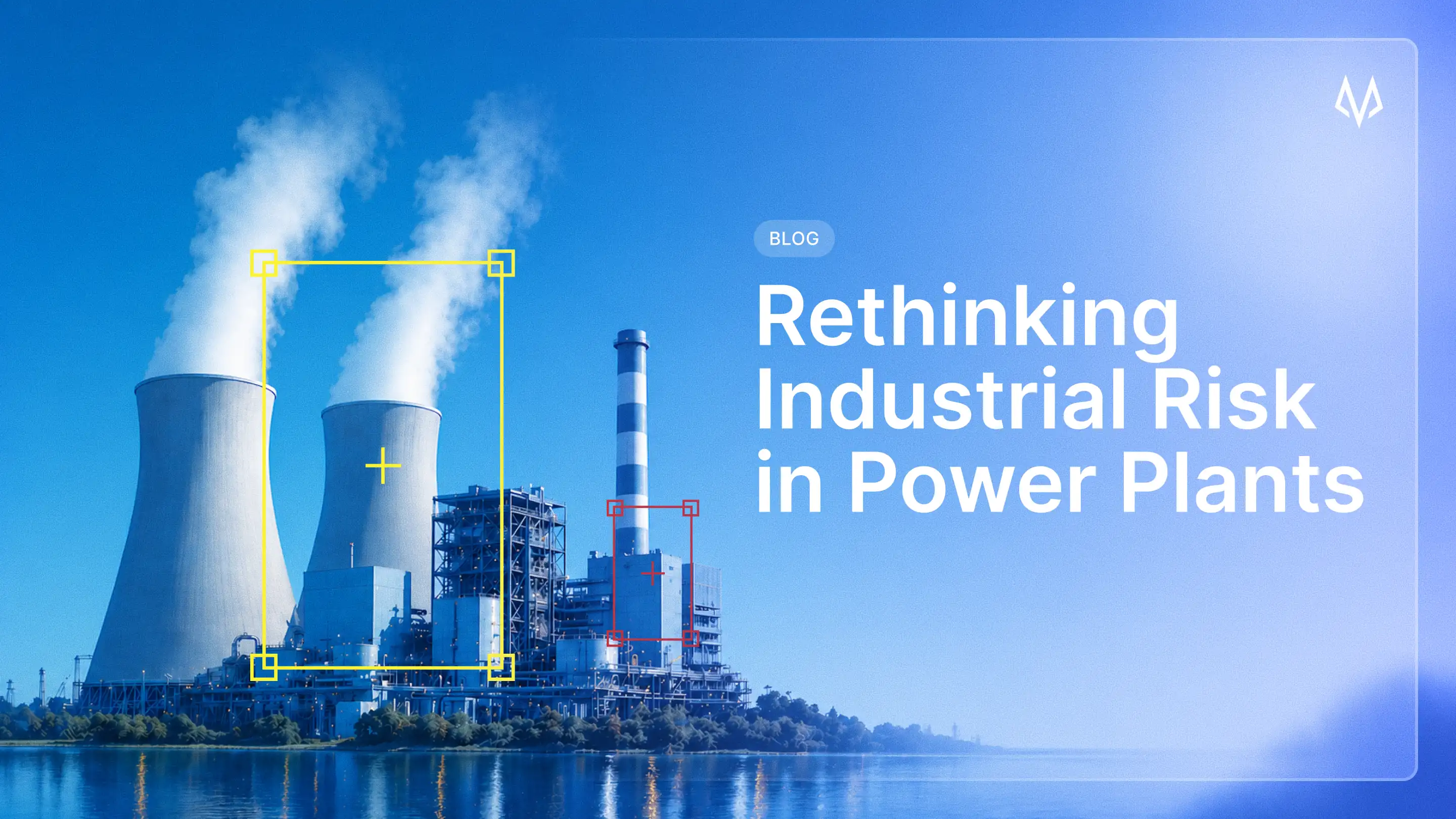
In high-load industrial environments like thermal power plants, failures are often described as sudden. In reality, they are anything but. What appears as a single event is typically the final stage of a much longer progression, one that builds quietly over days and weeks before becoming visible.
This pattern is not new. What is changing is how we expect these failures to be detected. Today, plants are more instrumented than ever. DCS, SCADA systems, and historians provide access to hundreds of parameters across the system, creating the expectation that risk should be identified early and managed proactively.
Yet, many critical events are still only recognized when they escalate. This points to a deeper issue: the challenge is no longer data availability; it is how that data is interpreted.
Plant failures rarely happen from one limit being crossed. They build slowly through small changes like rising temperatures, lower efficiency, or combustion imbalance that seem harmless on their own. Over time, these issues interact, forcing the system to rely on constant correction to stay stable. By the time failure becomes visible, the problem has usually been developing for a long time.
Most operational systems are built to monitor individual parameters and raise alerts when limits are crossed. While this is effective for catching extreme conditions, it struggles with gradual deviation, because risk often develops without breaching any single threshold.
A pressure reading may remain within limits while masking a combustion imbalance. A temperature trend may appear acceptable while heat-transfer efficiency deteriorates. When parameters are viewed independently, these relationships are easy to miss.
This creates a structural blind spot in how plants detect early-stage risk.
As industrial systems become more complex, this gap becomes more significant.
Plants are operating under increasing variability, fuel quality fluctuations, changing load patterns, aging equipment, and tighter efficiency expectations. At the same time, there is greater emphasis on safety, reliability, and uptime. In this environment, identifying risk only at the point of alarm is no longer sufficient. The expectation is shifting, from reacting to events to anticipating them.
And that requires a different way of interpreting plant behaviour.
If failures develop progressively, then stability must be managed continuously. This means moving beyond static thresholds and isolated monitoring toward a more contextual understanding of operations.
In practical terms, this involves:
For operators and plant leaders, this is an operational shift. It changes how performance is evaluated, how risk is understood, and how decisions are made. Instead of managing alarms, teams are managing behaviour. Instead of reacting to thresholds, they are identifying early patterns.
This enables:
The industry has made significant progress in capturing and storing data. The next phase is about turning that data into actionable understanding.
This requires systems that can:
Because the signals are already present. The challenge and the opportunity is to connect them early enough to make a difference.
As plants become more complex and performance expectations continue to rise, the ability to recognize these early signals will become a defining advantage.
The future of industrial reliability will not depend on who responds fastest to failure, but on who understands system behaviour early enough to prevent instability from taking hold in the first place.
July 30, 2026
10 minutes
.svg)
%20(1).webp)
July 9, 2026
7 min
July 9, 2026
9 min read