Join Our Lunch & Learn: How Agentic AI Will Transform Industrial Operations | Register Now →
.svg)
July 1, 2026
6 Mins
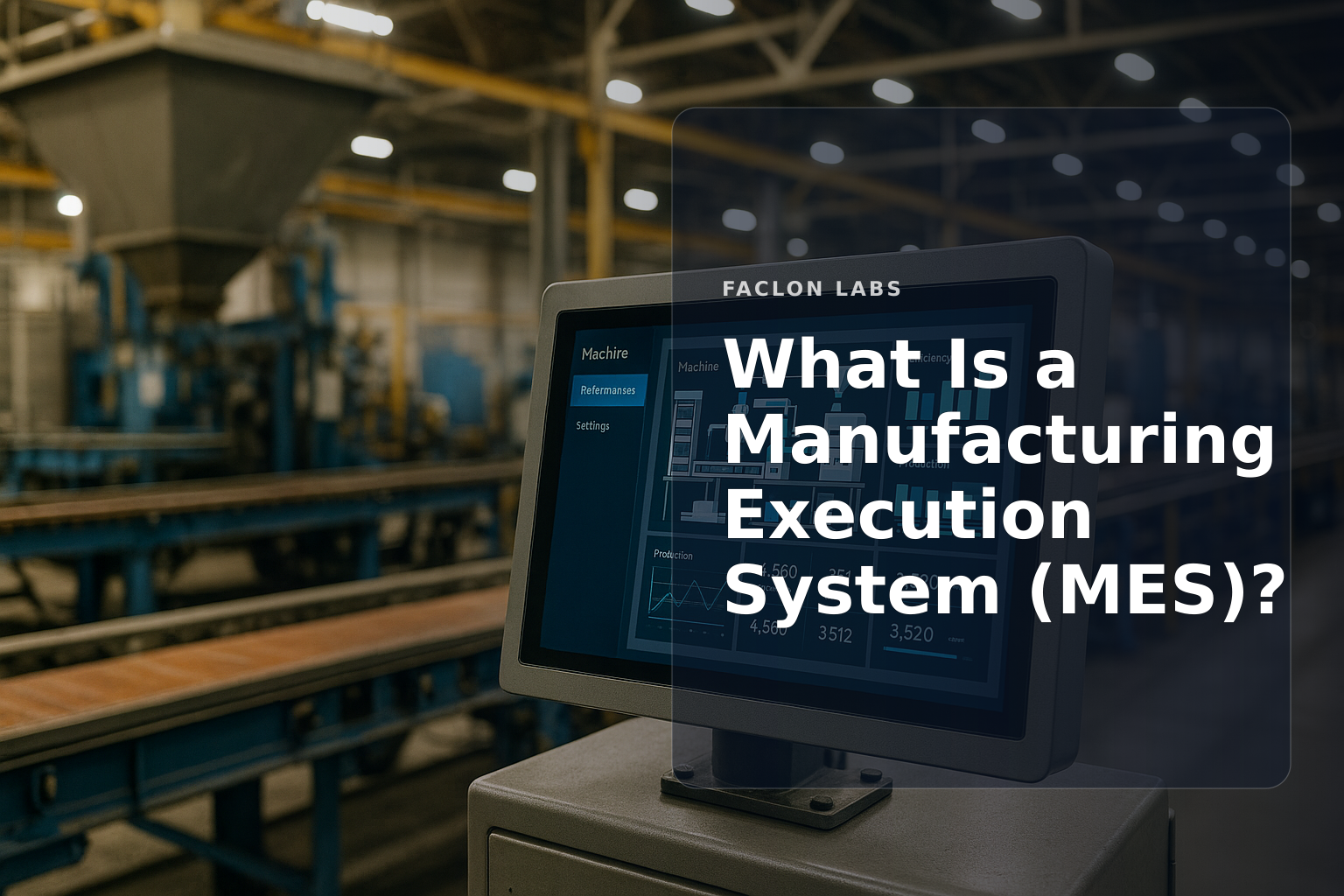
Manufacturing is increasingly complex, with demands for higher quality, faster delivery, and tighter regulatory compliance. To meet these challenges, plant operations leaders need tools that connect business planning with shop floor execution. Understanding what a Manufacturing Execution System (MES) is and how it functions is essential for navigating modern industrial operations.
MES plays a critical role in orchestrating production processes, ensuring that manufacturing runs smoothly from raw materials to finished goods. This article explains the fundamentals of MES, its benefits, core features, and how it fits into the broader manufacturing technology landscape.
A Manufacturing Execution System (MES) is software designed to monitor, control, and optimize manufacturing operations on the shop floor. It tracks the transformation of raw materials into finished products in real time, ensuring production processes align with business objectives. MES acts as the operational backbone that provides visibility into every step of manufacturing, enabling consistent quality and timely delivery.
MES originated in the 1980s as manufacturers sought to digitize and automate production workflows beyond basic automation and enterprise planning. Early MES systems focused on data collection and simple scheduling. Over time, MES evolved to integrate with enterprise resource planning (ERP), supervisory control and data acquisition (SCADA) systems, and more recently, Industrial Internet of Things (IIoT) and industrial AI technologies. This evolution has expanded MES capabilities to include advanced analytics, predictive maintenance, and adaptive scheduling.
Plant managers and operations leaders rely on MES to make informed decisions that impact throughput, quality, and cost. Without MES, manufacturing processes risk inefficiency, errors, and delays due to fragmented data and manual interventions. Understanding MES enables leaders to implement solutions that reduce downtime, improve compliance, and foster continuous improvement.
MES provides a live view of production status, machine performance, and operator activities. This transparency helps identify bottlenecks, track work-in-progress, and respond quickly to issues before they escalate.
By enforcing standardized workflows and capturing detailed process data, MES supports quality assurance and traceability. It helps ensure products meet specifications and regulatory requirements, reducing defects and recalls.
MES facilitates preventive maintenance scheduling and rapid troubleshooting, minimizing unplanned downtime. It also optimizes resource allocation, reducing waste and operational expenses.
MES aggregates and analyzes production data to guide decisions on scheduling, inventory, and process improvements. This empowers frontline teams with actionable insights rather than relying on intuition alone.
MES tracks every item as it moves through production, recording status, location, and processing history. This real-time tracking ensures accurate inventory control and timely completion of orders.
MES manages production schedules, prioritizing jobs based on capacity, deadlines, and resource availability. It dispatches work orders to machines and operators, optimizing flow and throughput.
MES collects data automatically from machines and manually from operators, including process parameters, cycle times, and quality checks. This data forms the basis for performance monitoring and continuous improvement.
MES enforces quality control steps and records inspection results. It maintains traceability of materials and processes, enabling root cause analysis and compliance reporting.
MES connects with ERP systems to align production with business planning and inventory management. It also integrates with automation and control systems like SCADA to synchronize physical production and digital workflows.
| Core MES Function | Description | Benefit |
|---|---|---|
| Work-in-process tracking | Real-time monitoring of production items | Accurate inventory and status |
| Scheduling and dispatching | Prioritizing and assigning production orders | Optimized throughput |
| Data collection | Automated and manual capture of production data | Informed decision making |
| Quality management | Enforcing inspections and traceability | Improved product quality and compliance |
| ERP and automation integration | Linking shop floor with enterprise and control systems | Streamlined operations |
MES sits between ERP and SCADA systems, acting as a bridge that translates business plans into actionable shop floor instructions. ERP focuses on high-level resource planning, while SCADA manages real-time control of machines. MES connects these layers, ensuring production execution aligns with strategic goals.
By linking enterprise systems with operational technology, MES enables seamless communication and coordination across functions. This integration reduces information silos and accelerates response times.
Modern MES platforms leverage IIoT sensors and devices for richer data collection and use industrial AI for predictive analytics, anomaly detection, and adaptive process optimization. These capabilities enhance MES effectiveness in complex manufacturing environments Understanding Performance Analytics for Manufacturing Operations Understanding Generative AI Tasks in Industrial Applications.
MES is primarily used by professionals responsible for production efficiency, quality control, and compliance. Plant managers rely on MES dashboards for real-time insights, operations leaders use it to coordinate workflows, and quality engineers depend on it for traceability and defect analysis.
Industries with complex, regulated, or high-volume production benefit most from MES. These include automotive, aerospace, pharmaceuticals, electronics, and food and beverage manufacturing.
MES addresses production visibility gaps, manual data collection inefficiencies, quality inconsistencies, and lack of coordination between business planning and shop floor operations.
By providing real-time data, automating workflows, and optimizing scheduling, MES reduces downtime, minimizes waste, and accelerates throughput.
Yes, MES solutions can scale to fit small and medium-sized manufacturers, though implementation complexity and cost vary with scope and customization.
Common challenges include integration with legacy systems, change management among staff, upfront investment, and aligning MES capabilities with business goals Implementing Total Productive Maintenance for Industrial Assets.
Evaluate existing IT and OT infrastructure, data quality, and process maturity to determine MES readiness.
Clarify what operational improvements and business outcomes MES should deliver, such as reduced downtime or improved compliance.
Consider factors like scalability, industry fit, integration capabilities, and vendor support when selecting an MES solution.
Develop a roadmap for technical integration, staff training, and process adjustments to ensure smooth MES adoption Choosing the Right Operational Software for Your Plant.
Understanding what MES is and how it integrates into your manufacturing ecosystem is the first step toward smarter, more efficient operations. If you’re considering MES for your plant, start by evaluating your current systems and defining clear objectives. Explore how MES can align with your digital transformation goals and operational priorities to deliver measurable value.
A Manufacturing Execution System (MES) is software designed to monitor, control, and optimize manufacturing operations on the shop floor, providing real-time visibility and coordination between production activities and enterprise systems.
MES improves efficiency by providing real-time data on production status, enabling better scheduling, reducing downtime, ensuring quality control, and facilitating faster decision-making through accurate and timely information.
While MES is traditionally used by large manufacturers, modern scalable MES solutions can also benefit small and medium-sized manufacturers by improving process visibility and operational control.
Challenges include integrating MES with existing systems, managing change among staff, defining clear objectives, and ensuring data accuracy and consistency across all production processes.
MES operates at the production execution level, managing real-time manufacturing processes, while ERP handles enterprise resource planning and business functions, and SCADA focuses on supervisory control and data acquisition at the machine and process level.