Join Our Lunch & Learn: How Agentic AI Will Transform Industrial Operations | Register Now →
.svg)
July 10, 2026
5 Mins
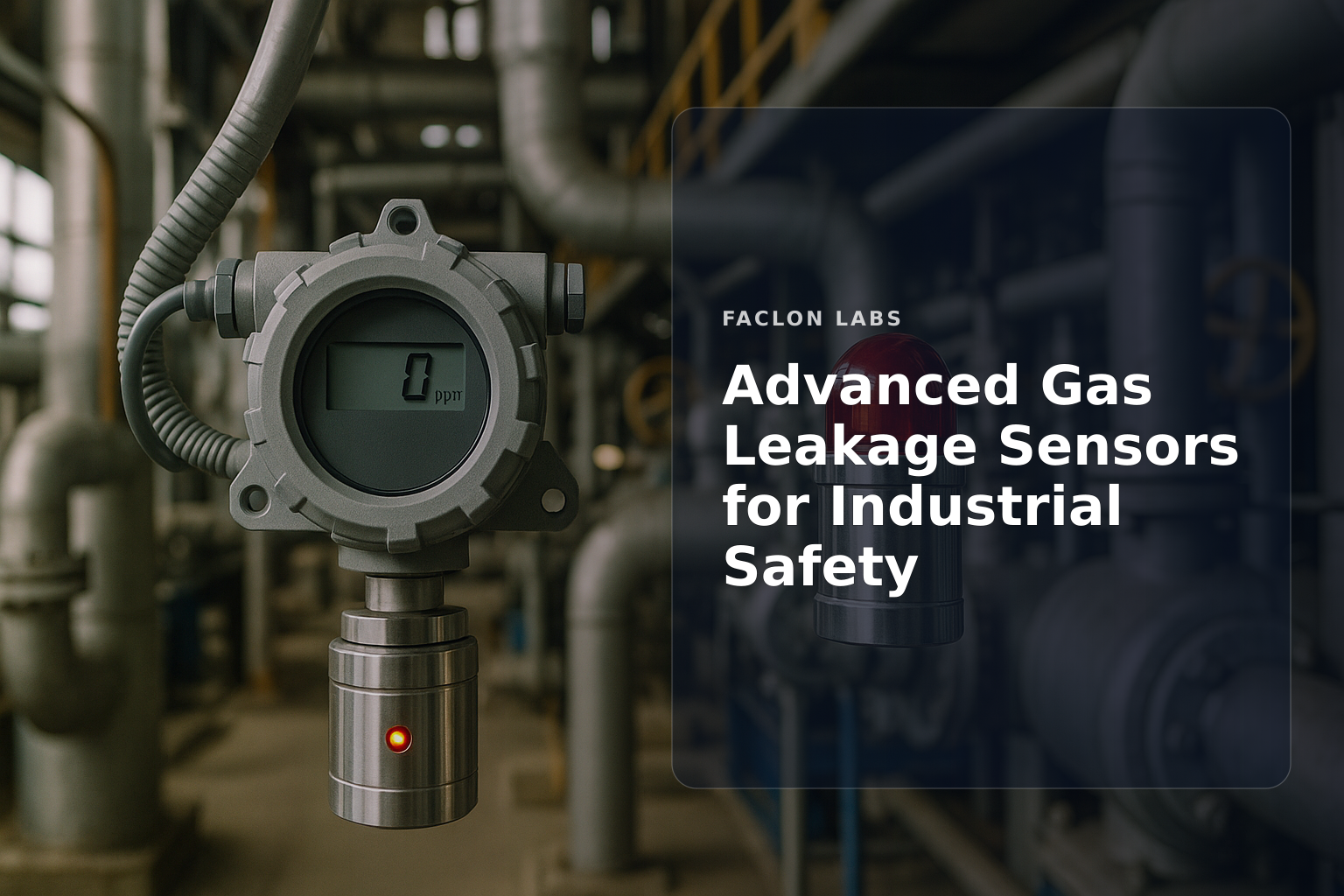
Industrial facilities, especially in oil and gas sectors, face significant risks from gas leaks that can lead to catastrophic safety incidents and costly downtime. Traditional detection methods often fall short in sensitivity, speed, or integration capabilities. Advanced gas leakage sensors provide a crucial upgrade by combining precise detection technologies with modern IIoT connectivity, enabling plant operations leaders to safeguard personnel and assets while optimizing maintenance and compliance.
Industrial environments commonly encounter three categories of gas hazards:
Each type requires tailored detection strategies to ensure timely alerts and prevention of incidents.
Conventional gas detection systems often rely on manual inspections or single-technology sensors that may suffer from:
These shortcomings can delay hazard response and increase operational risks.
Modern gas leakage sensors use a variety of technologies to overcome traditional limitations:
| Sensor Type | Detection Mechanism | Typical Applications |
|---|---|---|
| Electrochemical | Measures current changes due to gas reaction | Toxic gases like CO, H2S |
| Infrared (IR) | Absorbs specific IR wavelengths of gases | Combustible hydrocarbons, CO2 |
| Catalytic Bead | Detects combustible gases via oxidation heat | Methane, propane, natural gas |
These sensors offer higher accuracy, faster response, and longer operational life.
Early detection of gas leaks prevents:
Advanced sensors integrated into automated alert systems enable immediate response, minimizing risk and downtime Advanced Gas Leakage Detection for Industrial Facilities.
| Implementation Step | Key Tools / Metrics |
|---|---|
| Hazard Assessment | Gas inventory, process flow charts |
| Sensor Selection | Sensor datasheets, environmental data |
| Placement & Network Design | Site maps, wireless coverage tools |
| Integration & Calibration | Calibration gases, control system interfaces |
| Monitoring & Alerts | Dashboard software, alarm logs |
IIoT platforms transform gas detection by enabling:
This connectivity reduces human error and accelerates decision-making in critical situations.
Adhering to standards such as IEC 60079 and OSHA guidelines ensures system reliability and legal compliance What is Industrial Maintenance and Why It Matters.
Faclon Labs’ platform integrates advanced sensors with IIoT analytics, delivering:
This results in measurable safety improvements and operational cost savings.
| Feature | Fixed Gas Detectors | Portable Gas Detectors |
|---|---|---|
| Installation | Permanent, strategic locations | Handheld, used as needed |
| Coverage | Continuous area monitoring | Spot checks, confined spaces |
| Connectivity | Often integrated with control systems | Standalone or Bluetooth-enabled |
| Use Cases | General plant safety, perimeter defense | Maintenance, inspections, emergency entry |
Fixed detectors provide constant monitoring but require upfront installation and maintenance.
Portable units offer flexibility for inspections and confined space entry but depend on operator deployment.
Combining fixed and portable detectors ensures both continuous surveillance and targeted checks, maximizing safety.
Smaller, low-power sensors enable more widespread deployment and integration into wearable devices.
Machine learning models analyze sensor data to predict leaks and maintenance needs before failures occur.
Unmanned aerial vehicles equipped with sensors inspect pipelines, tanks, and remote sites safely.
Robust encryption and network protocols protect sensor data and control commands from cyber threats Generative AI Platforms: Capabilities, Applications, and Selection for Industrial AI.
For plant operations leaders seeking to upgrade their gas leakage detection systems, adopting advanced sensors integrated with IIoT platforms is essential. Contact Faclon Labs to explore tailored solutions that enhance safety, ensure compliance, and deliver measurable ROI.
A gas leakage sensor is a device designed to detect the presence of specific gases in an environment. It works by using various sensing technologies (e.g., electrochemical, infrared, catalytic bead) that react to the target gas, triggering an alarm when concentrations exceed predefined safety thresholds. This provides early warning of potential hazards.
Industrial gas leakage sensors can detect a wide range of gases, including combustible gases like methane, propane, and hydrogen; toxic gases such as carbon monoxide, hydrogen sulfide, and ammonia; and oxygen depletion or enrichment. The specific gases detected depend on the sensor technology and calibration.
The calibration frequency for industrial gas leakage sensors depends on the sensor type, manufacturer recommendations, environmental conditions, and regulatory requirements. Generally, sensors should be calibrated every 3 to 6 months, or more frequently in harsh environments, to ensure accuracy and reliability. Regular bump testing is also recommended between full calibrations.
Fixed gas detectors are permanently installed in specific locations to provide continuous, area-wide monitoring, often integrated into a plant's control system. Portable gas detectors are handheld devices used for personal safety, confined space entry, or pinpointing leaks, offering flexibility but not continuous area coverage.