Join Our Lunch & Learn: How Agentic AI Will Transform Industrial Operations | Register Now →
.svg)
July 9, 2026
5 Mins
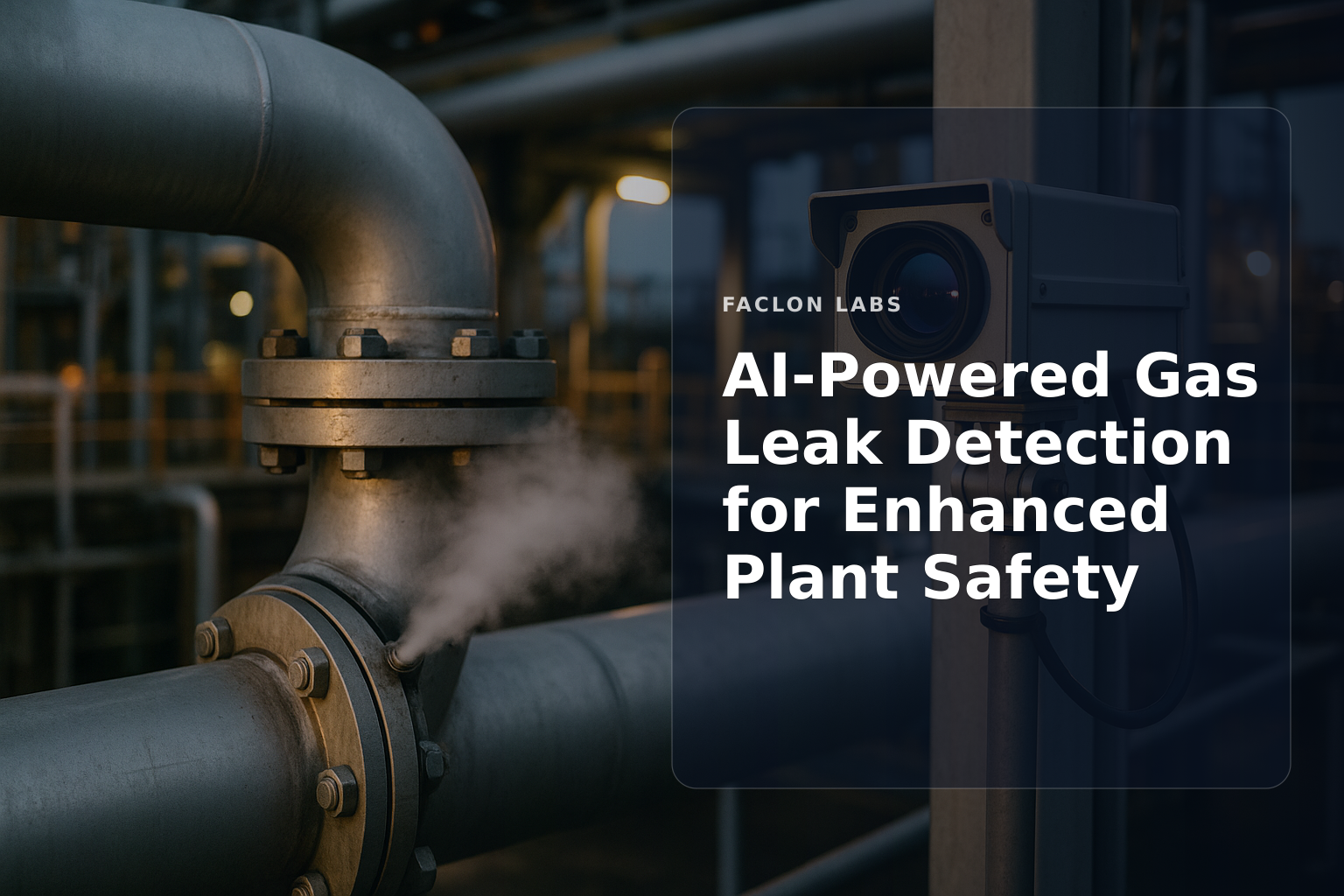
Industrial plants face significant risks from gas leaks, including explosions, toxic exposure, and costly downtime. Traditional gas leak detection methods—such as manual inspections and standalone sensors—often struggle with delayed detection and false alarms, limiting their effectiveness in fast-paced plant environments.
Integrating AI into gas leak detection systems addresses these challenges by improving detection accuracy and enabling real-time response. AI algorithms analyze sensor data continuously, identifying subtle anomalies that indicate leaks before they escalate. This results in enhanced safety, regulatory compliance, and operational efficiency.
Choosing the appropriate sensor technology is foundational to effective gas leak detection. Common sensor types include:
Sensor choice depends on the:
Sensors should connect seamlessly with Industrial Internet of Things (IIoT) platforms for continuous data collection and remote monitoring. This integration enables AI algorithms to analyze data streams in real time, supporting predictive maintenance and immediate leak detection.
AI models require high-quality, labeled data from sensors. Preprocessing steps include noise filtering, normalization, and handling missing data to improve model accuracy.
Supervised and unsupervised learning models detect deviations from normal sensor readings. Common approaches include:
Combining data from multiple sensor types and locations enables precise leak localization. Sensor fusion algorithms analyze spatial and temporal correlations, allowing operators to pinpoint leak origins quickly.
AI systems dynamically adjust detection thresholds based on environmental conditions and historical data, balancing sensitivity and false alarm rates.
User-friendly dashboards display real-time sensor data, AI-generated alerts, and leak locations. Visualizations include heat maps and trend graphs to support decision-making.
Automated alerts via SMS, email, or control system integration ensure rapid response. Escalation protocols define actions if initial alerts are not acknowledged, maintaining safety vigilance.
Regular calibration maintains sensor accuracy. Calibration methods include exposure to known gas concentrations and sensor drift compensation.
Simulated leaks validate system performance under realistic conditions, verifying detection and localization capabilities.
Key metrics to evaluate system effectiveness:
| Metric | Description |
|---|---|
| Detection Accuracy | Percentage of actual leaks correctly identified |
| False Positive Rate | Frequency of false alarms |
| Response Time | Time from leak occurrence to alert |
These metrics guide continuous improvement and compliance verification Implementing Gas Leak Sensors for Enhanced Industrial Safety.
A chemical plant identified high-risk zones near storage tanks and pipeline junctions. Sensors were deployed in a grid pattern, combining catalytic and ultrasonic types, covering both confined and open areas.
Historical leak incident data was combined with live sensor streams to train machine learning models. Anomaly detection algorithms were fine-tuned to reduce false positives caused by environmental noise.
Post-implementation, the plant reported a 40% reduction in leak detection time and a 25% decrease in false alarms. Early detection prevented several potential incidents, enhancing overall safety and reducing unplanned downtime Understanding Energy Consumption in Industrial Plants.
High sensitivity ensures leaks are rarely missed, while specificity minimizes false alarms. Balancing these is critical for operational trust.
Shorter MTTD and MTTR reduce the impact of leaks on safety and production.
Effective AI-powered detection lowers costs by preventing hazardous incidents and minimizing plant shutdown durations.
| Metric | Tool/Method |
|---|---|
| Sensitivity & Specificity | ROC curve analysis, confusion matrix |
| MTTD & MTTR | Incident tracking software |
| Cost Savings | ROI calculators, maintenance logs |
AI systems analyze continuous sensor data in real time, detecting subtle patterns and anomalies that humans may miss. This reduces detection delays and false alarms, enabling faster, more reliable responses.
Routine sensor calibration, periodic system validation with test leaks, and continuous monitoring of performance metrics ensure sustained accuracy and reliability.
Upon detection, automated alerts notify operators who should follow established emergency protocols—evacuate personnel, isolate the leak source, and initiate repair procedures promptly What Is an Uninterruptible Power Supply?.
For plant operations leaders seeking to enhance safety, integrating AI-powered gas leak detection offers measurable improvements in risk management and operational efficiency. Contact Faclon Labs to explore tailored solutions that fit your plant’s unique environment and safety requirements.
AI enhances gas leak detection by analyzing sensor data in real time to identify anomalies that indicate leaks, localizing the source quickly, reducing false alarms, and enabling faster response compared to manual or traditional sensor-only approaches.
The best sensors depend on the gas type and environment; common types include catalytic sensors for combustible gases, infrared sensors for hydrocarbons, ultrasonic sensors for pressure leaks, and electrochemical sensors for toxic gases, often integrated within IIoT systems.
Immediately alert plant safety personnel, evacuate affected areas if necessary, isolate the leak source following safety protocols, repair the leak, and then validate the repair with sensor data before resuming normal operations.
Calibration frequency depends on sensor type and manufacturer recommendations but typically ranges from monthly to quarterly to ensure detection accuracy and reduce false positives.
Key metrics include detection accuracy (sensitivity and specificity), mean time to detection, false alarm rate, and the reduction in safety incidents and unplanned downtime.