Join Our Lunch & Learn: How Agentic AI Will Transform Industrial Operations | Register Now →
.svg)
July 7, 2026
5 Mins
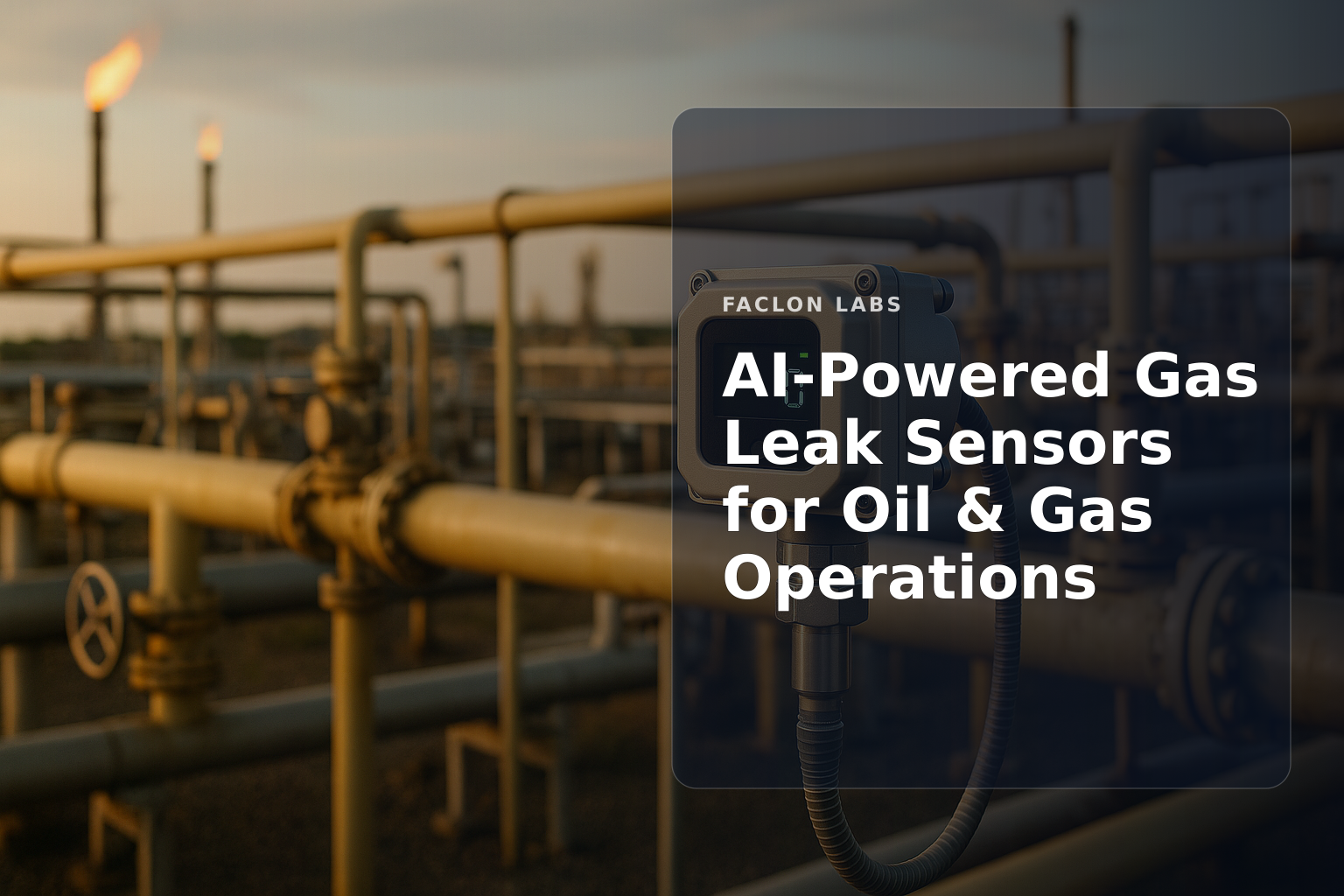
The oil and gas industry faces significant challenges in detecting gas leaks promptly and accurately. Traditional methods often fall short in speed, coverage, and false alarm management, leading to safety risks, regulatory penalties, and costly downtime. AI-powered gas leak sensors offer a transformative approach by combining sophisticated detection hardware with intelligent software systems, enabling more reliable and actionable leak detection.
This post outlines the critical need for these advanced sensors, explains how they work, and provides a practical guide for implementing them in industrial settings. We also cover the types of gas leak detectors available and how to select the right solution for your plant’s unique requirements.
Methane and propane are highly combustible gases commonly found in oil and gas operations. Undetected leaks pose serious safety hazards including fire or explosion risks, as well as health threats to personnel. Methane is also a potent greenhouse gas, making leak control critical for environmental compliance.
Conventional gas leak detectors, such as handheld sniffers and portable units, have several drawbacks:
These limitations often result in delayed leak identification and increased operational risk.
Undetected leaks lead to:
Industry research shows that predictive maintenance with AI-enabled detection can reduce downtime costs by millions annually [Predictive Maintenance Gas Leak Detection].
Oil and gas facilities must comply with stringent regulations such as EPA’s methane rules and OSHA safety standards. Effective leak detection systems are essential to meet these requirements and maintain operational licenses.
AI-powered systems typically integrate multiple sensor technologies:
Sensors feed continuous data streams into IIoT platforms via MQTT brokers or APIs. This centralized data hub enables real-time visualization, historical trend analysis, and cross-sensor correlation for improved leak detection accuracy.
AI models analyze sensor data to identify abnormal gas concentrations and patterns. These algorithms learn to differentiate true leaks from environmental noise, drastically reducing false positives and alert fatigue.
The system continuously monitors sensor inputs, triggering immediate alerts for detected leaks. Predictive analytics forecast potential leak development, allowing proactive maintenance before incidents escalate [AI-Driven Real-Time Methane Emissions Monitoring].
Use CAD and Computational Fluid Dynamics (CFD) modeling to map gas flow and identify high-risk leak points. Proper sensor placement maximizes coverage and detection sensitivity.
Connect sensors to an IIoT platform using MQTT brokers and secure APIs. Ensure data ingestion supports high-frequency updates and robust error handling.
Train machine learning models on historical and live sensor data. Key metrics to monitor include detection accuracy and false positive rate. Periodic recalibration improves performance over time.
Integrate alert systems with SCADA and CMMS platforms to automate incident response. Define clear escalation paths and response times to ensure swift action.
Track operational metrics such as system uptime and response time. Implement scheduled maintenance and model retraining to adapt to changing site conditions.
| Implementation Step | Tools/Technologies | Key Metrics |
|---|---|---|
| Site Assessment & Sensor Placement | CAD, CFD Modeling | Coverage %, Detection Sensitivity |
| IIoT Integration | MQTT Brokers, APIs | Data Latency, Throughput |
| AI Model Training & Calibration | Machine Learning Frameworks | Accuracy, False Positives |
| Alert Protocols & Response | SCADA, CMMS | Response Time, Escalation Rate |
| Monitoring & Optimization | Analytics Dashboards | Uptime, System Reliability |
Select platforms that can scale with your operation and integrate seamlessly with current control and maintenance systems.
Ensure sensors withstand harsh conditions such as extreme temperatures, dust, and corrosive atmospheres common in oil & gas facilities.
Choose solutions with robust cybersecurity features and compliance with industry data standards.
Partner with vendors offering comprehensive support, training programs, and continuous software updates.
Review documented deployments demonstrating measurable safety improvements and ROI in comparable oil and gas settings [Smart Gas Monitoring Using Machine Learning].
For oil and gas operators ready to improve safety and compliance, adopting AI-powered gas leak sensors is a strategic investment. Contact Faclon Labs to explore tailored solutions that integrate seamlessly with your existing infrastructure and deliver measurable ROI.
AI-powered gas leak sensors go beyond simple detection by integrating with IIoT platforms to analyze data, learn patterns, and provide predictive insights. They can differentiate between actual leaks and environmental factors, significantly reducing false alarms and enabling proactive maintenance, unlike traditional detectors that primarily offer immediate alerts.
Yes, many advanced AI gas leak sensor systems utilize an array of different sensor technologies (e.g., catalytic, electrochemical, infrared) within a single integrated network. This allows them to detect and identify a wide range of combustible, toxic, and asphyxiant gases simultaneously, providing comprehensive coverage for complex industrial environments.
The ROI for AI-powered gas leak sensors in oil & gas operations can be substantial, driven by reduced safety incidents, prevention of costly product loss, avoidance of regulatory fines, and minimized operational downtime. While specific figures vary, companies often see payback periods within 1-3 years due to these combined benefits and improved operational efficiency.
One of the key advantages of AI in gas leak detection is its ability to significantly reduce false alarms. By analyzing historical data and environmental factors, AI algorithms can distinguish between actual gas leaks and benign events (like dust, humidity changes, or non-hazardous vapors), leading to more reliable alerts and preventing unnecessary shutdowns or investigations.