Join Our Lunch & Learn: How Agentic AI Will Transform Industrial Operations | Register Now →
.svg)
July 9, 2026
6 Mins
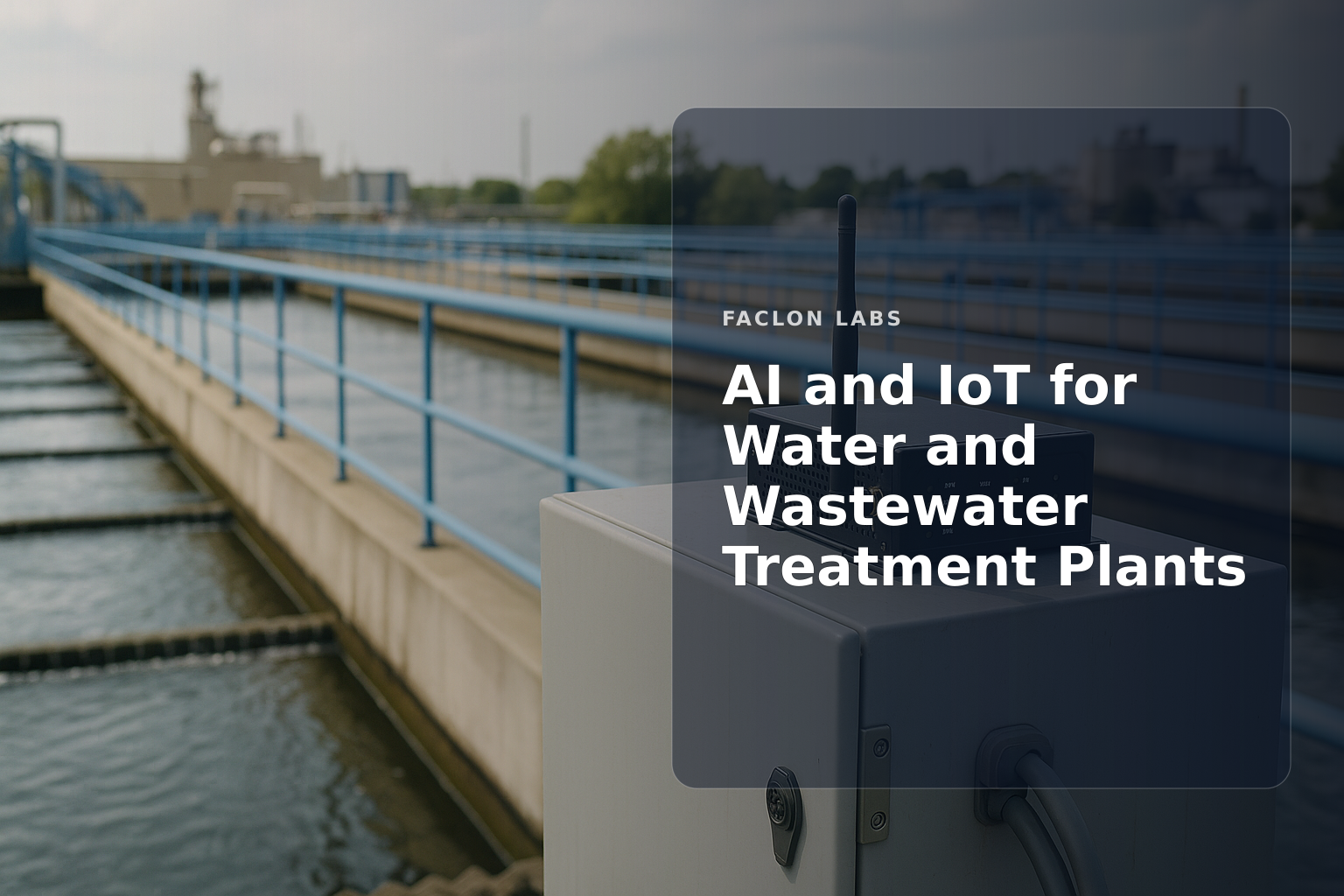
Water and wastewater treatment plants are essential components of public health and environmental protection. They process and treat water to make it safe for consumption or return it safely to the environment. As these plants face increasing operational complexity and regulatory demands, integrating AI and IoT technologies offers a path to smarter, more efficient management.
This article explores the fundamental role of water and wastewater treatment plants, the challenges they face, and how AI and IoT technologies are transforming their operations. Understanding these advances is key for plant leaders aiming to improve sustainability and operational outcomes.
Water treatment plants (WTPs) purify raw water from sources such as rivers, lakes, or groundwater to produce potable water suitable for human consumption. Their processes remove contaminants, pathogens, and impurities to meet strict drinking water standards.
Wastewater treatment plants (WWTPs) collect and treat used water from homes, industries, and storm runoff. They remove pollutants like nitrogen, phosphorus, organic matter, and pathogens to reduce environmental impact before releasing treated water back into nature or reusing it.
| Aspect | Water Treatment Plants (WTPs) | Wastewater Treatment Plants (WWTPs) |
|---|---|---|
| Source water | Raw water from natural sources | Used water from homes, industries, runoff |
| Primary goal | Produce safe drinking water | Remove pollutants from wastewater |
| Treatment focus | Filtration, disinfection, chemical dosing | Sedimentation, biological treatment, nutrient removal |
| Regulatory standards | Drinking water quality standards | Environmental discharge permits |
Both WTPs and WWTPs are vital for preventing waterborne diseases, protecting aquatic ecosystems, and supporting sustainable water resource management. Their effectiveness directly impacts community health and environmental quality.
Many treatment plants operate with aging equipment and infrastructure, which increases maintenance needs and risks of failure. This can lead to unplanned downtime and costly repairs.
Energy-intensive processes and chemical usage contribute to high operational expenses. Labor costs also rise as skilled operators are required to manage complex treatment processes.
Meeting evolving environmental regulations demands precise control of treatment processes and comprehensive reporting, which can strain existing systems.
Traditional operations often rely on manual data collection and isolated systems, limiting visibility and delaying response to issues.
Changing weather patterns and growing populations increase variability in water availability and wastewater volumes, complicating treatment plant management.
IoT sensors continuously monitor critical parameters such as flow rates, pressure, water quality indicators (e.g., turbidity, pH), and tank levels. This real-time data provides immediate insights into plant conditions.
IoT enables operators to monitor and adjust equipment remotely, reducing the need for on-site presence and accelerating response times to operational issues.
Connecting disparate assets into a unified network breaks down data silos, allowing holistic analysis of plant performance and system interactions.
From detecting leaks in pipelines to optimizing pump schedules and monitoring chemical dosing, IoT applications span the entire water cycle.
Automated data capture reduces human error and ensures timely availability of accurate information for decision-making.
AI algorithms analyze sensor data to predict when equipment may fail or require maintenance, enabling proactive interventions that reduce downtime.
Machine learning models can optimize chemical usage and energy consumption by adapting to changing water quality and operational conditions, lowering costs and environmental impact.
AI detects unusual patterns indicating leaks, equipment malfunctions, or contamination events, allowing faster corrective action.
AI-driven control systems can adjust operational parameters automatically, maintaining optimal treatment performance with minimal human intervention.
AI models forecast water quality outcomes under varying conditions, helping plants maintain compliance with regulatory standards efficiently.
| Outcome | Benefit | Example Impact |
|---|---|---|
| Energy and chemical savings | Lower operational expenses | Up to 20% reduction in energy consumption |
| Predictive maintenance | Reduced unplanned downtime | Equipment lifespan extended by 15–30% |
| Water quality compliance | Avoidance of fines and environmental damage | Consistent discharge within permit limits |
| Operational efficiency | Streamlined workflows and faster response | 30% faster issue detection and resolution |
Begin with a thorough evaluation of existing assets, data systems, and operational challenges to prioritize areas where AI and IoT can add the most value.
Start with pilot projects in targeted areas to validate technology benefits before scaling up plant-wide deployments.
Ensure seamless integration of new data streams with legacy systems while implementing robust cybersecurity measures to protect critical infrastructure.
Invest in training and hiring personnel skilled in data analytics, AI, and IoT system management to sustain technology adoption.
Track key performance indicators such as cost savings, downtime reduction, and compliance improvements to justify further investments and expansion.
| Implementation Step | Key Focus | Success Metric |
|---|---|---|
| Infrastructure assessment | Identify gaps and needs | Comprehensive asset and data audit |
| Pilot projects | Validate technology impact | Measurable operational improvements |
| Integration and cybersecurity | Secure data flows and system links | Zero security incidents |
| Workforce development | Skill enhancement and knowledge transfer | Trained staff and reduced external support |
| ROI measurement and scaling | Quantify benefits and expand scope | Positive ROI and broader deployments |
For plant leaders, adopting AI and IoT technologies is not just a future possibility but a practical strategy to meet rising demands and regulatory expectations. Start small with focused pilots, build your data infrastructure, and develop the right skills to realize sustainable improvements in water and wastewater treatment operations. To learn more about digital transformation in industrial operations, explore our Understanding Energy Consumption in Industrial Plants and Generative AI Platforms: Capabilities, Applications, and Selection for Industrial AI resources.
Water treatment plants (WTPs) purify raw water from sources like rivers or groundwater, making it safe for drinking and other uses. Wastewater treatment plants (WWTPs) process used water from homes, businesses, and industries to remove pollutants before safely returning it to the environment.
AI and IoT improve water quality by enabling continuous, real-time monitoring of water parameters, optimizing chemical dosing for effective contaminant removal, and using predictive analytics to anticipate and prevent quality deviations. This ensures that treated water consistently meets regulatory standards.
Yes, AI and IoT significantly reduce operational costs in wastewater treatment by optimizing energy consumption for pumps and aerators, minimizing chemical usage through precise dosing, enabling predictive maintenance to avoid costly breakdowns, and automating processes to reduce manual labor requirements.
Wastewater treatment typically involves preliminary treatment (screening large solids), primary treatment (settling of suspended solids), secondary treatment (biological removal of dissolved organic matter), and tertiary treatment (advanced filtration and disinfection) to further purify the water.