Join Our Lunch & Learn: How Agentic AI Will Transform Industrial Operations | Register Now →
.svg)
July 9, 2026
5 Mins
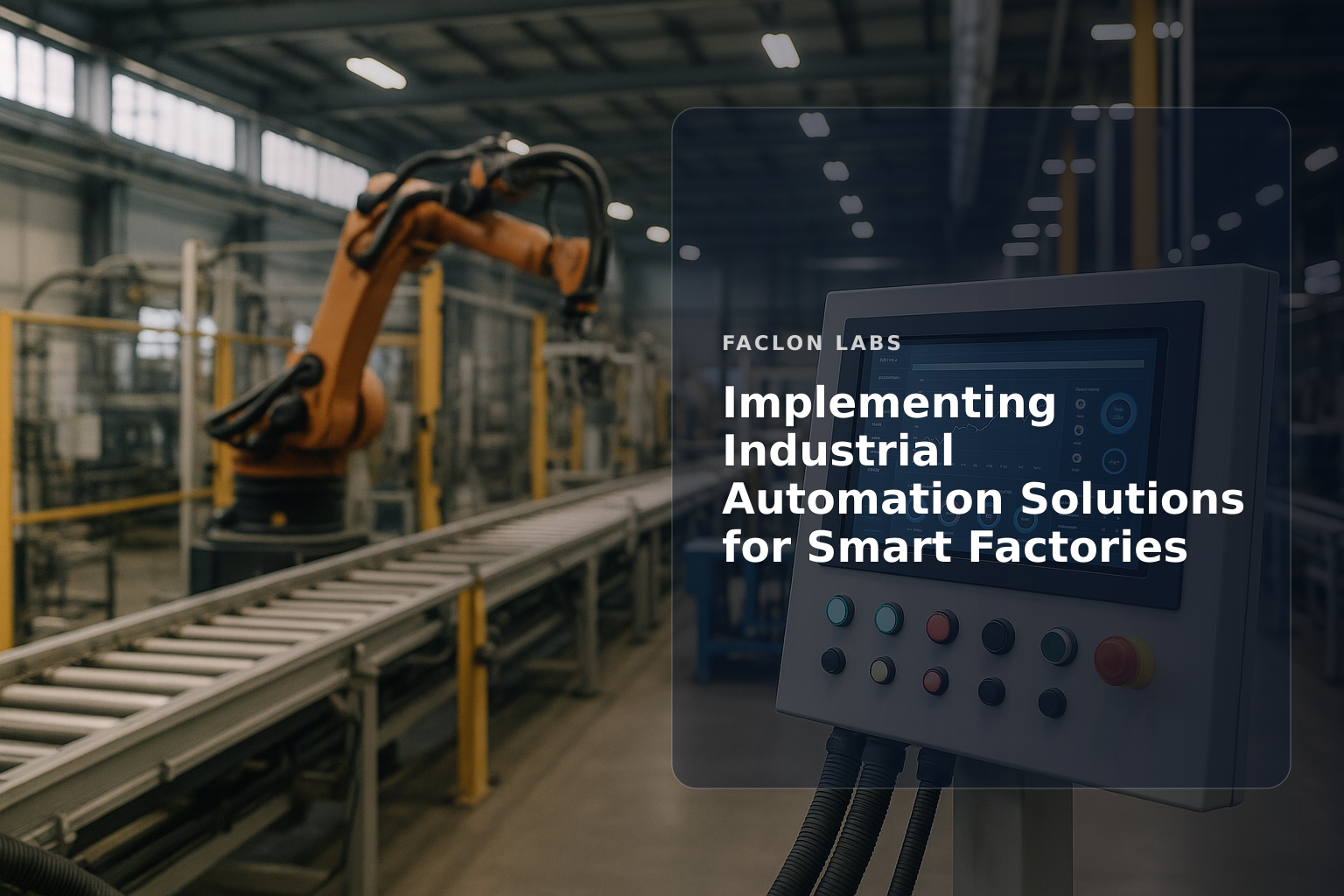
Industrial automation is a foundational element of smart factory transformation, enabling manufacturers to enhance productivity, quality, and operational agility. As factories evolve, adopting the right automation solutions tailored to specific operational goals becomes essential for maintaining competitiveness and achieving sustainable growth.
Implementing these solutions requires a deliberate, stepwise approach that aligns technology with business objectives and plant realities. This guide outlines a practical process for plant operations leaders to implement industrial automation solutions effectively, ensuring measurable outcomes and long-term value.
Industrial automation solutions integrate hardware and software systems to control manufacturing processes with minimal human intervention. In smart factories, this extends to connected devices and data-driven decision-making, enabling real-time visibility and adaptive control.
Automation reduces manual labor, minimizes errors, and accelerates production cycles. It also lowers operational costs by cutting downtime and waste while improving product consistency. Scalable automation architectures support future growth and innovation.
The market offers diverse solutions including PLCs (Programmable Logic Controllers), SCADA (Supervisory Control and Data Acquisition), MES (Manufacturing Execution Systems), and IIoT platforms. These components work together to provide control, monitoring, and analytics capabilities.
Without a clear plan, automation projects risk cost overruns, integration failures, or underwhelming performance. A structured approach ensures alignment with business goals, smooth deployment, and measurable return on investment.
Begin by analyzing your plant’s key challenges such as frequent downtime, high scrap rates, or bottlenecks. Engage cross-functional teams to gather insights on inefficiencies and safety concerns.
Define specific KPIs like Overall Equipment Effectiveness (OEE), cycle time reduction, or energy consumption targets. These metrics will guide solution selection and measure success.
Evaluate technical and financial feasibility by estimating costs, expected savings, and payback periods. This step helps prioritize projects with the highest impact.
Document existing workflows and identify automation opportunities. This mapping highlights gaps and informs system design.
| Component | Role | Typical Use Case |
|---|---|---|
| PLC (Programmable Logic Controller) | Real-time control of machinery | Assembly line control |
| SCADA (Supervisory Control and Data Acquisition) | Monitoring and data collection | Plant-wide process visualization |
| DCS (Distributed Control System) | Process control in continuous production | Chemical, oil refining |
| MES (Manufacturing Execution System) | Scheduling and execution tracking | Production order management |
IIoT platforms collect and analyze sensor data at the edge, enabling faster decision-making and reducing latency. This integration enhances predictive maintenance and process optimization.
Robotic arms, AGVs (Automated Guided Vehicles), and vision systems automate repetitive or hazardous tasks, improving safety and throughput.
Artificial intelligence and machine learning analyze historical and real-time data to predict equipment failures and optimize parameters, reducing downtime and improving quality Benefits of Automated Maintenance Services for Industrial Plants.
Design an architecture that defines how components communicate, data flows, and control hierarchies. This blueprint ensures system coherence and scalability.
Use open standards and protocols (e.g., OPC UA, MQTT) to enable seamless integration of legacy and new systems, avoiding data silos.
Implement robust cybersecurity measures including network segmentation, encryption, and continuous monitoring to protect critical infrastructure Understanding Energy Consumption in Industrial Plants.
Plan incremental rollouts starting with pilot areas to validate solutions before full-scale deployment, reducing operational risks.
Conduct thorough system compatibility assessments and use middleware or adapters to bridge old and new technologies.
Develop comprehensive test plans covering functional, performance, and safety criteria to ensure system reliability before go-live.
Equip staff with the necessary skills through targeted training programs, fostering acceptance and effective operation of automated systems.
Start with a pilot to demonstrate value, gather feedback, and refine processes before scaling across the plant or multiple sites Understanding Actuators in Industrial Automation Systems.
Use dashboards and analytics tools to track KPIs such as OEE, uptime, and throughput in real time, enabling proactive management.
Continuously analyze operational data to identify improvement opportunities and fine-tune automation parameters.
Adopt predictive and preventive maintenance schedules supported by condition monitoring to maximize equipment availability.
Plan for modular upgrades, software updates, and integration of emerging technologies to keep systems current and competitive.
| Step | Key Focus | Tools & Metrics |
|---|---|---|
| Assess Needs | Define pain points and KPIs | Feasibility study, ROI calculator |
| Select Technologies | Choose components and platforms | Technology matrix, vendor evaluation |
| Design Architecture | Plan system integration | Network diagrams, protocol standards |
| Deploy | Implement and test | Pilot projects, training programs |
| Optimize | Monitor and improve | Analytics dashboards, maintenance logs |
Implementing industrial automation solutions is a strategic journey that requires careful planning and execution. If you’re ready to transform your factory with automation technologies tailored to your operational goals, reach out to explore how Faclon Labs can support your smart factory initiatives.
An industrial automation system is a set of computerized technologies and processes used in manufacturing facilities to control and monitor machinery and production lines, reducing human intervention and improving efficiency, safety, and output quality.
Key benefits include increased operational efficiency, significant cost reductions through optimized resource use and reduced waste, improved product quality and consistency, enhanced worker safety, and greater scalability and flexibility in production.