Join Our Lunch & Learn: How Agentic AI Will Transform Industrial Operations | Register Now →
.svg)
July 4, 2026
5 Mins
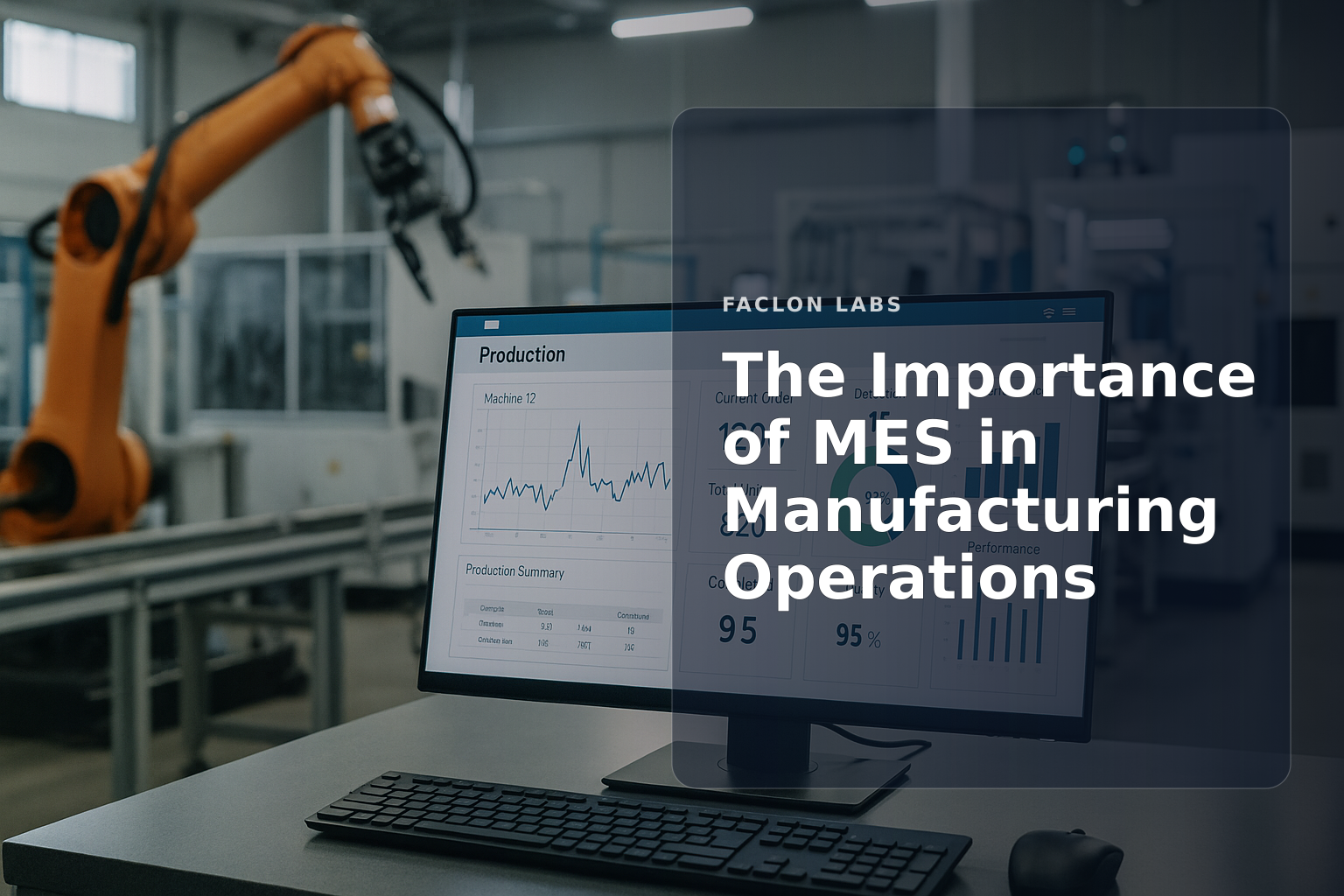
Manufacturing Execution Systems (MES) have become essential for modern manufacturing operations. As factories grow more complex and competitive pressures increase, understanding what MES is and why it matters is key for plant operations leaders. MES provides the operational backbone that links planning with execution, delivering actionable insights and control over manufacturing processes.
This post explains MES in manufacturing, its core functions, and how it supports digital transformation and operational excellence. We’ll clarify common misconceptions and outline how manufacturers can begin leveraging MES to improve production outcomes.
A Manufacturing Execution System (MES) is a software solution designed to monitor, track, and control production activities on the factory floor. It operates in real time, providing detailed data on work-in-process, machine status, labor, and materials. MES acts as the operational layer between enterprise systems like ERP and the physical manufacturing equipment.
MES typically includes capabilities such as:
These functions help manufacturers maintain tight control over production workflows, ensuring processes run smoothly and consistently.
MES sits between high-level planning systems (ERP) and low-level control systems (SCADA, PLCs). It integrates data from both sides to provide a comprehensive view of manufacturing operations. MES also connects with Industrial IoT platforms to enable data-driven automation and analytics, forming a critical component of smart factory initiatives Understanding Energy Consumption in Industrial Plants.
MES delivers real-time visibility into production status, enabling operators and managers to respond quickly to issues such as machine downtime or quality deviations. This visibility reduces delays and helps keep production on schedule.
By tracking quality metrics and enforcing standardized processes, MES ensures products meet specifications and regulatory standards. Traceability features help quickly identify root causes of defects and support audits.
MES monitors equipment performance and process parameters continuously, allowing early detection of anomalies that could cause downtime or scrap. This proactive approach minimizes waste and improves overall equipment effectiveness (OEE).
MES manages work orders, sequences tasks, and tracks progress on the shop floor, ensuring production follows the planned schedule and adapts to changes dynamically.
Sensors, machines, and operators feed data into MES, which aggregates and analyzes it to provide actionable insights on performance, bottlenecks, and trends.
MES enforces quality checks at critical points and maintains detailed records of material batches, process steps, and inspection results for full traceability.
MES interfaces with ERP for order and inventory data, SCADA for machine control, and IIoT platforms for advanced analytics and automation, creating a unified manufacturing ecosystem.
| MES Component | Function | Benefits |
|---|---|---|
| Production Scheduling | Organizes and sequences manufacturing tasks | Improved throughput and flexibility |
| Data Collection | Captures real-time shop floor data | Accurate performance monitoring |
| Quality Management | Monitors product quality and enforces standards | Reduced defects and compliance |
| System Integration | Connects MES with ERP, SCADA, IIoT platforms | Streamlined operations and data flow |
MES provides the digital infrastructure to connect machines, people, and processes, enabling smart factory capabilities like adaptive scheduling and predictive maintenance.
Data collected by MES can feed AI models to identify inefficiencies, predict failures, and recommend process improvements, driving continuous operational excellence Top Manufacturing Execution Software for Industrial Plants.
Integrating MES with IIoT platforms enables automated data exchange and control, facilitating real-time decision-making and reducing manual intervention Generative AI Platforms: Capabilities, Applications, and Selection for Industrial AI.
MES closes information silos by providing a centralized, real-time view of manufacturing activities, improving coordination and transparency.
Replacing paper or spreadsheet-based tracking with MES reduces human errors and speeds up data capture and reporting.
MES automates compliance documentation and enforces quality protocols, making audits easier and reducing risk.
ERP systems manage high-level business processes like procurement, finance, and inventory planning. MES focuses on executing production on the shop floor, tracking real-time manufacturing data and processes.
MES fills the operational gap by providing detailed execution data that ERP lacks, enabling more accurate production control and feedback loops.
Together, ERP and MES provide end-to-end visibility and control from order receipt through finished goods, supporting both strategic planning and tactical execution What Is a Manufacturing Execution System (MES)?.
Begin by identifying key pain points such as quality issues, downtime, or lack of visibility. Define clear objectives for MES deployment aligned with business goals.
Focus on core MES capabilities that address your highest-impact challenges, such as production tracking or quality management, before expanding functionality.
Develop a roadmap for MES integration with existing systems and invest in training and process redesign to ensure adoption and maximize value What Is a Manufacturing Execution System (MES)?.
Understanding and implementing MES in manufacturing operations is a strategic move that delivers measurable improvements in efficiency, quality, and compliance. If you’re considering MES for your plant, start by assessing your production challenges and defining clear objectives. This foundation will help you choose the right MES solution and integrate it effectively into your digital transformation journey.
MES stands for Manufacturing Execution System, a software solution that monitors, controls, and manages manufacturing operations on the shop floor in real time.
MES improves efficiency by providing real-time production data, enabling better scheduling, reducing downtime, minimizing waste, and ensuring consistent quality throughout the manufacturing process.
No, MES focuses on managing and tracking production activities on the factory floor, while ERP handles broader business processes like finance, supply chain, and inventory management. They complement each other.
Yes, MES can integrate with Industrial IoT platforms to collect and analyze data from connected devices, enabling advanced automation, predictive maintenance, and improved operational insights.
MES addresses challenges such as lack of real-time visibility, manual tracking errors, quality compliance issues, and inefficient production workflows in manufacturing operations.