Join Our Lunch & Learn: How Agentic AI Will Transform Industrial Operations | Register Now →
.svg)
July 5, 2026
5 Mins
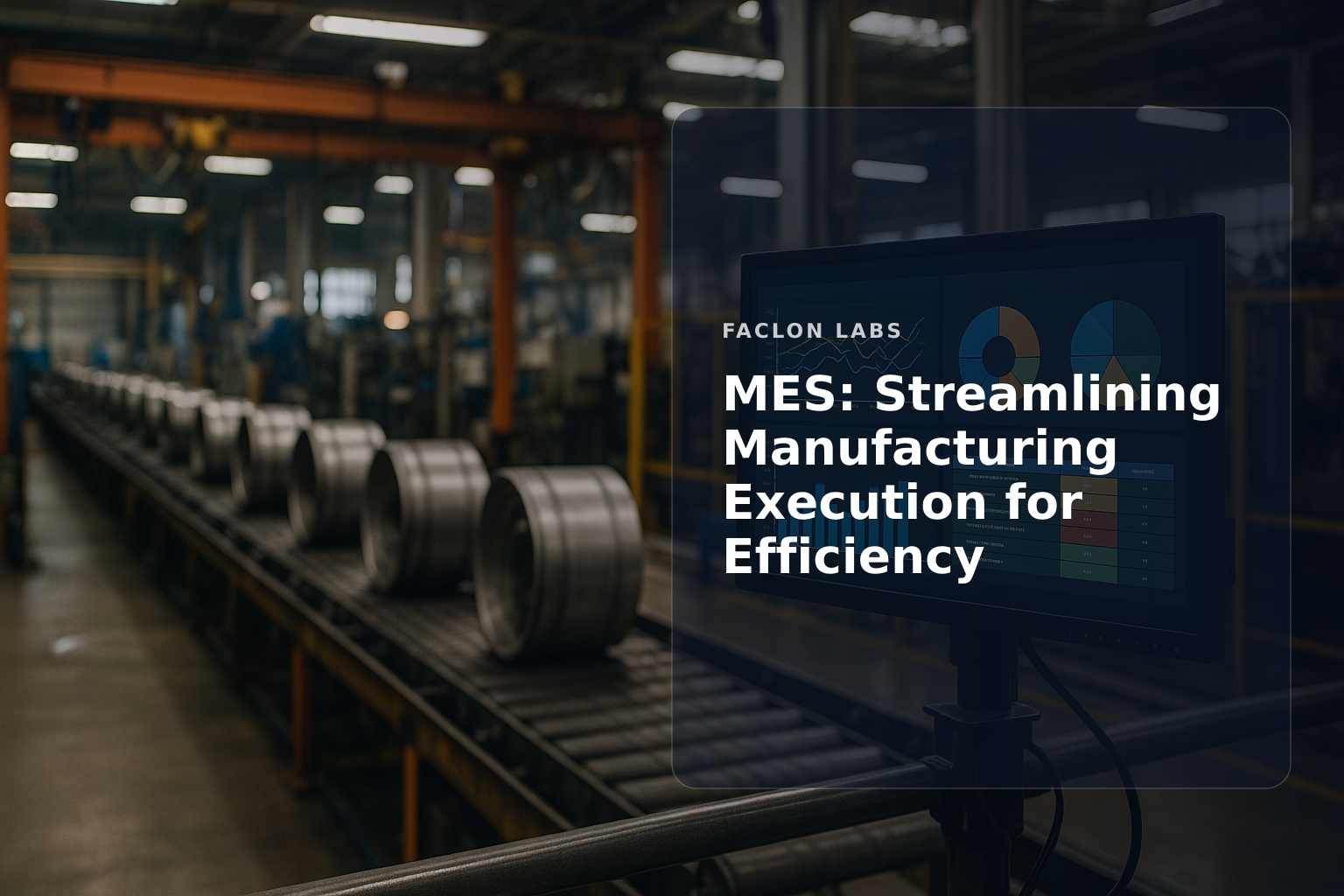
Manufacturing Execution Systems (MES) have become a cornerstone of modern industrial operations, bridging the gap between high-level planning and the realities of the factory floor. As manufacturing complexity grows, MES solutions enable plant leaders to gain real-time insights, streamline processes, and improve overall operational efficiency.
Understanding MES is essential for anyone involved in plant operations or industrial IT. This post breaks down what MES is, why it matters, the benefits it delivers, and how it fits within the broader industrial software environment.
A Manufacturing Execution System (MES) is software that manages and controls production activities on the factory floor. It acts as the critical intermediary between Enterprise Resource Planning (ERP) systems—which handle business-level planning and logistics—and the operational realities of manufacturing equipment, operators, and workflows.
MES ensures that production orders from ERP are executed accurately and efficiently, providing real-time feedback on progress, quality, and resource usage.
At its core, MES is designed to:
Typical MES components include:
MES systems provide the operational foundation for manufacturing plants to move beyond manual tracking and disconnected systems. They enable visibility, control, and agility — essential for responding to changing demand, maintaining quality standards, and improving throughput.
Top Manufacturing Execution System (MES) Software Solutions
Manufacturers face persistent challenges such as production inefficiencies, quality inconsistencies, and data silos that hinder timely decision-making. MES directly addresses these by providing unified, real-time data and process control.
MES offers plant leaders and operators live insights into production status, machine health, and quality metrics. This visibility enables faster detection and resolution of issues, reducing downtime and scrap.
By standardizing and automating execution processes, MES helps manufacturers improve throughput, reduce errors, and maintain consistent product quality—key factors for staying competitive in global markets.
MES centralizes data collection and reporting, empowering managers to make informed decisions grounded in accurate, real-time information rather than guesswork or delayed reports.
Essential Tools for Data Analytics in Smart Manufacturing
| Benefit | Description |
|---|---|
| Production efficiency | Reduced cycle times and improved throughput |
| Product quality | Consistent quality with fewer defects and rework |
| Inventory management | Accurate material tracking and waste reduction |
| Regulatory compliance | Audit trails and traceability for standards adherence |
| Resource utilization | Optimal use of machines, labor, and materials |
| Responsiveness | Rapid detection and correction of production issues |
Choosing the Right Operational Software for Your Plant
MES systems convert production plans into actionable work orders, dispatching them to the shop floor and tracking their progress.
They monitor machine availability, labor assignments, and material status to optimize scheduling and reduce idle time.
Data is gathered through sensors, barcode scans, and operator inputs to provide an accurate picture of production activities.
MES integrates quality checks at critical points, capturing defects and enforcing compliance with specifications.
MES calculates key metrics like Overall Equipment Effectiveness (OEE) and downtime to identify improvement opportunities.
Complete traceability links raw materials to finished products, supporting recalls and quality investigations.
Understanding Performance Analytics for Manufacturing Operations
| System | Primary Focus | Relationship to MES |
|---|---|---|
| ERP (Enterprise Resource Planning) | Business planning, inventory, and finance | MES executes production plans created by ERP |
| SCADA (Supervisory Control and Data Acquisition) | Real-time control and monitoring of equipment | MES complements SCADA by managing workflows and data |
| MOM (Manufacturing Operations Management) | Broader manufacturing management including MES and related systems | MES is a key component within MOM |
MES fills the critical role of orchestrating production execution, complementing ERP’s planning and SCADA’s control functions. It is often considered a core part of the broader Manufacturing Operations Management (MOM) framework.
Choosing the Right Operational Software for Your Plant
Begin by evaluating existing workflows, pain points, and data gaps on the shop floor to define MES requirements aligned with business goals.
Look for solutions that offer:
A phased rollout—starting with critical production lines or functions—reduces risk and enables iterative learning.
MES success depends on seamless integration with existing IT and OT systems to ensure data consistency and operational continuity.
Choosing the Right Operational Software for Your Plant
Understanding MES manufacturing execution is the first step toward improving your plant’s operational efficiency. If you’re considering MES adoption or want to deepen your knowledge, explore how MES fits into your broader industrial technology strategy and how it can deliver tangible ROI for your operations.
The main purpose of a Manufacturing Execution System (MES) is to monitor, manage, and optimize work-in-process on the factory floor. It provides real-time data and control over production activities, ensuring efficient execution, quality control, and traceability from raw materials to finished goods.
MES improves manufacturing efficiency by providing real-time visibility into production, enabling better resource allocation, reducing downtime through proactive monitoring, optimizing scheduling, and minimizing waste. It helps identify bottlenecks and provides data for continuous process improvement.
While both are crucial, an MES (Manufacturing Execution System) focuses on real-time control and execution of production processes on the shop floor, managing operations minute-by-minute. An ERP (Enterprise Resource Planning) system operates at a higher, strategic level, managing business processes like finance, HR, and supply chain over longer time horizons. MES feeds critical production data to ERP for holistic business planning.
Yes, a robust MES is designed to integrate with various existing factory systems, including ERP, SCADA, PLC, and other automation solutions. This integration creates a unified data flow, breaking down silos and providing a comprehensive view of operations from the enterprise level down to individual machines.