Join Our Lunch & Learn: How Agentic AI Will Transform Industrial Operations | Register Now →
.svg)
June 29, 2026
5 Mins
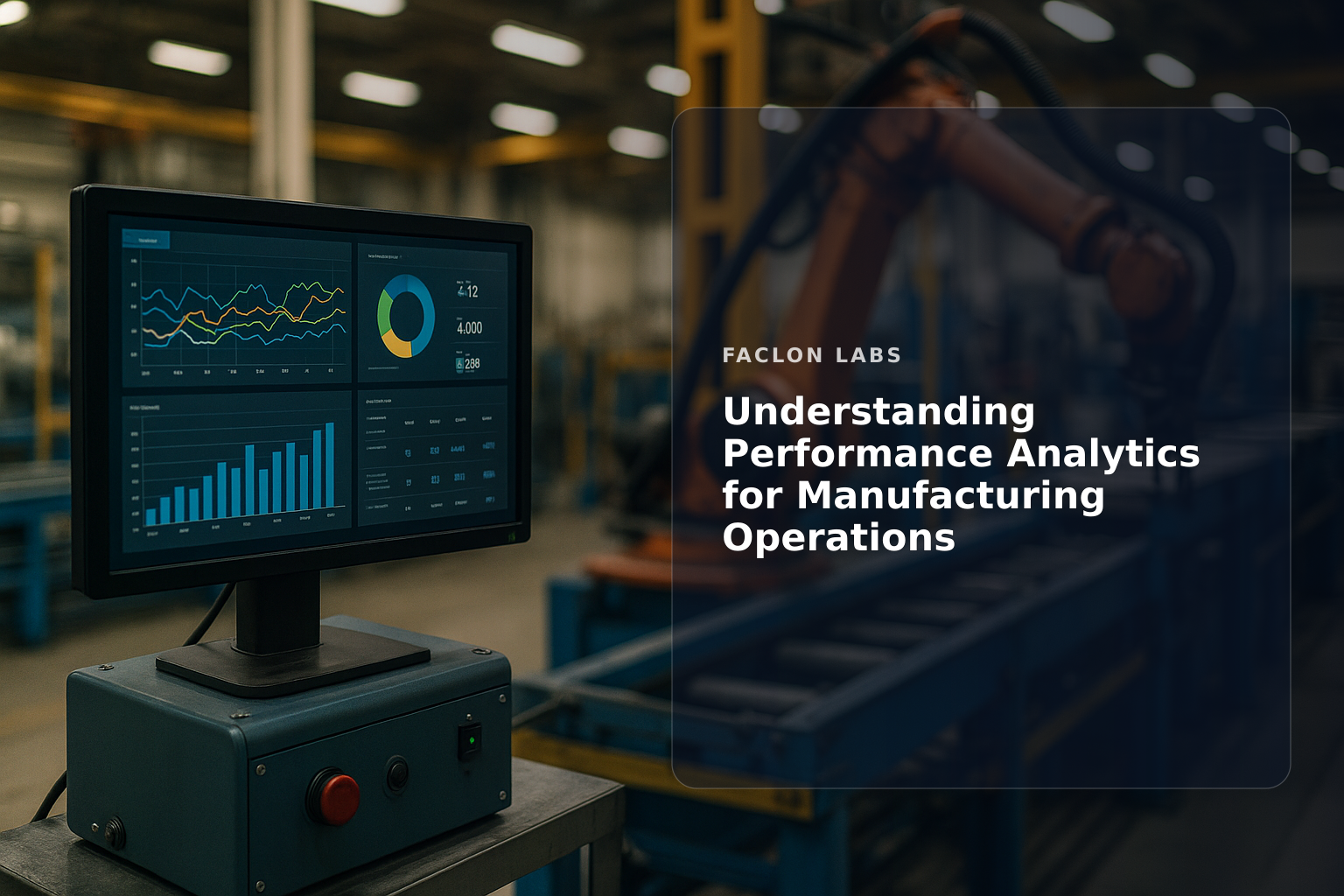
Performance analytics is becoming foundational for manufacturing operations looking to optimize productivity and maintain competitiveness. Unlike traditional reporting, it emphasizes continuous data-driven decision-making by leveraging real-time operational data. This approach helps plant leaders move from reactive problem-solving to proactive performance management.
Understanding the core concepts, benefits, and implementation steps of performance analytics empowers manufacturers to better align their technology investments with measurable outcomes such as improved OEE and reduced operational costs. Below, we explore what performance analytics entails, why it matters, and how to effectively deploy it in manufacturing environments.
Performance analytics is more than just generating reports. It is a systematic process of collecting, analyzing, and visualizing data specifically related to manufacturing operations. This data-driven approach uncovers patterns and insights that help optimize production processes and resource utilization.
At its core, performance analytics integrates data collection from multiple sources, applies analytical methods to interpret this data, and presents findings through intuitive dashboards. This enables operational teams to monitor key metrics continuously and make informed decisions quickly.
While traditional BI often focuses on historical financial or sales data, performance analytics in manufacturing prioritizes operational data such as machine status, production rates, and quality metrics. It delivers near real-time insights critical for managing shop-floor activities.
Manufacturers rely on performance analytics to track live production conditions, enabling rapid identification of inefficiencies or deviations from targets. This immediacy supports timely interventions that minimize downtime and waste.
Performance analytics highlights where processes slow down or resources are underutilized. Detecting these bottlenecks early allows manufacturers to adjust workflows or maintenance schedules proactively.
By providing a factual basis for evaluating process changes, performance analytics supports ongoing efforts to refine operations. It quantifies improvements and helps prioritize initiatives based on impact.
Rather than waiting for problems to escalate, performance analytics enables operators and managers to anticipate issues through trend analysis and predictive insights, reducing unplanned downtime.
Key manufacturing goals such as overall equipment effectiveness (OEE) improve as performance analytics reveals losses in availability, performance, and quality. This leads to better asset management and product consistency.
Optimizing production efficiency and reducing defects directly lowers costs. Enhanced visibility into energy use and waste further contributes to operational savings and higher profit margins.
Performance analytics systems ingest data from industrial Internet of Things (IIoT) sensors, Manufacturing Execution Systems (MES), Enterprise Resource Planning (ERP), and Supervisory Control and Data Acquisition (SCADA) platforms. These diverse inputs provide a comprehensive operational picture.
Collected data is aggregated and stored in centralized warehouses or cloud platforms, ensuring it is accessible for analysis and historical comparison.
Performance analytics employs several analytical approaches:
User-friendly dashboards display KPIs and trends in real time, enabling quick interpretation and decision-making by plant personnel.
Seamless integration ensures performance analytics complements existing systems, avoiding data silos and enabling end-to-end visibility Generative AI Platforms: Capabilities, Applications, and Selection for Industrial AI.
Performance analytics focuses on several key performance indicators critical to manufacturing success:
| KPI | Description |
|---|---|
| Overall Equipment Effectiveness (OEE) | Measures availability, performance, and quality combined |
| Mean Time Between Failures (MTBF) | Average operating time between equipment failures |
| Mean Time To Repair (MTTR) | Average time required to repair equipment |
| Production throughput | Quantity of products produced per time unit |
| Cycle time | Time taken to complete one production cycle |
| Quality metrics | Defect rates, first pass yield, and scrap rates |
| Energy consumption | Amount of energy used during production |
| Inventory turns | Frequency of inventory replacement |
| Lead times | Time from order to delivery |
Tracking these KPIs helps manufacturers pinpoint areas for improvement and measure the impact of changes.
Start by specifying what operational challenges or goals the analytics should address, such as reducing downtime or improving quality.
Determine which machines, processes, and systems generate the most relevant data for your objectives.
Select analytics tools and platforms that support your data volume, integration needs, and visualization requirements.
Design dashboards focused on actionable insights tailored to different user roles, from operators to executives.
Encourage staff training and leadership support to ensure analytics insights translate into operational improvements What is Terminal 4.0 and Its Impact on Industry?.
Ensure data accuracy and consistency by validating sources and establishing robust integration pipelines.
Provide comprehensive training and demonstrate clear benefits to encourage widespread use of analytics tools.
Pilot analytics initiatives on critical processes before expanding across the plant to manage risk and build confidence.
Prioritize insights that lead to concrete actions rather than overwhelming users with raw data.
Leadership support and collaboration across departments are essential for sustained analytics success Generative AI Platforms: Capabilities, Applications, and Selection for Industrial AI.
Performance analytics offers manufacturing leaders a practical approach to enhancing operational performance through data-driven insights. Begin by defining your key objectives and identifying critical data sources, then choose appropriate tools to deliver timely, actionable information. This disciplined approach will help you reduce downtime, improve quality, and increase profitability over time.
The main purpose of performance analytics is to collect, analyze, and visualize data to gain deep insights into an organization's performance, identify trends, predict future outcomes, and prescribe actions to optimize processes and achieve strategic goals more effectively. In manufacturing, this translates to improving operational efficiency and profitability.
Traditional reporting typically provides a static snapshot of past performance (what happened), while performance analytics goes further by explaining why things happened, predicting what might happen next, and even recommending what actions to take. It involves more sophisticated data models, predictive algorithms, and interactive dashboards for deeper insights.
Examples include using sensor data to predict machine failures before they occur (predictive maintenance), analyzing production line data to identify bottlenecks and optimize throughput, monitoring energy consumption patterns to reduce waste, and tracking quality metrics to pinpoint root causes of defects and improve product consistency.
Absolutely. While often associated with large enterprises, modern, accessible performance analytics platforms and IIoT solutions are increasingly available for SMEs. The benefits of improved efficiency, reduced costs, and better decision-making are equally, if not more, critical for smaller operations looking to compete effectively.