Join Our Lunch & Learn: How Agentic AI Will Transform Industrial Operations | Register Now →
.svg)
July 3, 2026
5 Mins
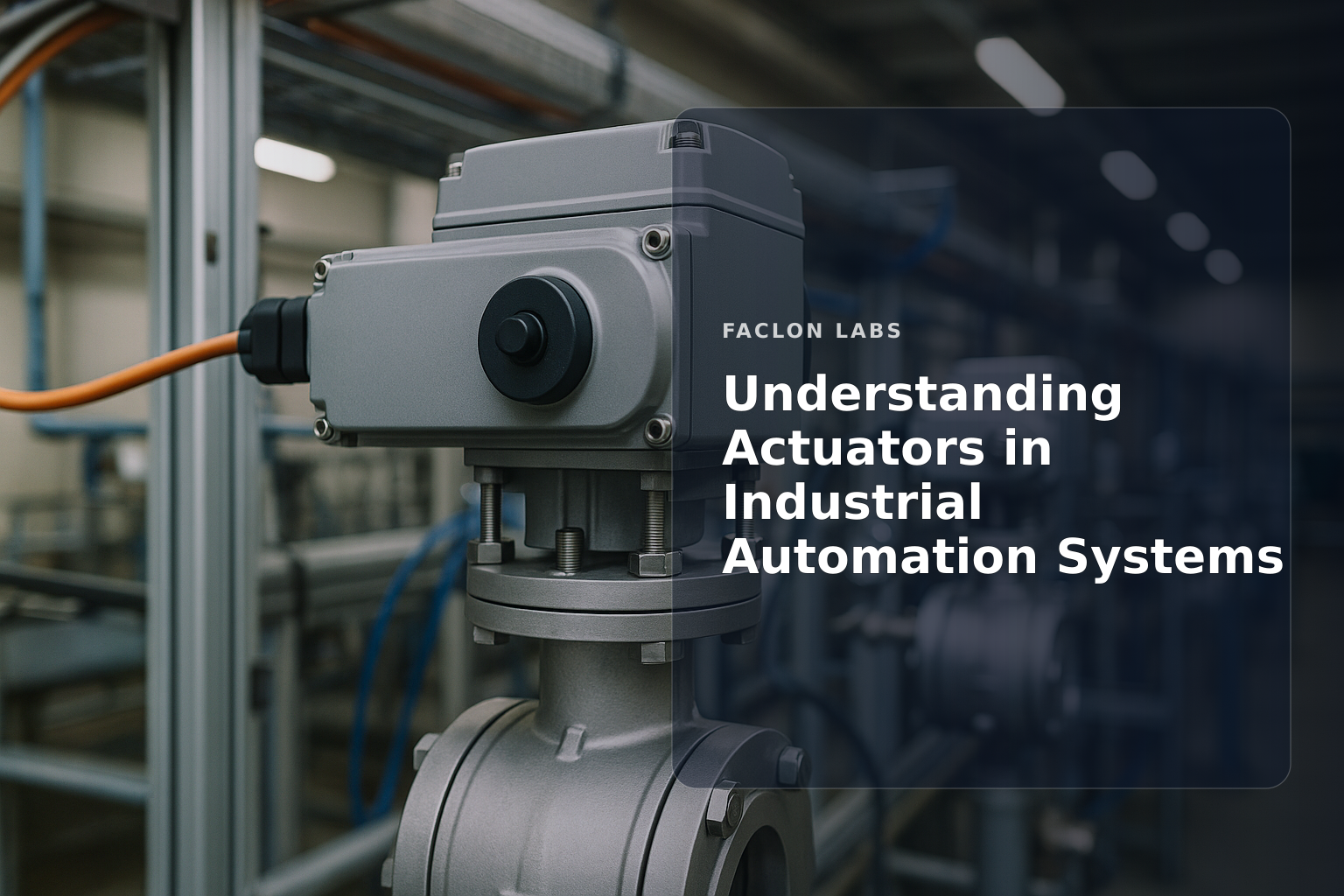
Industrial automation relies heavily on components that can translate control signals into physical action. Among these, actuators play a crucial role by converting various forms of energy into mechanical motion. Understanding what an actuator actuator is and how it functions is foundational for plant operations leaders aiming to optimize process control, improve safety, and enable predictive maintenance.
This article breaks down the concept of actuators, explores their types and working principles, and highlights their applications and importance in industrial settings. It is designed for those new to the topic, providing a clear, practical overview without technical jargon overload.
An actuator actuator is a mechanical device that receives energy input—commonly electrical, pneumatic (compressed air), or hydraulic (fluid pressure)—and converts it into physical motion. This motion can take the form of linear displacement, rotary movement, or force application.
The primary function of an actuator actuator is to transform energy into mechanical output that moves or controls a mechanism or system component. It acts as the “muscle” in automated systems, enabling machines to perform tasks such as opening valves, moving robotic arms, or adjusting conveyor belts.
Without actuators, control signals from sensors or programmable logic controllers (PLCs) would remain abstract commands with no physical effect. Actuators enable automated systems to interact with the physical world, making them indispensable for process control, safety interlocks, and efficient operation.
Electric actuators use electric motors to generate motion. They offer precise control over speed and position and are commonly found in applications requiring fine adjustments or remote operation.
Pneumatic actuators utilize compressed air to produce motion. They are valued for their simplicity, speed, and reliability in environments where electrical sparks must be avoided.
Hydraulic actuators operate using pressurized fluid to deliver high force and torque, making them suitable for heavy-duty industrial tasks such as lifting or pressing.
| Actuator Type | Energy Source | Typical Applications | Advantages | Limitations |
|---|---|---|---|---|
| Electric | Electricity | Positioning, robotics, valve control | Precise control, easy integration | Limited force, sensitive to environment |
| Pneumatic | Compressed air | Valve automation, packaging | Fast response, explosion-proof | Requires air supply, less precise |
| Hydraulic | Pressurized fluid | Heavy machinery, presses | High force, robust | Complex maintenance, potential leaks |
This table helps clarify which actuator type suits specific industrial needs based on operational demands and environmental factors.
Actuators receive energy from electrical circuits, compressed air lines, or hydraulic pumps. Internally, this energy is converted through motors, pistons, or gears into mechanical motion.
The mechanical output varies by actuator design but generally includes force application (linear actuators), torque generation (rotary actuators), or precise displacement control.
Modern actuators often incorporate sensors and feedback mechanisms to enable closed-loop control. This integration allows systems to monitor actuator position or force and adjust commands dynamically for accuracy and safety.
Actuators are widely used to open, close, or modulate valves controlling the flow of liquids and gases. This is critical in chemical plants, oil and gas pipelines, and water treatment facilities.
In automated manufacturing, actuators drive robotic arms, conveyor belts, and pick-and-place systems, enabling precise and repeatable movements.
Actuators adjust machine components’ positions for cutting, welding, or assembly tasks, ensuring consistent product quality and process efficiency.
Proper actuator selection and maintenance directly affect operational uptime and safety by ensuring reliable motion control and preventing unexpected failures.
Actuator condition monitoring through sensors supports predictive maintenance. Detecting wear or performance degradation early reduces downtime and maintenance costs.
Choosing the right actuator type and size for an application optimizes energy use, extends equipment life, and maximizes return on investment by minimizing unscheduled stops and repairs Benefits of Automated Maintenance Services for Industrial Plants.
An actuator produces physical motion or force based on input energy, while a sensor detects and measures physical parameters like position, temperature, or pressure, sending signals back to control systems.
Pneumatic actuators are generally faster and better suited for hazardous environments due to their non-electrical operation, but electric actuators provide more precise control and easier integration with digital systems.
Yes, many actuators are designed for retrofit applications, allowing older equipment to be upgraded with modern automation capabilities without complete replacement Implementing Total Productive Maintenance for Industrial Assets.
Electric actuators require motor and wiring inspections; pneumatic actuators need air supply and seal checks; hydraulic actuators demand fluid level monitoring and leak inspections. Regular maintenance ensures reliable performance and longevity.
Understanding actuators is fundamental for plant operations leaders seeking to improve automation outcomes. For deeper insights on actuator integration and predictive maintenance, explore our resources on What is Terminal 4.0 and Its Impact on Industry? and Understanding Energy Consumption in Industrial Plants.
An actuator actuator is a device that converts energy—electrical, pneumatic, or hydraulic—into mechanical motion to move or control a system component, such as a valve or robotic arm, enabling automated industrial processes.
The primary actuator types are electric actuators (using motors), pneumatic actuators (powered by compressed air), and hydraulic actuators (using fluid pressure), each suited for specific force, speed, and environmental requirements.
Actuators equipped with sensors provide real-time data on position, force, and performance, enabling early detection of wear or faults, reducing unexpected downtime and maintenance costs.
Yes, modern actuators often include digital interfaces or sensors that allow integration with Industrial Internet of Things (IIoT) platforms for monitoring, control, and analytics.
Maintenance varies by type but generally includes lubrication, inspection for wear or leaks, calibration checks, and ensuring electrical connections or pneumatic/hydraulic lines are intact.