Join Our Lunch & Learn: How Agentic AI Will Transform Industrial Operations | Register Now →
.svg)
July 1, 2026
5 Mins
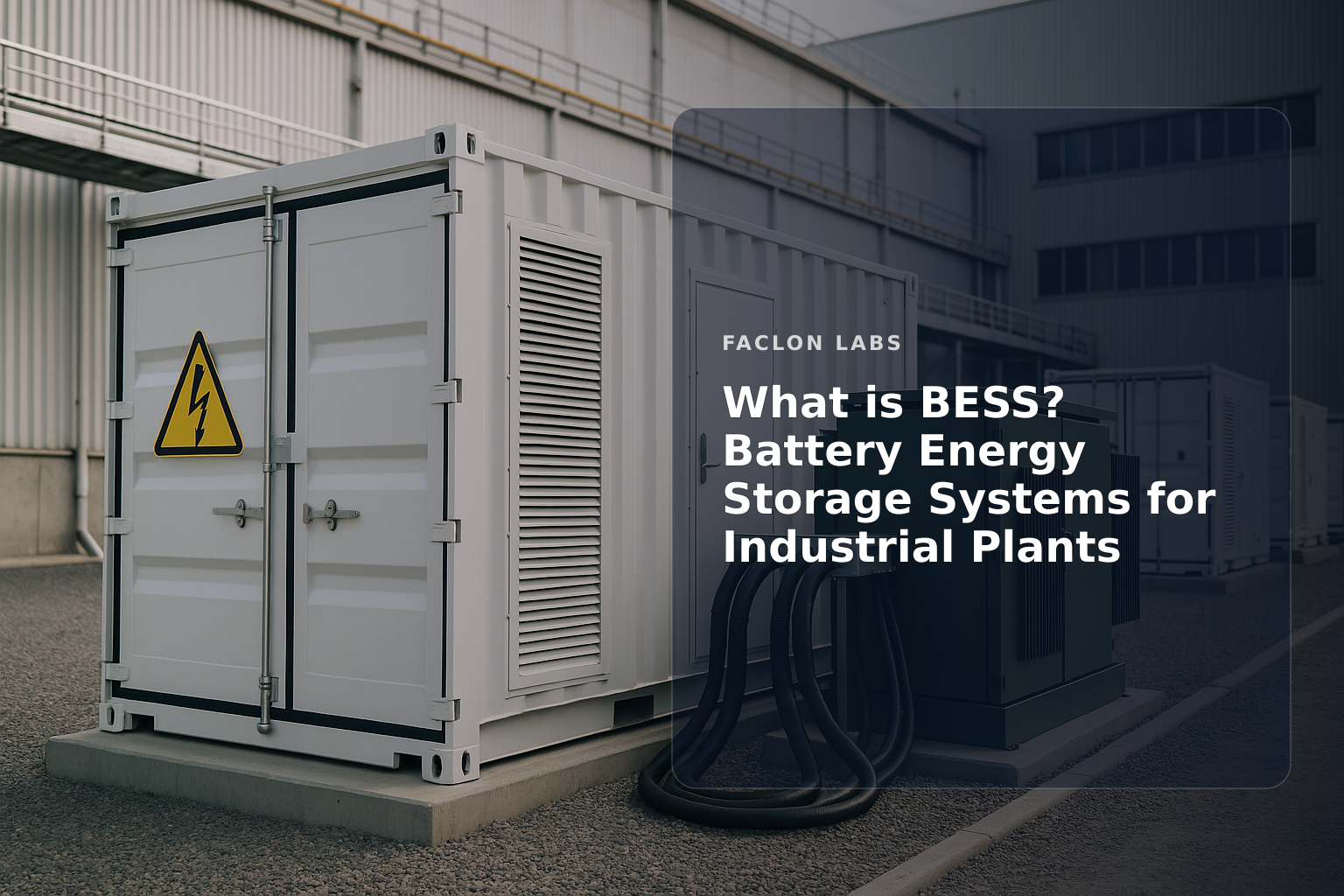
Battery Energy Storage Systems (BESS) are becoming essential components in modern industrial energy management. As industrial plants face increasing energy costs, grid instability, and the integration of renewable energy, understanding what BESS entails and how it functions is critical for plant operations leaders. This technology not only stores energy but also optimizes its use, improving operational resilience and sustainability.
A Battery Energy Storage System (BESS) refers to a complete setup that stores electrical energy in batteries and manages its flow through various supporting systems. Unlike standalone batteries, a BESS integrates multiple components to ensure energy is stored safely, converted efficiently, and dispatched intelligently according to demand.
In industrial plants, BESS primarily serves to balance energy supply and demand, enhance power quality, and provide backup power. It enables facilities to store excess energy during low-demand periods and deploy it during peak times, reducing dependency on the grid and lowering energy costs.
While ESS is a broad category including all types of energy storage, BESS specifically uses batteries for energy storage, offering faster response times and modular scalability compared to mechanical or thermal storage options What Are Intelligent Motion Systems in Industry 4.0?.
Industrial plants face fluctuating energy prices, grid outages, and power quality issues. BESS helps mitigate these challenges by providing a reliable energy buffer, reducing exposure to price spikes, and ensuring continuous operations during grid disturbances.
Renewables introduce variability to power supply. BESS smooths out this intermittency by storing surplus renewable energy when available and releasing it when generation dips, making renewable integration more practical and cost-effective.
BESS can rapidly respond to grid frequency and voltage fluctuations, protecting sensitive industrial equipment from damage and downtime. This sub-second response capability is vital for process stability in manufacturing and heavy industry [source: Back to basics: A technical guide to BESS implementation].
By discharging stored energy during peak demand periods, BESS reduces the facility’s peak load, lowering demand charges on electricity bills. This strategy improves cost efficiency without compromising operational capacity.
BESS charges by drawing electricity from the grid or onsite generation during off-peak hours or excess renewable production. When energy demand rises, it discharges stored power back to the plant, converting DC battery output to AC power compatible with industrial loads.
The PCS is the interface between batteries and the plant’s electrical system. It manages voltage and frequency conversion, enabling seamless energy transfer and ensuring power quality matches operational requirements.
The BMS continuously monitors battery temperature, voltage, and state of charge. It prevents unsafe conditions, balances cell performance, and extends battery life, which is critical given the high capital cost of battery packs.
The EMS uses real-time data and predictive algorithms to optimize when and how the BESS charges or discharges. It aligns energy usage with cost signals, grid conditions, and operational priorities, maximizing return on investment Optimizing Industrial Burner Management Systems for Efficiency.
| Benefit | Impact on Industrial Plants |
|---|---|
| Cost Savings | Lower electricity bills via peak shaving |
| Operational Resilience | Reduced downtime and equipment protection |
| Sustainability | Supports carbon reduction targets |
| Revenue Opportunities | Access to grid ancillary service markets |
BESS provides immediate backup power during outages, protecting critical processes and avoiding costly downtime.
Shifting energy use from peak to off-peak periods reduces energy expenses without affecting production schedules.
BESS enables industrial sites to operate microgrids, combining onsite generation and storage for enhanced energy autonomy and resilience.
As electric vehicle fleets grow, BESS helps manage charging loads, preventing grid overload and optimizing energy use.
ROI depends on factors like energy price volatility, demand charges, and available incentives. Strategic sizing and intelligent EMS control are key to maximizing value over the system’s lifecycle [source: Commercial & Industrial Energy Storage Buyer Guide].
Understanding BESS is essential for industrial plant leaders aiming to optimize energy use and improve operational resilience. To explore how BESS can fit your facility’s energy strategy, consider assessing your current energy profile and consulting with experts specializing in industrial energy storage solutions.
A BESS (Battery Energy Storage System) is a system that stores electrical energy in batteries and releases it when needed. Countries are rapidly adopting BESS due to the increasing integration of intermittent renewable energy sources (like solar and wind), the need for grid stabilization, and the desire to reduce reliance on fossil fuels. BESS provides flexibility, enhances energy security, and helps manage peak demand efficiently.
ESS (Energy Storage System) is a broad term encompassing any technology that stores energy, including mechanical (e.g., pumped hydro), thermal, chemical, and electrical storage. BESS (Battery Energy Storage System) is a specific type of ESS that exclusively uses batteries to store electrical energy. While all BESS are ESS, not all ESS are BESS.
A typical BESS comprises several key components: the battery modules (which store the energy), a Power Conversion System (PCS) to convert power between AC and DC, a Battery Management System (BMS) to monitor and protect the batteries, and an Energy Management System (EMS) for overall control, optimization, and integration with the grid or plant operations.
BESS helps industrial plants reduce energy costs primarily through peak shaving and load shifting. Plants can charge the BESS during off-peak hours when electricity prices are lower and discharge it during peak demand periods, avoiding expensive demand charges. This strategy optimizes energy procurement and reduces overall operational expenditures.