Join Our Lunch & Learn: How Agentic AI Will Transform Industrial Operations | Register Now →
.svg)
July 6, 2026
4 Mins
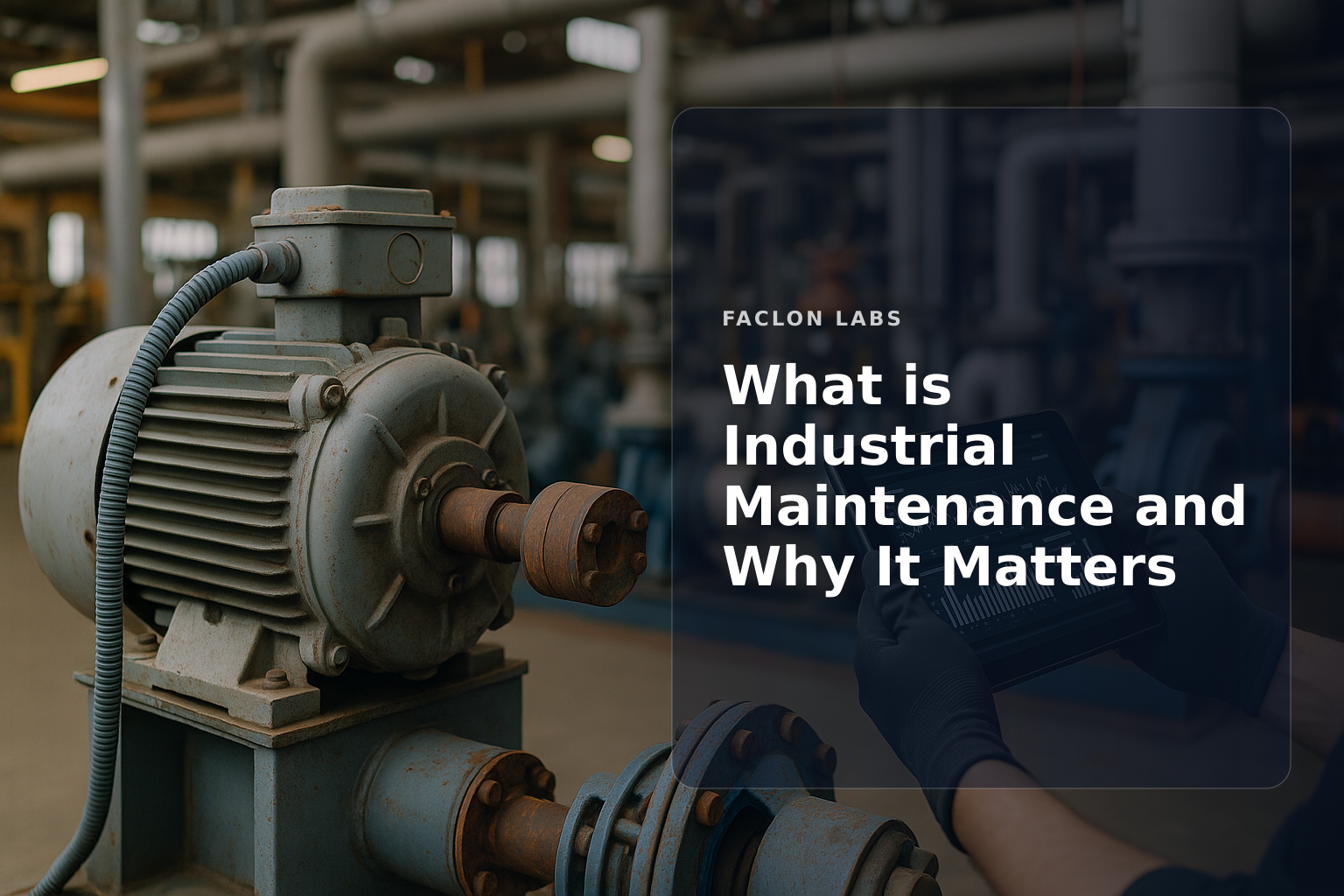
Industrial maintenance is a foundational discipline in manufacturing and industrial operations, essential for keeping complex machinery and infrastructure running smoothly. For plant operations leaders new to the concept, understanding what industrial maintenance entails and why it matters is critical to achieving consistent production quality, safety compliance, and cost control.
This post breaks down the core components of industrial maintenance, why it’s vital for plant operations, and how emerging technologies are reshaping maintenance practices. Whether you’re exploring the field or looking to optimize your plant’s maintenance strategy, this overview provides a clear, practical foundation.
Industrial maintenance involves more than fixing broken machines. It is a comprehensive approach to maintaining all physical assets in an industrial environment—machinery, electrical systems, instrumentation, and the facility itself—to ensure they operate reliably and safely over time.
The scope of industrial maintenance includes:
The primary goals of industrial maintenance are to maximize equipment uptime, ensure workplace safety, maintain product quality, and control operational costs by preventing unexpected failures and optimizing asset performance.
Unplanned downtime can halt production lines, causing significant revenue loss. Regular maintenance reduces the risk of sudden equipment failures, keeping operations running smoothly.
Proper maintenance delays wear and tear, extending the useful life of expensive machinery and infrastructure, which directly improves return on investment.
Equipment in good condition produces consistent, high-quality output. Maintenance helps avoid defects caused by malfunctioning machinery.
Regular inspections and repairs reduce hazards, helping plants comply with safety regulations and protect employees.
By preventing breakdowns and improving efficiency, maintenance lowers repair costs, energy consumption, and waste.
Industrial maintenance can be categorized into four main domains:
| Maintenance Domain | Typical Components and Focus Areas |
|---|---|
| Mechanical Maintenance | Gears, bearings, hydraulics, pumps, conveyors |
| Electrical Maintenance | Wiring, motors, circuit breakers, control systems |
| Instrumentation & Control | Sensors, programmable logic controllers (PLCs), automation equipment |
| Facility Maintenance | Structural integrity, HVAC, plumbing, utilities |
Each pillar requires specialized knowledge and coordinated efforts to maintain overall plant health.
Fixing equipment only after it breaks down. This approach often leads to unexpected downtime and higher repair costs.
Scheduled inspections and servicing based on time or usage intervals to prevent failures before they occur.
Using sensor data and analytics to forecast when equipment will fail, allowing maintenance to be performed just in time. This reduces unnecessary work and downtime.
Optimizing maintenance tasks by assessing risks and focusing efforts where they will have the greatest impact on reliability and safety Implementing Total Productive Maintenance for Industrial Assets.
Internet of Things (IoT) devices collect real-time data from equipment, while Artificial Intelligence (AI) analyzes this data to detect patterns and predict failures. This shift enables more precise and efficient maintenance scheduling.
Data-driven maintenance improves decision-making by providing actionable insights on asset health, failure modes, and resource allocation, leading to better uptime and cost control.
Modern plants are adopting smart maintenance platforms that integrate sensors, analytics, and automation to create connected ecosystems for proactive asset management Understanding Energy Consumption in Industrial Plants.
Technicians regularly inspect equipment, diagnose issues using diagnostic tools, perform repairs, and document maintenance activities to ensure equipment reliability.
They need a broad skill set covering mechanical systems, electrical circuits, and instrumentation diagnostics to handle diverse maintenance tasks effectively.
Industrial maintenance technicians can advance into roles such as maintenance supervisors, reliability engineers, or automation specialists as the industry increasingly integrates advanced technologies Benefits of Automated Maintenance Services for Industrial Plants.
Industrial maintenance is essential for sustainable plant performance and competitiveness. Understanding its scope, strategies, and technological advancements helps operations leaders make informed decisions to improve reliability and reduce costs. To explore how industrial AI and IIoT platforms can support your maintenance goals, reach out to Faclon Labs for expert guidance.
The primary goal of industrial maintenance is to ensure the continuous, safe, and efficient operation of industrial equipment and facilities. This involves minimizing downtime, extending asset lifespan, maintaining product quality, ensuring worker safety, and optimizing overall operational costs.
The main types of industrial maintenance include Reactive (corrective) maintenance, which addresses failures after they occur; Preventive maintenance, which involves scheduled inspections and servicing; and Predictive maintenance, which uses data and analytics to forecast potential equipment failures before they happen, allowing for timely intervention.
Industrial maintenance is crucial for profitability because it directly impacts operational efficiency and cost. Effective maintenance reduces unexpected breakdowns and associated production losses, extends the life of expensive equipment, minimizes repair costs, prevents quality issues, and enhances safety, all of which contribute to a healthier bottom line.
An industrial maintenance technician typically needs a diverse skill set, including strong mechanical aptitude, electrical knowledge, troubleshooting skills, familiarity with hydraulic and pneumatic systems, basic welding and fabrication, and an understanding of automation and control systems. Problem-solving abilities and attention to detail are also critical.