Join Our Lunch & Learn: How Agentic AI Will Transform Industrial Operations | Register Now →
.svg)
September 14, 2026
5 Mins
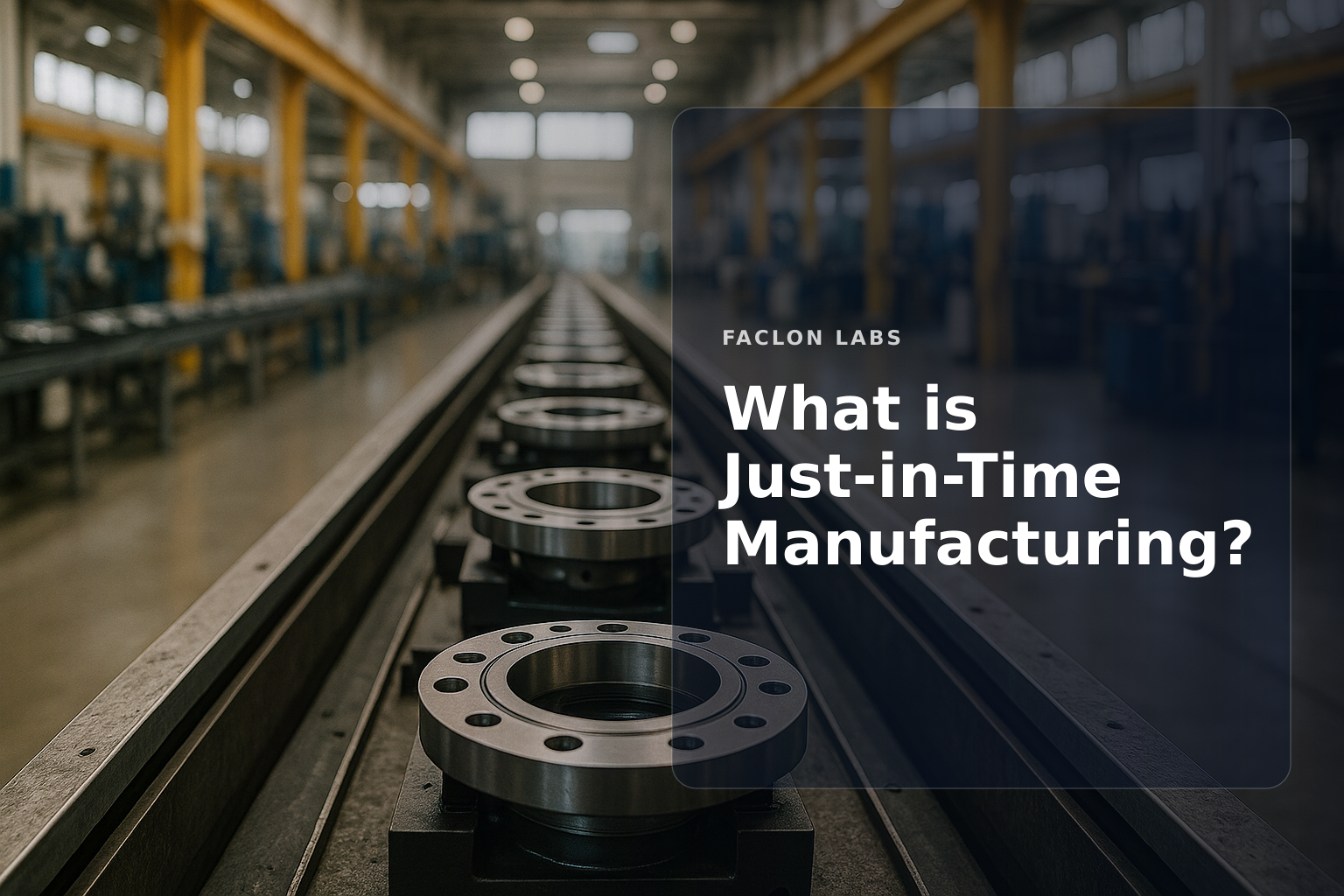
Just-in-time manufacturing (JIT) reshaped how factories manage production and inventory by tightly aligning manufacturing activities with customer demand. Instead of stockpiling raw materials or finished goods, JIT emphasizes producing only what is needed at the moment it is needed. This approach reduces waste, minimizes inventory costs, and improves operational responsiveness. Understanding the core principles and practical implications of JIT provides plant operations leaders with a foundation to evaluate its fit for their industrial environments.
At its core, JIT manufacturing means producing goods exactly when they are required by the next step in the production process or by the customer, and only in the quantities demanded. This minimizes excess inventory and reduces storage costs, aligning production tightly with real-time demand signals.
JIT originated in the 1970s as a key pillar of the Toyota Production System (TPS). Toyota pioneered this philosophy to improve manufacturing efficiency by eliminating waste and improving flow. It became a global benchmark for lean manufacturing, influencing industries worldwide.
JIT targets three main goals:
Traditional manufacturing often uses a "push" system, producing goods based on forecasts and pushing inventory downstream. JIT uses a "pull" system where production is triggered by actual demand signals from customers or downstream processes, reducing overproduction risk.
JIT drastically reduces inventories at all stages: raw materials, work-in-progress (WIP), and finished goods. This lowers carrying costs and frees up working capital but requires precise coordination with suppliers and production schedules.
For JIT to work, production processes must be stable and predictable. Variability in cycle times or quality can disrupt flow and cause shortages. Thus, standardization and continuous improvement are critical foundations.
| Benefit | Description | Impact on Operations |
|---|---|---|
| Inventory reduction | Minimize raw materials, WIP, finished goods | Lower costs, less storage needed |
| Waste elimination | Reduce overproduction, defects, waiting | Leaner processes, higher efficiency |
| Quality improvement | Detect defects at source | Fewer returns, higher customer satisfaction |
| Supplier integration | Just-in-time deliveries | More reliable supply chain |
| Cash flow enhancement | Less capital tied in inventory | Improved financial flexibility |
JIT depends on suppliers delivering materials exactly when needed. Supply chain disruptions or delays can halt production, so dependable logistics and vendor partnerships are essential.
Unexpected demand spikes or supply interruptions risk stockouts. JIT requires contingency planning and agile response mechanisms to mitigate these risks.
Since JIT minimizes buffers, any quality defect can immediately impact production. Rigorous quality management and standardized processes are prerequisites.
Implementing JIT often demands cultural change towards continuous improvement and employee empowerment. Training and engagement are crucial to sustain JIT practices.
Industrial AI and IIoT provide continuous, real-time visibility into production status, inventory levels, and supply chain conditions. This data enables more accurate synchronization of production with demand.
Advanced analytics forecast demand trends and optimize inventory replenishment, reducing the risk of stockouts or overstock.
Sensors and AI-driven monitoring detect anomalies early, supporting quality-at-source and preventing disruptions.
Digital twins simulate production flows and supply chain scenarios, allowing fine-tuning of JIT systems before implementation.
Evaluate your plant’s process stability, supplier reliability, and cultural readiness. JIT suits operations with predictable demand and mature quality systems.
Start with pilot lines or specific product families to validate JIT benefits and identify challenges before scaling.
Track key metrics such as inventory levels, lead times, defect rates, and cash flow to quantify JIT impact and guide ongoing optimization.
If you’re considering adopting JIT manufacturing, start by evaluating your current processes and supply chain reliability. Pilot small-scale implementations to build experience and measure results before expanding. For industrial operations leaders, understanding how JIT integrates with modern digital tools can unlock new levels of efficiency and agility in your plant. Explore how industrial AI and IIoT can support your JIT journey today. Understanding Takt Time for Lean Manufacturing Efficiency Effective Obsolescence Planning for Industrial Assets Understanding Energy Consumption in Industrial Plants
The primary goal of Just-in-Time (JIT) manufacturing is to eliminate waste and maximize efficiency by producing goods only when they are needed and in the exact quantities required. This minimizes inventory holding costs, reduces lead times, and improves overall operational flow.
JIT inventory management offers several key benefits, including reduced inventory carrying costs, improved cash flow, minimized waste, enhanced production efficiency, better product quality due to immediate defect detection, and stronger, more integrated relationships with suppliers.
Potential drawbacks of JIT include vulnerability to supply chain disruptions (e.g., supplier delays, natural disasters), increased reliance on precise demand forecasting, and the risk of production halts if a critical component is unavailable. It requires extremely reliable suppliers and robust logistics.
Just-in-Time (JIT) is a fundamental component and core principle of Lean Manufacturing. While Lean Manufacturing is a broader philosophy focused on eliminating all forms of waste to create value, JIT specifically addresses waste related to inventory and overproduction by ensuring materials and products flow precisely when needed.