Join Our Lunch & Learn: How Agentic AI Will Transform Industrial Operations | Register Now →
.svg)
September 21, 2026
6 Mins
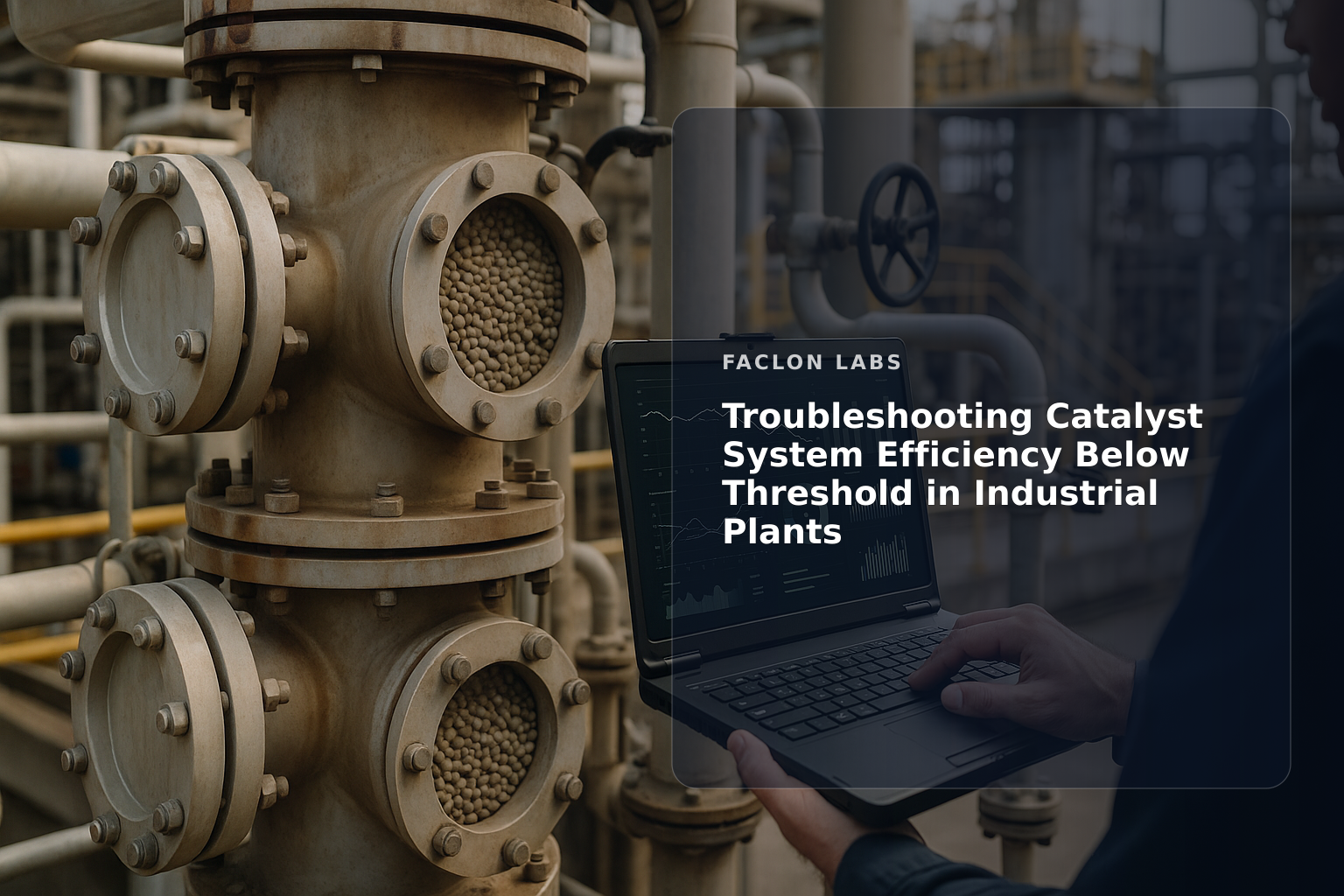
Catalytic systems play a critical role in industrial plants by converting harmful gases into less toxic substances, ensuring compliance with environmental regulations and operational efficiency. When catalyst system efficiency falls below the required threshold, it can lead to increased emissions, regulatory penalties, and reduced plant performance. Understanding the causes and troubleshooting these issues is essential for plant operations leaders aiming to maintain optimal system function and avoid costly downtime.
Catalyst system efficiency refers to the ability of a catalytic converter or catalyst bed to effectively convert pollutants such as carbon monoxide (CO), hydrocarbons (HC), and nitrogen oxides (NOx) into less harmful gases like carbon dioxide (CO2), nitrogen (N2), and water vapor (H2O). In industrial plants, this efficiency is critical for meeting emission standards and ensuring environmental compliance.
‘Below threshold’ means the catalyst’s performance has dropped beneath a predefined efficiency level set by regulatory or manufacturer standards. This threshold represents the minimum acceptable conversion rate of pollutants. Falling below it signals that the catalyst is not functioning optimally, potentially allowing excessive emissions to escape.
Continuous monitoring of catalyst efficiency helps plant operators detect early signs of catalyst degradation or system faults. Timely detection allows for corrective actions that prevent environmental violations, maintain process efficiency, and reduce operational costs associated with unplanned maintenance or equipment replacement Understanding PID Control in Industrial Automation.
Several factors can cause catalyst efficiency to drop below threshold in industrial settings:
Understanding these causes helps focus troubleshooting efforts and prioritize corrective measures Implementing Gas Leak Sensors for Enhanced Industrial Safety.
The most common diagnostic trouble code (DTC) associated with catalyst efficiency issues is P0420, which stands for “Catalyst System Efficiency Below Threshold (Bank 1).” This code is triggered when the onboard computer’s Powertrain Control Module (PCM) detects that the catalyst on one side of the engine is not performing as expected. Related codes like P0430 apply to the opposite bank or different catalyst systems.
The PCM uses data from oxygen sensors placed before and after the catalyst to measure oxygen levels in exhaust gases. By comparing these readings, the system estimates how well the catalyst stores and releases oxygen — a proxy for its pollutant conversion efficiency. If the post-catalyst sensor indicates oxygen levels too similar to the pre-catalyst sensor, the PCM infers that the catalyst is not converting pollutants effectively.
It is important to differentiate whether a low efficiency reading is due to actual catalyst failure or sensor malfunction. Faulty oxygen sensors, wiring issues, or exhaust leaks can mimic catalyst inefficiency. Proper diagnosis involves testing sensor operation, checking for exhaust integrity, and analyzing performance data trends before concluding that the catalyst itself is defective [[apextechnation.com]].
Start with a visual inspection of the catalyst system and related components. Deploy IIoT-enabled sensors to log real-time data on exhaust temperature, oxygen levels, and pressure differentials. This data provides a baseline for further analysis.
Use diagnostic tools to test oxygen sensor voltage and response times. Inspect exhaust piping for leaks, cracks, or blockages that could affect sensor readings or catalyst exposure.
Review logged sensor data over time to identify patterns indicating gradual catalyst degradation or sudden faults. Trends in oxygen sensor behavior can pinpoint whether the catalyst or sensors are at fault.
If sensor and exhaust integrity tests pass, the catalyst may need direct inspection or replacement. Physical signs of damage, contamination, or clogging confirm the diagnosis.
Corrective measures may include:
| Troubleshooting Step | Purpose | Tools/Methods |
|---|---|---|
| Visual inspection | Identify obvious damage or leaks | Visual check, borescope |
| Data logging with IIoT sensors | Collect real-time system performance data | IIoT sensors, cloud analytics |
| Oxygen sensor testing | Verify sensor accuracy and responsiveness | Multimeter, OBD-II scanner |
| Exhaust system integrity check | Detect leaks or blockages | Smoke test, pressure test |
| Catalyst physical inspection | Confirm catalyst condition | Physical removal, lab analysis |
This structured approach ensures efficient root cause identification and minimizes unnecessary replacements [[ricksfreeautorepairadvice.com]].
Establish regular inspection and maintenance intervals based on operational hours and emissions data to catch issues early.
Leverage AI algorithms to analyze sensor data continuously, identifying subtle deviations before they trigger efficiency drops.
Maintain proper fuel composition and combustion settings to reduce catalyst poisoning and maximize conversion efficiency.
Ensure oxygen sensors and other measurement devices are calibrated and replaced as per manufacturer guidelines to maintain diagnostic accuracy Benefits of Automated Maintenance Services for Industrial Plants.
The P0420 code signals that the catalyst system efficiency is below the threshold set by the vehicle or plant’s control system. Common causes include:
Diagnosing the root cause requires sensor testing, exhaust inspection, and catalyst performance analysis to determine whether the catalyst or sensors need replacement [[obdguides.com]].
Maintaining catalyst system efficiency is essential for industrial plants to meet emissions standards and operate smoothly. Implementing systematic troubleshooting and preventive strategies can minimize downtime and optimize performance. For deeper insights on leveraging IIoT and AI in emissions monitoring, explore our posts on Cloud Applications for Business: Driving Digital Transformation and Implementing Total Productive Maintenance for Industrial Assets.
It means the catalytic converter is not performing at the expected efficiency level, reducing its ability to convert harmful emissions effectively.
The P0420 code is typically caused by a failing catalytic converter, faulty oxygen sensors, exhaust leaks, or issues with the fuel mixture affecting catalyst performance.
Start with sensor diagnostics and exhaust system checks, analyze catalyst performance data, inspect the converter for damage, and apply corrective measures such as sensor replacement or catalyst repair.
Yes, regular monitoring, sensor calibration, fuel optimization, and AI-driven analytics can help detect early signs of catalyst inefficiency and prevent failures.