Join Our Lunch & Learn: How Agentic AI Will Transform Industrial Operations | Register Now →
.svg)
August 11, 2026
5 Mins
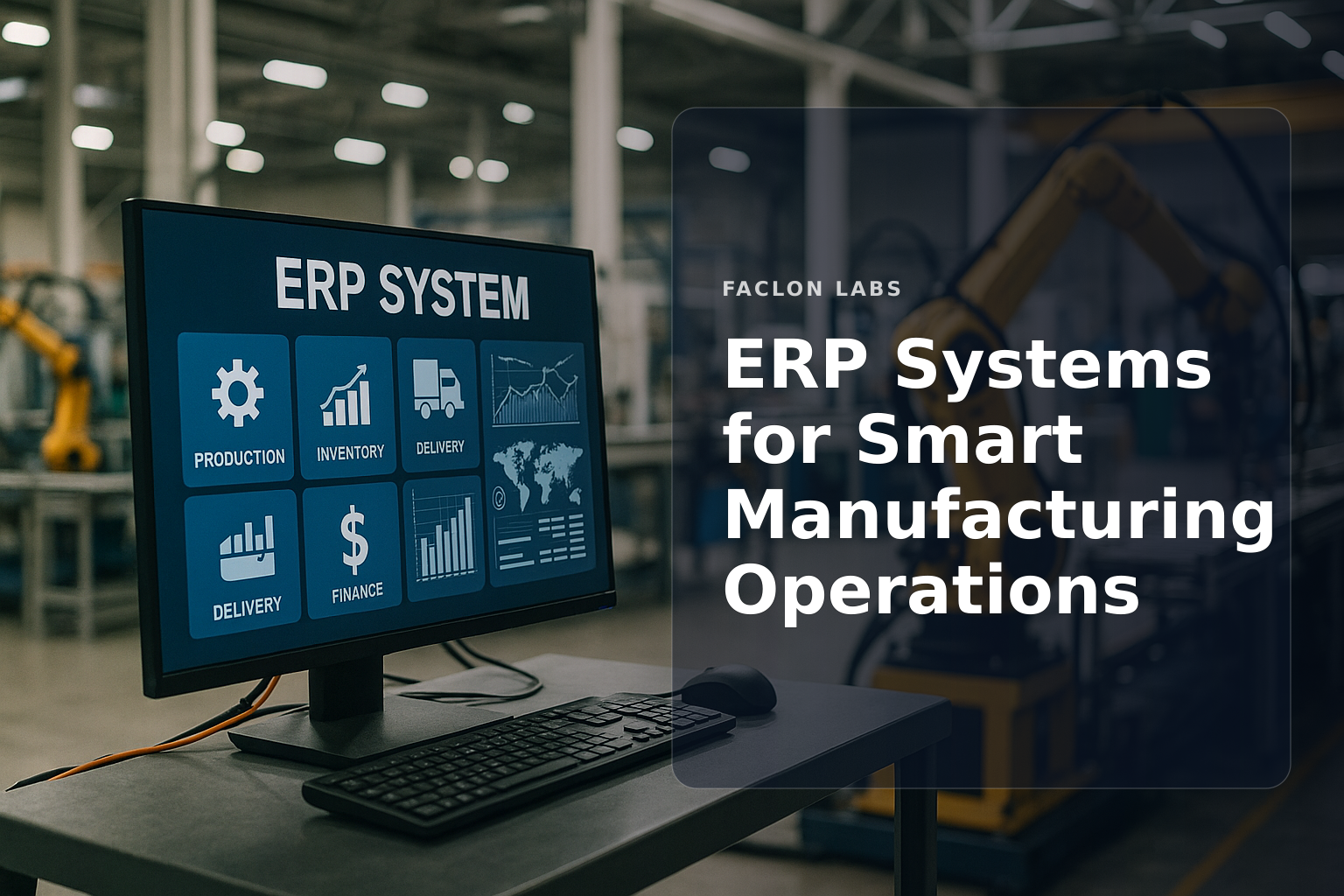
Enterprise Resource Planning (ERP) systems are foundational tools for modern manufacturers aiming to improve operational efficiency and competitiveness. As manufacturing evolves with digital transformation and smart technologies, understanding what an ERP system is and how it functions provides essential context for plant operations leaders considering digital investments.
Smart manufacturing integrates advanced automation, data analytics, and connectivity to optimize production. ERP systems play a critical role by uniting disparate business functions into a single platform, making data accessible and actionable across the enterprise. This post explains ERP systems from the ground up, focusing on their relevance to smart manufacturing operations.
An ERP system is software that integrates and manages a company’s core business processes in a unified environment. It consolidates data and workflows from departments like manufacturing, finance, human resources, and supply chain management into a single system.
ERP software breaks down traditional data silos by connecting processes and information across departments. This integration enables seamless coordination, reduces errors, and improves overall operational visibility.
ERP systems evolved from early manufacturing resource planning (MRP) tools in the 1960s and 1970s. Over decades, ERP expanded beyond production to encompass finance, procurement, HR, and customer management. Modern ERP platforms support real-time data processing and cloud deployment, reflecting the needs of dynamic manufacturing environments.
Common ERP modules include:
Each module handles specific tasks but shares data through the central database.
A unified database ensures that all departments work with consistent, up-to-date information. For example, production schedules automatically reflect inventory levels and supplier deliveries, avoiding delays or shortages.
An ERP system manages the entire process flow:
ERP automates routine tasks such as purchase order generation, inventory tracking, and compliance reporting. This reduces manual errors and frees staff to focus on higher-value activities.
By synchronizing activities and automating workflows, ERP systems reduce waste, minimize downtime, and optimize resource use, directly lowering operational costs.
Access to real-time data and integrated analytics empowers managers to make timely, evidence-based decisions, improving responsiveness to market changes.
ERP systems provide end-to-end visibility into supply chain status and inventory levels, enabling proactive adjustments to avoid stockouts or excess inventory.
ERP supports regulatory compliance by maintaining traceability and automating quality control processes, reducing risks associated with non-compliance.
Modular ERP architectures allow manufacturers to scale functionality as their operations grow or evolve, ensuring long-term value.
ERP systems enable detailed production scheduling aligned with demand forecasts and resource availability, improving throughput.
MRP calculates material needs based on production plans, ensuring timely procurement and reducing inventory costs.
Built-in quality management modules track inspection results, non-conformances, and corrective actions to maintain product standards.
ERP systems schedule and document maintenance activities, helping extend equipment life and prevent unplanned downtime.
Modern ERP platforms integrate with Industrial Internet of Things (IIoT) devices and OT systems, providing real-time operational data that enhances visibility and control Generative AI Platforms: Capabilities, Applications, and Selection for Industrial AI.
| Deployment Model | Description | Advantages | Considerations |
|---|---|---|---|
| On-Premise ERP | Installed locally on company servers | Full control, customization | Higher upfront cost, IT maintenance |
| Cloud-Based ERP | Hosted by vendor, accessed via internet | Lower upfront cost, scalability, remote access | Dependency on internet, subscription fees |
| Hybrid ERP | Combination of on-premise and cloud modules | Flexibility, balance of control and scalability | Complexity in integration and management |
Industry-specific ERP solutions include features tailored for manufacturing sectors such as discrete, process, or hybrid manufacturing. General-purpose ERP systems offer broader functionality but may require customization.
A factory uses ERP to automatically adjust production schedules based on real-time sales data, reducing lead times and inventory costs.
By providing accurate data on inventory and process flows, ERP helps identify waste and inefficiencies, supporting continuous improvement efforts.
| ERP Provider | Focus Area | Deployment Options |
|---|---|---|
| SAP | Large enterprises, extensive modules | On-premise, cloud |
| Oracle | Scalable cloud ERP, strong analytics | Cloud-first |
| Microsoft Dynamics 365 | Mid-market, flexible integration | Cloud, hybrid |
| Epicor | Manufacturing-centric features | On-premise, cloud |
These platforms illustrate the range of ERP solutions available to manufacturers MES System Software for Manufacturing Plants.
Understanding ERP systems is essential for plant operations leaders exploring smart manufacturing initiatives. To evaluate the right ERP fit for your operations, start by assessing your current processes and integration needs. For deeper insights into selecting and deploying ERP in industrial environments, explore our detailed guides and case studies Implementing Total Productive Maintenance for Industrial Assets.
ERP stands for Enterprise Resource Planning. It refers to a type of software system that organizations use to manage day-to-day business activities such as accounting, procurement, project management, risk management, compliance, and supply chain operations.
The main components of an ERP system typically include modules for finance and accounting, human resources, manufacturing, supply chain management, customer relationship management (CRM), and project management. These modules integrate to share data across a centralized database.
For manufacturing companies, an ERP system provides benefits such as improved production planning and scheduling, better inventory control, enhanced supply chain visibility, reduced operational costs, and real-time data for informed decision-making, ultimately leading to higher efficiency and profitability.
No, an ERP system and an IIoT platform are distinct but complementary. An ERP system focuses on business process management and data integration across an enterprise. An IIoT platform focuses on connecting industrial assets, collecting sensor data, and enabling real-time monitoring and analytics from the factory floor. They often integrate to provide a holistic view of operations.
MRP (Material Requirements Planning) is a component or module within a broader ERP system. MRP specifically focuses on planning and managing materials, inventory, and production schedules for manufacturing. ERP, on the other hand, encompasses MRP along with other business functions like finance, HR, and sales, providing a more comprehensive, enterprise-wide solution.