Join Our Lunch & Learn: How Agentic AI Will Transform Industrial Operations | Register Now →
.svg)
August 10, 2026
5 Mins
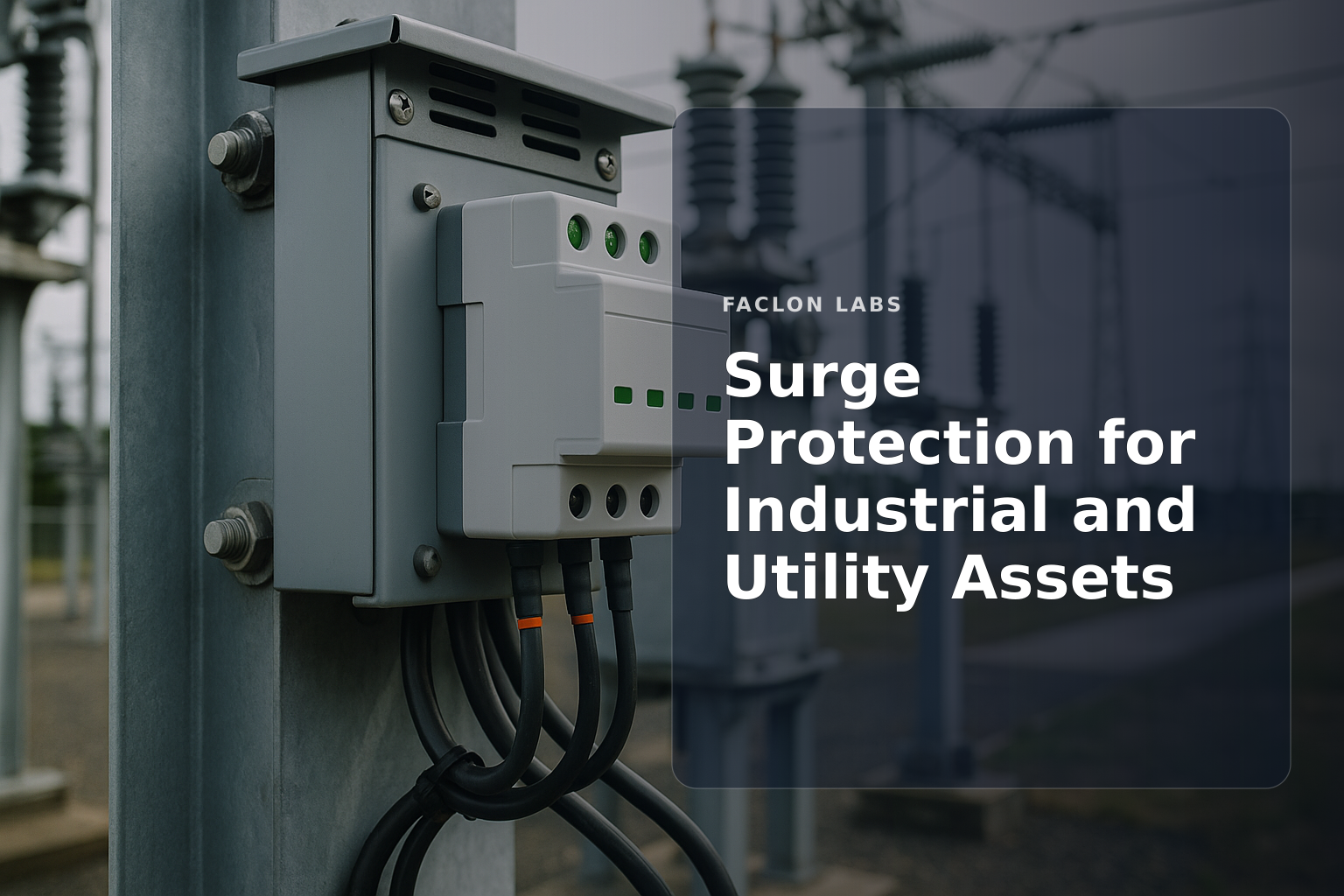
Surge protection is a critical consideration for industrial and utility sectors where sensitive electronic equipment and control systems operate continuously. Power surges, whether from external lightning strikes or internal switching events, can cause costly damage and operational interruptions if not properly managed.
Understanding what surge protection entails, why it matters, and how to select the right devices is essential for plant operations leaders aiming to safeguard infrastructure and maintain uptime. This guide breaks down the basics of surge protectors, their role in industrial settings, and best practices for implementation.
A surge protector is a device designed to shield electrical equipment from voltage spikes, also known as surges, which can exceed normal operating voltages and cause damage. In industrial and utility environments, these devices are often called Surge Protective Devices (SPDs). SPDs detect transient overvoltages and divert the excess energy away from critical equipment, usually to ground.
Unlike basic power strips that merely provide multiple outlets, surge protectors actively limit voltage to safe levels. Power strips without surge protection do not prevent damage from electrical surges—they simply distribute power. True surge protectors incorporate components that absorb or redirect harmful voltage spikes.
SPDs operate by clamping voltage to a predetermined threshold. When a surge occurs, components like metal-oxide varistors (MOVs) become conductive, creating a low-resistance path that safely channels the surge current to ground. This action prevents the spike from reaching connected devices.
These components work together to ensure effective surge suppression and device longevity.
Industrial assets often include programmable logic controllers (PLCs), sensors, and communication equipment that are highly sensitive to voltage fluctuations. Surges can corrupt data, cause hardware failures, or degrade performance over time.
Unexpected equipment failure due to surges leads to unplanned downtime, expensive repairs, and potential safety hazards. Robust surge protection reduces these risks, preserving operational continuity and reducing maintenance costs.
Utilities and industrial plants operate critical infrastructure where interruptions can affect public services or production lines. Surge protection is a key element in ensuring consistent, reliable operation and compliance with industry standards.
Surges originate from external events like lightning strikes or internal sources such as switching operations and motor startups. Effective surge protection addresses both sources by combining different types of SPDs strategically placed within the electrical distribution system What Is an Uninterruptible Power Supply?.
Industrial setups often use a layered approach combining both types for comprehensive defense.
| SPD Type | Location | Application | Protection Level |
|---|---|---|---|
| Type 1 | Service entrance | Protects against external surges like lightning | High-energy surge protection |
| Type 2 | Distribution panel | Protects internal wiring and equipment | Medium-energy surge protection |
| Type 3 | Point-of-use | Protects sensitive end-use devices | Low-energy surge protection |
This classification aligns with standards such as IEEE Std C62.43-2005 and NEC requirements, guiding proper SPD selection NEC Requirements for Overvoltage Protection — EC&M.
A multi-layered surge protection strategy uses combinations of SPD types to intercept surges at various points, reducing stress on equipment and increasing overall system resilience How SPDs work — NEMA Surge Protection Institute.
Evaluate factors such as geographic location (lightning frequency), facility size, type of equipment, and criticality of operations to determine surge risk and protection needs.
Selecting SPDs with appropriate ratings ensures effective protection without nuisance tripping.
Different sectors have unique surge exposure profiles and equipment sensitivities. For example, energy utilities may face higher surge currents from switching, while manufacturing lines require precise protection for control systems Implementing Gas Leak Sensors for Enhanced Industrial Safety.
Proper installation and upkeep maximize the lifespan and effectiveness of surge protection systems.
Effective surge protection is foundational to safeguarding industrial and utility assets from damaging voltage spikes. Assess your facility’s unique risks, select SPDs that meet appropriate standards, and implement a layered protection approach. For deeper insights on integrating surge protection with industrial IoT and asset monitoring, explore our resources on What Is an Uninterruptible Power Supply? and Implementing Gas Leak Sensors for Enhanced Industrial Safety.
A surge protector, also known as a surge suppressor or Surge Protective Device (SPD), is an electrical device designed to protect electronic equipment from voltage spikes. It works by diverting excess voltage away from the connected devices and safely into the ground, or by absorbing the spike, thus limiting the voltage supplied to a safe threshold.
While many power strips include surge protection, not all do. A basic power strip only provides additional outlets. A surge protector, however, contains specific components (like MOVs) that actively defend against voltage surges and spikes, preventing them from damaging connected electronics, appliances, or industrial equipment.
Choosing an industrial surge protector involves assessing the specific risks and requirements of your equipment. Key factors include the SPD's type (e.g., Type 1 for service entrance, Type 2 for branch panels), its voltage protection rating (VPR), nominal discharge current (In), and energy absorption capability (joules). Consult with an expert to match the SPD to your facility's electrical system and critical assets.