Join Our Lunch & Learn: How Agentic AI Will Transform Industrial Operations | Register Now →
.svg)
September 14, 2026
5 Mins
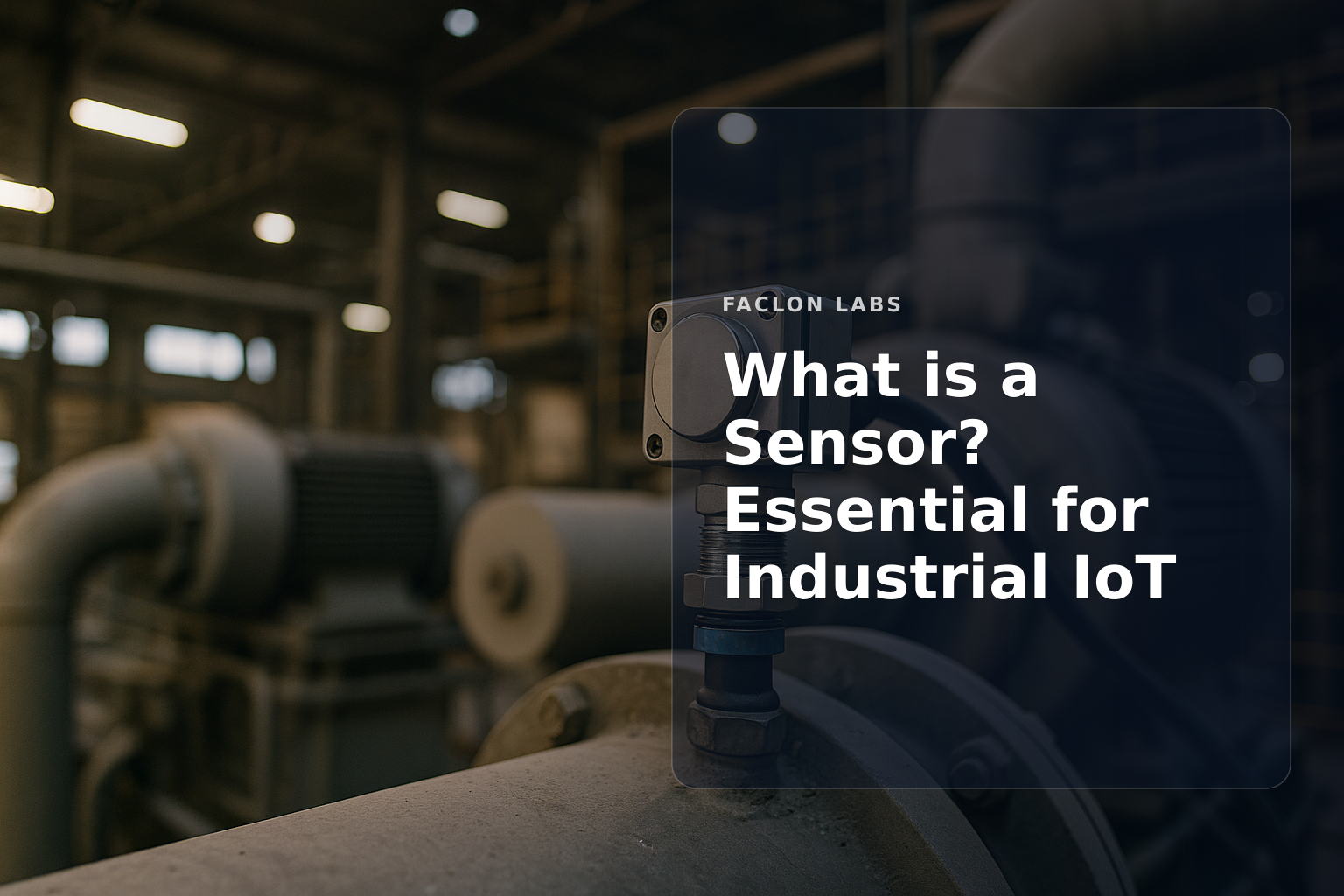
Industrial plants and factories rely on accurate, timely information about their equipment and environment to maintain smooth operations. Sensors are the foundational technology that makes this possible by translating physical phenomena into digital data. Understanding what sensors are and how they function is essential for plant operations leaders aiming to leverage Industrial IoT (IIoT) for smarter, more responsive manufacturing.
Sensors are often described simply as devices that detect changes in their surroundings. However, their role in bridging the physical and digital worlds is far more nuanced and impactful. This article breaks down the core concepts behind sensors, their operation, and their indispensable role in modern industrial environments.
At its core, a sensor is an apparatus designed to detect a physical stimulus—such as heat, light, pressure, or motion—and produce a corresponding signal, usually electrical, that represents that stimulus. This conversion enables machines and control systems to "sense" their environment.
Sensors act as the interface between the physical environment and digital systems. They capture real-world conditions and convert them into data that software platforms can analyze. This data underpins decision-making, automation, and predictive maintenance in industrial settings.
A typical sensor assembly includes:
Together, these components enable sensors to deliver reliable, actionable data.
Sensors detect changes in physical quantities through their sensing elements. For example, a temperature sensor detects heat variations, while a pressure sensor responds to force exerted by fluids or gases.
Once the physical stimulus is detected, the sensor’s transducer converts it into an electrical signal—such as voltage, current, or resistance—that corresponds proportionally to the stimulus intensity. This electrical output can be measured and interpreted.
Sensor outputs come in two main forms:
Understanding the signal type is crucial when integrating sensors with Industrial IoT platforms and data analytics tools.
Sensors are the backbone of Industrial IoT, enabling several transformative capabilities:
Careful sensor selection and deployment are essential to avoid over-specification, which can add unnecessary costs without proportional benefits [How Sensors Unlock Value in IIoT].
Industrial environments use a variety of sensors tailored to specific monitoring needs. Common types include:
| Sensor Type | Application Area | Typical Use Case |
|---|---|---|
| Temperature | Process control | Monitoring reactor or furnace temperatures |
| Pressure | Fluid dynamics, system monitoring | Detecting pipeline pressure drops or spikes |
| Proximity & Level | Material handling, inventory | Sensing object presence or liquid levels |
| Vibration | Machine health monitoring | Detecting bearing wear or imbalance in motors |
| Flow | Pipeline and resource management | Measuring fluid or gas flow rates |
Each sensor type has specialized sensing elements and output characteristics suited to its industrial role [Industrial IoT Sensors: The Complete 2026 Selection Guide].
Continuous sensor data enables plant managers to identify inefficiencies and intervene before minor issues escalate. This proactive approach minimizes costly downtime and extends equipment life.
Sensors monitor hazardous conditions such as gas leaks, high temperatures, or pressure anomalies, triggering alarms or shutdowns that protect personnel and assets.
Sensor-derived data feeds analytics platforms that provide actionable insights, allowing managers to make informed decisions based on real-time operational realities.
For instance, vibration sensors on motors can detect early signs of bearing failure, prompting maintenance that avoids catastrophic breakdowns. Similarly, temperature sensors in chemical reactors ensure reactions stay within safe limits, preventing dangerous excursions [How to Select Industrial IoT Sensors - Riproar].
Sensors continuously monitor environmental parameters or machine conditions, detecting changes that indicate important events or trends.
The sensor translates physical stimuli into electrical signals that can be quantified, recorded, and analyzed.
These signals serve as the foundational input for control systems, dashboards, and predictive analytics that drive Industrial IoT benefits [IIoT Sensor Integration in Modern Manufacturing].
Sensors are the foundation of smart, connected industrial operations. If you’re exploring Industrial IoT for your plant, start by understanding your sensor needs and how they translate physical realities into data-driven insights. For more on selecting and integrating sensors effectively, explore our detailed guides on Implementing Gas Leak Sensors for Enhanced Industrial Safety and Benefits of Automated Maintenance Services for Industrial Plants.
The main function of a sensor is to detect and measure physical quantities or environmental changes (like temperature, pressure, light, or motion) and convert them into an electrical signal that can be read, processed, and interpreted by an electronic device or system. This enables monitoring, control, and data acquisition.
Sensors are the foundational components of Industrial IoT (IIoT), acting as the 'eyes and ears' of industrial systems. They collect real-time data from machines, processes, and environments, which is then transmitted to IIoT platforms for analysis. This data enables predictive maintenance, operational optimization, energy management, and enhanced safety within industrial plants.
While often used interchangeably, a sensor is specifically designed to detect a physical phenomenon. A transducer, on the other hand, is a broader term for any device that converts energy from one form to another. All sensors are transducers because they convert physical energy into electrical energy, but not all transducers are sensors (e.g., a loudspeaker is a transducer but not a sensor).
Common industrial sensors include temperature sensors (thermocouples, RTDs), pressure sensors, proximity sensors, level sensors, flow sensors, vibration sensors, and humidity sensors. Each type is designed to measure specific physical parameters critical for monitoring and controlling industrial processes and machinery.