Join Our Lunch & Learn: How Agentic AI Will Transform Industrial Operations | Register Now →
.svg)
August 11, 2026
5 Mins
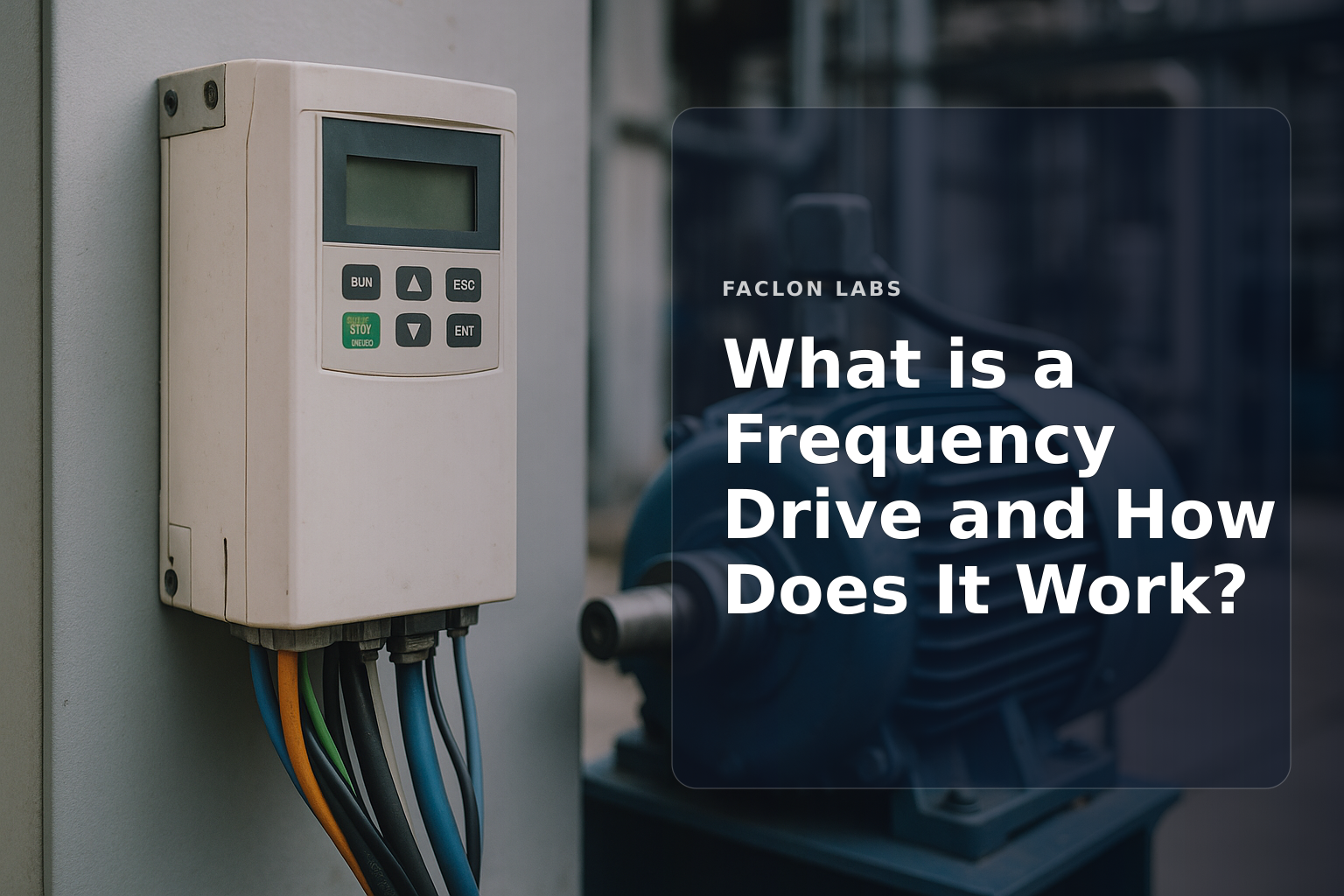
Frequency drives have become essential in modern industrial operations for managing motor-driven equipment more efficiently. Unlike traditional fixed-speed motors, frequency drives allow variable speed control, which optimizes performance and reduces energy consumption. Understanding what a frequency drive is and how it works is foundational for plant operations leaders aiming to improve process control and operational costs.
A frequency drive is an electronic device primarily used to control the speed of AC induction motors. It is commonly referred to as a Variable Frequency Drive (VFD), Adjustable Speed Drive (ASD), or Variable Speed Drive (VSD). Despite the different names, they refer to the same technology that regulates motor speed by varying the frequency of the electrical power supplied to the motor.
The fundamental purpose of a frequency drive is to adjust the motor speed and torque dynamically to meet the precise demands of the process. This contrasts with traditional motors running at fixed speeds, which often leads to inefficiencies and unnecessary energy use.
Fixed-speed motors operate at a constant speed regardless of load requirements. This inflexibility can cause excessive energy consumption, mechanical wear, and reduced process accuracy. Frequency drives enable motors to run only as fast as necessary, improving efficiency and reducing costs.
A frequency drive consists of several critical components:
The frequency drive first converts the fixed-frequency AC input power into DC using a rectifier. This step is essential because controlling motor speed requires manipulating the frequency of the power, which cannot be done directly with AC input.
The DC power is then stored and smoothed in the DC bus, which includes capacitors acting as buffers. This buffering ensures a stable DC voltage supply to the inverter stage, minimizing fluctuations that could affect motor performance.
The inverter converts the steady DC voltage back into AC power, but now with a variable frequency and voltage. This variable-frequency AC output is what controls the motor speed.
Pulse Width Modulation (PWM) is the technique used by the inverter to synthesize the desired AC waveform. By adjusting the duration and timing of voltage pulses, PWM creates a variable frequency and voltage output that precisely controls motor speed and torque.
Frequency drives offer several advantages that directly impact operational efficiency and costs:
| Benefit | Description |
|---|---|
| Energy Savings | Reduces electricity use by matching motor speed to load |
| Process Control | Enables precise speed and torque adjustments |
| Equipment Longevity | Decreases mechanical wear through smooth operation |
| Power Factor Improvement | Optimizes electrical efficiency and reduces demand fees |
| Soft Start/Stop | Minimizes electrical and mechanical stress |
Frequency drives are versatile and find use across many industrial sectors:
These applications benefit from the energy efficiency and control precision that frequency drives provide, supporting better operational outcomes Industrial Automation and Its Role in Modern Factories.
When selecting a frequency drive, consider:
| Selection Factor | Considerations |
|---|---|
| Motor Type | Induction, synchronous, or servo motors |
| Power Rating | Match drive capacity to motor load |
| Application | Load characteristics and control precision |
| Environment | Ambient conditions and enclosure requirements |
| Connectivity | Support for communication protocols and IoT |
Proper installation is critical for reliable VFD operation. This includes correct wiring, grounding, and ensuring the drive is matched to the motor and application requirements.
Issues like harmonic distortion, overheating, or communication errors can arise. Regular monitoring and diagnostics help identify and resolve problems early.
Routine inspections, cleaning, and firmware updates extend the life of frequency drives and maintain operational efficiency.
Advancements in smart drives include embedded sensors, cloud connectivity, and integration with plant-wide control systems, enabling predictive maintenance and real-time optimization Implementing Industrial Automation Solutions for Smart Factories.
Understanding frequency drives is essential for plant leaders focused on operational efficiency and cost control. For deeper insights into motor control and industrial IoT integration, explore our related resources and consider how frequency drives can fit into your plant’s modernization efforts.
The main purpose of a frequency drive is to precisely control the speed and torque of an AC electric motor by adjusting the frequency and voltage of the power supplied to it. This allows for optimized motor performance, energy efficiency, and adaptability to varying process requirements.
There is no difference; 'VFD' is simply an acronym for 'Variable Frequency Drive,' which is another common term for a frequency drive. They refer to the same electronic device used to control AC motor speed and torque.
Yes, a frequency drive can significantly save energy, especially in applications like pumps and fans. By allowing the motor to run only at the speed required for the current load, it avoids the energy waste associated with fixed-speed motors operating at full capacity when not needed, leading to substantial reductions in electricity consumption.
The three main parts of a VFD are the rectifier, which converts incoming AC power to DC; the DC bus (or DC link), which filters and stores this DC power; and the inverter, which converts the DC power back into variable frequency and voltage AC power for the motor.