Join Our Lunch & Learn: How Agentic AI Will Transform Industrial Operations | Register Now →
.svg)
July 30, 2026
10 minutes
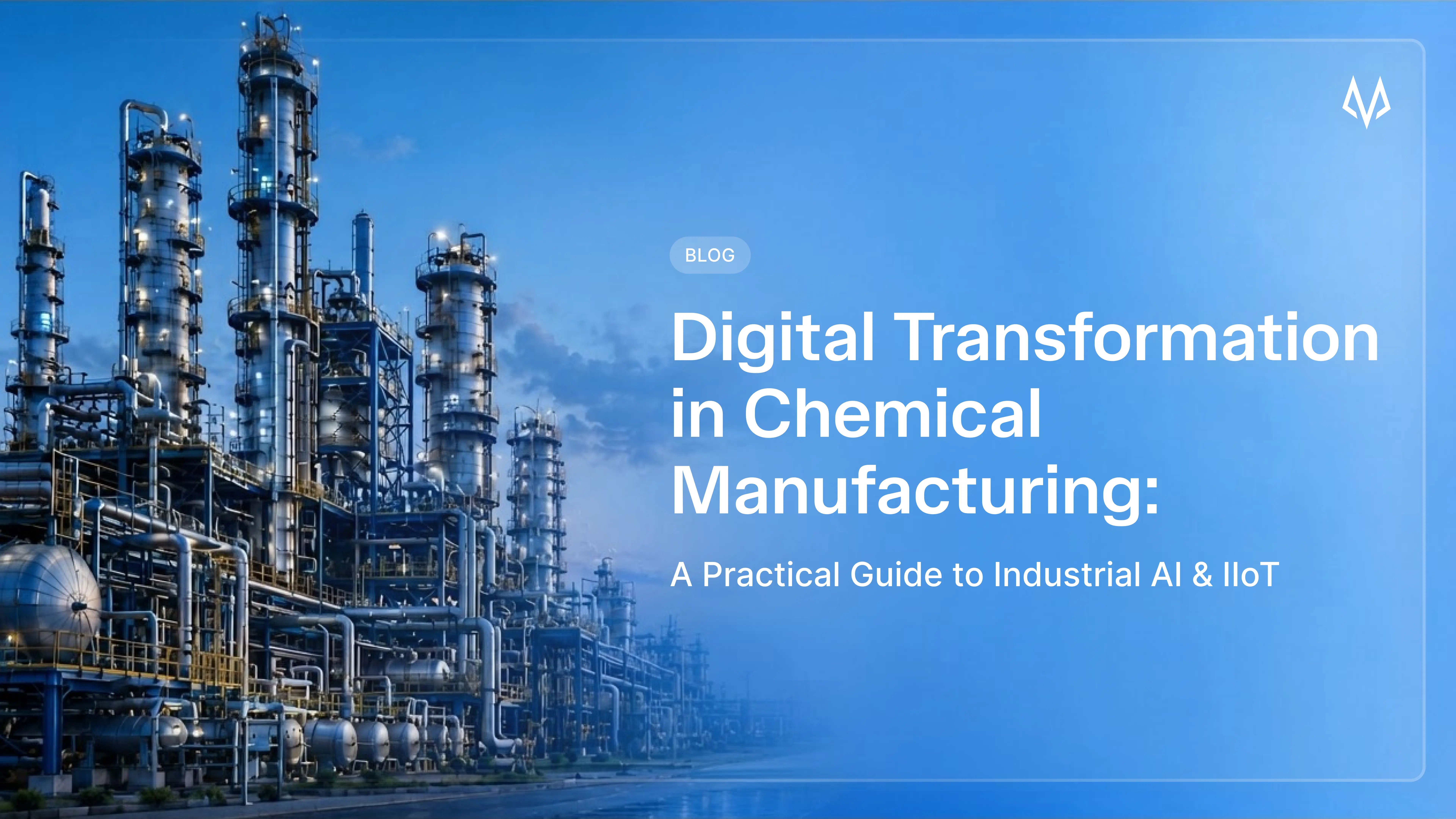
At Faclon, we’ve worked with manufacturers across their digital transformation journey, and one challenge consistently stands out: plants rarely struggle with a lack of operational data. The real challenge is transforming fragmented data into timely, actionable operational intelligence.
Most chemical plants have already invested in automation systems, PLCs, DCS, SCADA platforms, historians, ERP systems, and Industrial IoT devices. Yet many organizations still struggle to answer critical operational questions such as:
The opportunity is no longer collecting more data; it’s connecting existing systems to create a unified operational view that enables faster decisions and measurable business outcomes.
Manufacturers that build this connected foundation are better positioned to scale Industrial AI and drive enterprise-wide operational excellence.
The chemical industry is under increasing pressure to improve operational efficiency, reduce costs, strengthen safety, meet sustainability goals, and comply with evolving environmental regulations. Yet many facilities continue to face challenges such as:
These issues directly impact productivity and profitability, with every unplanned shutdown, equipment failure, steam leak, or compliance incident resulting in significant operational and financial risk.
The business case for digital transformation is becoming increasingly compelling as manufacturers face rising operational costs and greater pressure to improve efficiency.
Industry research highlights the impact of adopting connected operations and predictive technologies:
These trends reinforce why digital transformation has evolved from an IT initiative into a strategic business priority.
The Current State of Digital Transformation in Chemical Manufacturing
The chemical industry has already made substantial progress in digitization. Most plants now generate enormous volumes of operational data from:
Despite generating enormous volumes of operational data, many chemical manufacturers still struggle to make timely decisions because operational information remains isolated across different systems and teams.
As a result:
Creating a unified operational view allows organizations to move from reactive decision-making to proactive, data-driven operations.
Successful initiatives start by solving operational challenges such as reducing energy losses, improving asset reliability, or preventing equipment failures. Technology should support business outcomes, not drive them.
Operations, maintenance, production, and energy teams often work with disconnected systems, making it difficult to generate unified operational insights.
Many manufacturers believe digital transformation requires replacing existing systems. In reality, modern Industrial IoT platforms integrate with PLCs, DCS, SCADA, historians, and ERP systems, extending the value of existing infrastructure.
Many projects remain confined to a single plant or production line because they lack standardized data models and a scalable digital strategy.
AI and analytics deliver value only when insights are embedded into everyday workflows, enabling operators and maintenance teams to make faster, data-driven decisions.
Rather than pursuing disconnected software deployments, leading manufacturers are building a connected Industrial Intelligence architecture.
The foundation typically consists of five layers.
The first step is securely connecting operational assets across the plant. This includes:
The objective is to establish a unified, real-time operational data flow.
Industrial IoT expands visibility beyond traditional automation systems by incorporating additional operational measurements such as:
This creates a richer operational picture.
Instead of maintaining disconnected databases, organizations consolidate operational information into a centralized Industrial Intelligence platform.
This enables:
Once operational data is connected, AI can identify patterns that are difficult to detect manually. Applications include:
The final layer transforms analytics into real-time decisions.
Instead of simply displaying data, Operational Intelligence answers questions such as:
This enables proactive operations rather than reactive management.
Digital transformation doesn’t require replacing existing infrastructure. A phased approach helps manufacturers achieve faster results while minimizing risk.
Integrate existing PLCs, DCS, SCADA, historians, ERP, and maintenance systems to create a connected data foundation without major infrastructure changes.
Create unified dashboards that combine production, maintenance, energy, asset health, and process KPIs into a single operational view.
Focus on high-value opportunities such as steam systems, boilers, compressors, pumps, rotating equipment, and other energy-intensive assets to deliver measurable ROI.
Leverage AI for predictive maintenance, failure prediction, process optimization, energy optimization, and intelligent operational recommendations.
Standardize successful solutions across facilities to enable enterprise-wide visibility, benchmarking, and continuous improvement.
Digital transformation becomes meaningful when it solves real operational problems. Here are some of the highest-value opportunities for chemical manufacturers.
Instead of repairing equipment after failure, AI continuously analyzes asset conditions to detect early warning signs.
Benefits include:
While each use case delivers measurable value independently, the greatest business impact comes from integrating these capabilities through a unified Industrial Intelligence platform. This enables organizations to move beyond isolated improvements and optimize operations across the entire plant.
Energy represents one of the largest operating expenses in chemical manufacturing. Digital energy management enables organizations to:
Steam systems are often overlooked despite their significant impact on operational efficiency. Continuous steam trap monitoring helps manufacturers:
For many facilities, this is one of the fastest digital transformation initiatives to deliver measurable returns.
By combining equipment condition, maintenance history, operational parameters, and AI-driven diagnostics, organizations can improve overall asset performance.
The result is greater equipment availability and more predictable production.
AI continuously evaluates operating conditions to identify opportunities for:
Environmental and regulatory reporting increasingly demands continuous monitoring rather than periodic audits.
Digital platforms automate:
This reduces manual effort while improving transparency.
As digital transformation initiatives grow, manufacturers often end up with multiple software tools that create new data silos. A unified Industrial Intelligence platform overcomes this by bringing together operational data, analytics, AI, and workflows into a single ecosystem.
Instead of switching between disconnected applications, operators, maintenance teams, and plant managers can work from a shared operational view. A unified platform enables organizations to:
By unifying people, data, and processes, manufacturers can transform isolated digital projects into a scalable and sustainable digital transformation strategy.
Digital transformation delivers the greatest value when it improves measurable business outcomes, not just technology adoption. By connecting operational data and applying Industrial AI, chemical manufacturers can achieve:
When these improvements work together, digital transformation becomes a scalable business strategy that drives long-term operational excellence.
Digital transformation is no longer a technology initiative; it has become a business imperative for chemical manufacturers. Organizations that establish a connected operational foundation can improve efficiency, strengthen asset reliability, enhance safety, and accelerate
enterprise-wide AI adoption.
Rather than replacing existing infrastructure, the focus should be on solving high-impact operational challenges and continuously scaling proven digital capabilities.
Organizations that establish a connected operational data foundation before deploying AI consistently achieve better outcomes. By unifying operations, maintenance, energy, and production data, manufacturers can:
The most successful digital transformation journeys begin by solving operational challenges first, then scaling AI on top of a connected data foundation.
Successful digital transformation in chemical manufacturing starts with solving real operational challenges, not replacing existing infrastructure. By connecting systems, unifying operational data, and focusing on high-impact use cases like predictive maintenance, energy management, and process optimization, manufacturers can achieve measurable business value and build a scalable foundation for Industrial Intelligence.
The future belongs to chemical manufacturers that transform fragmented data into real-time operational insights, enabling smarter, safer, and more efficient operations.
Digital transformation in chemical manufacturing uses Industrial IoT, AI, and unified data platforms to improve efficiency, asset reliability, energy management, safety, and compliance through real-time, data-driven decision-making.
Start by connecting existing systems like PLCs, DCS, SCADA, historians, ERP, and maintenance software into a unified operational intelligence platform. Then focus on high-impact use cases such as predictive maintenance and energy management.
Industrial IoT enables real-time monitoring of assets, utilities, and processes, helping chemical manufacturers reduce downtime, improve energy efficiency, and optimize plant performance.
Key challenges include fragmented data, legacy infrastructure, disconnected systems, limited operational visibility, and scaling digital initiatives across multiple plants.
Industrial AI helps predict equipment failures, optimize processes, improve energy efficiency, and deliver actionable insights, enabling more proactive and efficient operations.
%20(1).webp)
July 9, 2026
7 min
.svg)
July 9, 2026
9 min read

June 23, 2026
6 Mins