Join Our Lunch & Learn: How Agentic AI Will Transform Industrial Operations | Register Now →
.svg)
August 24, 2026
5 Mins
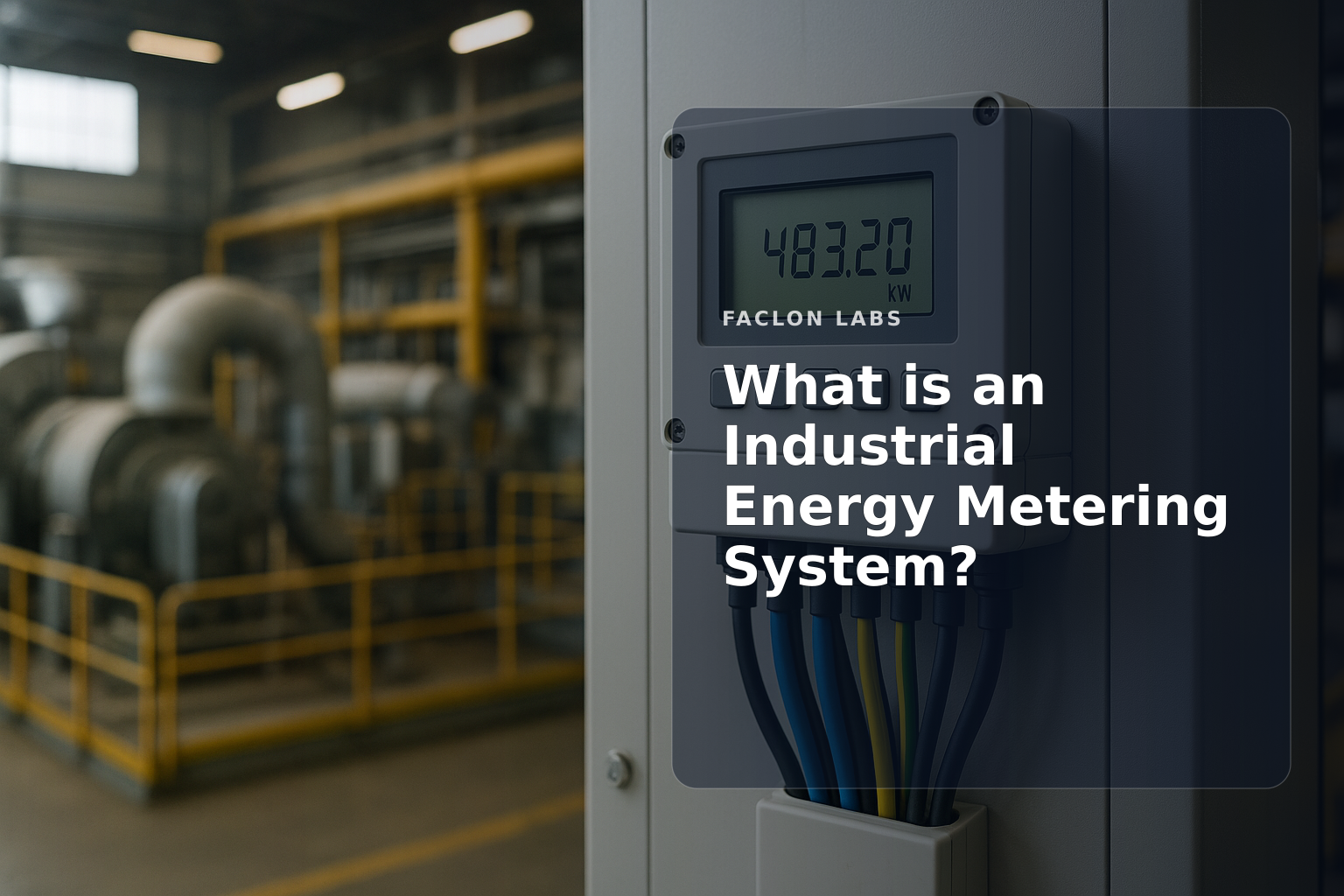
Industrial energy metering systems play a pivotal role in modern industrial operations by providing detailed visibility into resource use. Unlike residential or commercial meters, these systems are designed to handle complex, high-volume energy flows and diverse resource types, enabling plant leaders to optimize performance and reduce costs. Understanding what these systems entail is essential for any industrial operation aiming to improve energy management.
An industrial energy metering system is an integrated solution that captures, records, and analyzes the consumption of various energy resources within an industrial facility. It typically includes meters and sensors that measure electrical power, gas, water, steam, and compressed air usage. These measurements are collected and transmitted to centralized data platforms for monitoring and analysis.
Industrial metering systems differ significantly from residential or commercial meters in scale, complexity, and functionality. Industrial systems must handle higher loads, multiple resource types, and provide granular data for diverse processes and equipment. They often integrate with operational technology systems like SCADA or MES for comprehensive energy management.
| Resource Type | Description |
|---|---|
| Electricity | Measures kWh, kVAh, kVarh across production lines and equipment |
| Gas | Tracks consumption for heating, processes, or fuel |
| Water | Monitors usage for cooling, cleaning, and processes |
| Steam | Measures steam flow and pressure for heating and production |
| Compressed Air | Tracks air consumption critical for pneumatic tools and processes |
Accurate metering helps pinpoint inefficiencies such as leaks, equipment malfunctions, or excessive consumption, enabling targeted corrective actions that reduce energy waste and cost.
By understanding energy usage patterns, plant managers can optimize equipment schedules, balance loads, and allocate resources more effectively to improve overall operational efficiency.
Energy metering provides data necessary to meet environmental regulations and sustainability targets, including reporting emissions and demonstrating energy savings.
Continuous monitoring detects anomalies indicating equipment degradation or failure, allowing proactive maintenance that prevents costly downtime.
In industries where energy costs are a major expense, precise metering ensures accurate billing, budgeting, and minimizes financial risks associated with energy procurement and usage.
Smart meters measure electrical parameters like voltage, current, and power factor, often with communication capabilities. Sensors extend to flow meters for gas, water, and steam, and pressure sensors for compressed air systems.
Data acquisition units collect signals from meters and sensors, transmitting data via wired (Ethernet, Modbus) or wireless (Wi-Fi, LoRaWAN) networks to central systems. Reliable communication ensures real-time visibility and control.
Centralized platforms aggregate data, apply analytics, and generate actionable insights. These tools support energy reporting, benchmarking, and decision-making.
Integration allows energy data to complement operational and business information, facilitating comprehensive performance management and aligning energy goals with production and financial objectives What is BESS? Battery Energy Storage Systems for Industrial Plants.
Measures total energy consumption at the facility’s main service entry point, providing a baseline for overall energy use.
Focuses on specific areas such as departments, machines, or processes, enabling detailed analysis and targeted efficiency improvements.
Monitors consumption of particular building systems like HVAC or lighting, helping to optimize facility support systems.
Ensures fiscal accuracy during the transfer of energy resources between parties, critical in industries like oil and gas to reduce financial risk.
Smart meters eliminate manual reading errors and enable continuous, remote access to energy data, reducing labor and improving accuracy.
Instantaneous data streams allow quick identification of unusual consumption patterns or faults, supporting rapid response.
Machine learning and AI analyze historical and real-time data to predict future consumption trends, optimize load management, and support energy procurement strategies.
Smart metering systems vastly increase data granularity and frequency, providing a richer dataset for decision-making compared to periodic manual reads or drive-by systems Essential Tools for Data Analytics in Smart Manufacturing.
Design must consider facility layout, resource types, measurement points, and integration needs. Environmental factors and regulatory requirements also influence system design.
Proper installation and calibration ensure measurement accuracy and system reliability. Commissioning includes testing communication and data integrity.
Protecting data from cyber threats and ensuring accuracy through validation processes is critical, especially when systems integrate with operational controls.
Choosing modular, interoperable components and open communication standards helps accommodate future expansion and technology upgrades.
| Implementation Aspect | Key Considerations |
|---|---|
| Planning & Design | Resource types, measurement points, integration |
| Installation & Commissioning | Accuracy, testing, calibration |
| Security & Integrity | Cybersecurity, data validation |
| Scalability | Modular design, open standards |
Understanding and implementing an industrial energy metering system is foundational for plant operations leaders seeking to optimize energy use and operational performance. For tailored guidance on designing and deploying these systems in your facility, explore our detailed resources or connect with experts in industrial energy management Understanding Energy Consumption in Industrial Plants.
A smart metering system is a digital system for the automated collection, processing, and transmission of energy consumption data. Unlike traditional meters, smart meters can communicate data remotely and in real-time or near real-time, enabling advanced analytics, remote control, and improved energy management for utilities and consumers alike.
The primary purpose of a metering system is to accurately measure and record the consumption of resources like electricity, water, gas, or heat. In industrial settings, this data is crucial for identifying inefficiencies, optimizing usage, reducing operational costs, ensuring regulatory compliance, and supporting sustainability initiatives by providing actionable insights into energy performance.
Metering typically refers to measuring the total consumption of a utility at the main service entry point for an entire building or facility. Submetering, on the other hand, involves installing additional meters within that facility to measure consumption at a more granular level, such as for individual departments, specific machines, or particular processes. This allows for more detailed cost allocation and targeted efficiency improvements.
Industrial energy metering systems contribute to ROI by enabling significant cost savings through waste reduction, optimized energy purchasing, and improved operational efficiency. They also help avoid penalties for exceeding demand limits, extend equipment lifespan through better monitoring, and support sustainability initiatives that can enhance brand reputation and market value.