Join Our Lunch & Learn: How Agentic AI Will Transform Industrial Operations | Register Now →
.svg)
August 19, 2026
5 Mins
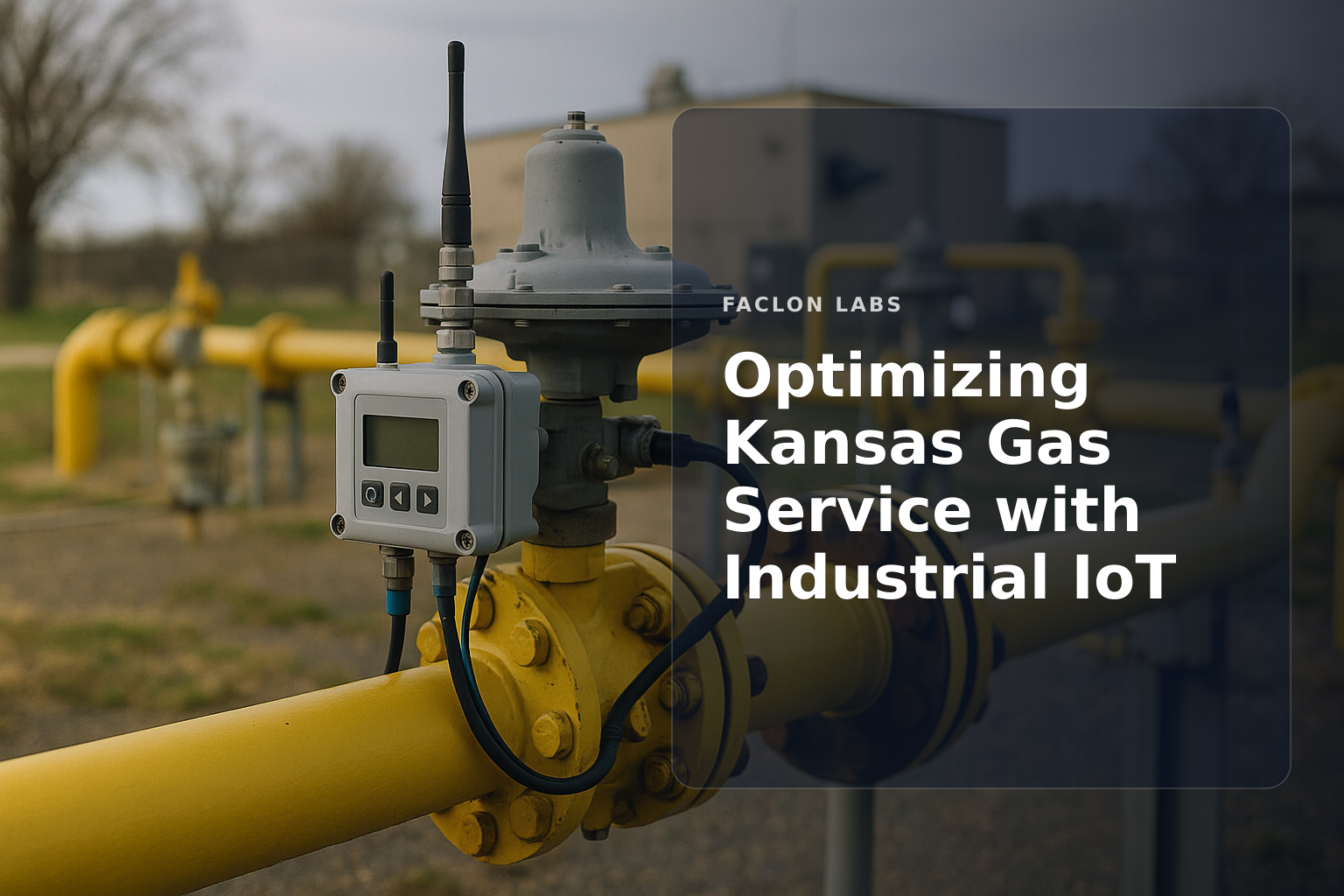
Kansas Gas Service is the largest natural gas utility in Kansas, responsible for safely delivering fuel to more than 650,000 customers across 82 counties. As energy demands grow and infrastructure ages, the utility faces challenges in maintaining safety, regulatory compliance, and service reliability. Industrial IoT (IIoT) offers a technological pathway to address these challenges by enabling smarter, data-driven operations.
Understanding how IIoT integrates with natural gas distribution helps plant operations leaders and utility managers appreciate the concrete benefits and strategic considerations involved. This post explains the role of Kansas Gas Service, the fundamentals of IIoT, its specific applications in gas service operations, and how utilities can implement IIoT effectively to optimize performance and customer satisfaction.
Kansas Gas Service is a division of ONE Gas, Inc., serving as the primary natural gas distributor in Kansas. It operates an extensive network of pipelines and infrastructure spanning 82 counties, delivering clean, reliable natural gas to residential, commercial, and industrial customers. The utility’s scale involves managing over 40,000 miles of distribution mains and thousands of miles of transmission pipelines, making operational efficiency critical.
Natural gas utilities like Kansas Gas Service face several challenges:
Operational excellence is vital not only for safety and compliance but also for cost control and customer trust. Kansas Gas Service must balance infrastructure investments with efficient operations to meet regulatory requirements and deliver uninterrupted service, all while minimizing environmental impact.
Industrial IoT refers to the use of interconnected sensors, devices, and software to collect and analyze data from industrial equipment and infrastructure. In utilities, IIoT enables continuous monitoring of assets, real-time data collection, and advanced analytics to optimize operations.
Unlike consumer IoT, which focuses on convenience and lifestyle devices, IIoT emphasizes:
IIoT transforms natural gas utilities by enabling predictive maintenance, early leak detection, and data-driven decision-making. This reduces downtime, enhances safety, and improves regulatory compliance, all essential for maintaining public trust and operational stability.
IIoT sensors installed along pipelines continuously measure pressure, flow, and environmental conditions. Advanced analytics detect anomalies indicating leaks or weaknesses, enabling rapid response before incidents escalate.
By analyzing sensor data trends, IIoT systems predict when equipment will require maintenance, reducing unplanned outages and extending asset life.
IIoT devices dynamically adjust gas flow and pressure based on real-time demand and supply conditions, improving energy efficiency and customer service reliability.
Integrated IIoT solutions improve safety by providing operators with immediate alerts and situational awareness during emergencies, helping to protect employees and the public.
IIoT platforms offer centralized dashboards for monitoring dispersed assets, enabling better resource allocation and faster troubleshooting.
| IIoT Application | Functionality | Benefits |
|---|---|---|
| Pipeline Integrity Monitoring | Real-time sensor data collection | Early leak detection, safety |
| Predictive Maintenance | Data-driven maintenance scheduling | Reduced downtime, cost savings |
| Gas Flow & Pressure Optimization | Dynamic control systems | Energy efficiency, reliability |
| Safety & Emergency Response | Automated alerts and protocols | Enhanced personnel and public safety |
| Remote Asset Management | Centralized monitoring and control | Improved operational efficiency |
IIoT enables proactive maintenance and optimized operations, lowering repair costs and minimizing service interruptions.
Continuous monitoring and faster response reduce risks associated with gas leaks and equipment failures.
Better visibility and control over the network ensure consistent gas delivery, improving customer trust.
IIoT supports adherence to safety standards and environmental regulations by providing detailed operational data and audit trails.
Analytics from IIoT data help utility managers forecast demand, plan infrastructure investments, and optimize tariffs Essential Tools for Data Analytics in Smart Manufacturing.
Utilities often begin with pilot projects focused on critical assets or regions, gradually scaling IIoT deployment to manage costs and complexity.
Protecting sensitive operational data and infrastructure from cyber threats is paramount. IIoT systems must incorporate robust encryption, access controls, and continuous monitoring.
Successful IIoT adoption requires seamless integration with legacy systems to leverage existing data and workflows without disruption.
Advanced analytics and AI algorithms interpret vast sensor data, identifying patterns and anomalies that humans might miss, enabling smarter operational decisions Implementing an Industrial Operations Management Suite.
| Implementation Aspect | Key Considerations | Best Practices |
|---|---|---|
| Pilot Programs | Select critical assets for testing | Measure ROI before scaling |
| Cybersecurity | Protect data and network access | Use multi-layered security |
| System Integration | Ensure compatibility with SCADA | Use open standards and APIs |
| Analytics & AI | Employ predictive and prescriptive analytics | Train staff on data tools |
For utility leaders and operations managers, understanding and adopting Industrial IoT technologies is essential for optimizing Kansas Gas Service operations. Exploring pilot programs and partnering with experienced IIoT providers can help you realize measurable improvements in safety, efficiency, and customer service. Reach out to learn how to start your IIoT journey today.
Kansas Gas Service is the largest natural gas distribution utility in Kansas, serving over 650,000 customers across 360 communities. It is a division of ONE Gas, Inc., responsible for delivering natural gas safely and reliably to homes and businesses.
Industrial IoT improves natural gas distribution by enabling real-time monitoring of pipelines and assets, facilitating predictive maintenance, optimizing gas flow, enhancing leak detection, and improving overall operational efficiency and safety across the network.
Main challenges include managing aging infrastructure, ensuring public and employee safety, maintaining regulatory compliance, optimizing operational costs, and responding effectively to emergencies. IIoT offers solutions to address these challenges proactively.
Yes, Kansas Gas Service is a regulated public utility. It operates under the oversight of state regulatory bodies to ensure the safe and reliable delivery of natural gas to its customers.