Join Our Lunch & Learn: How Agentic AI Will Transform Industrial Operations | Register Now →
.svg)
August 24, 2026
5 Mins
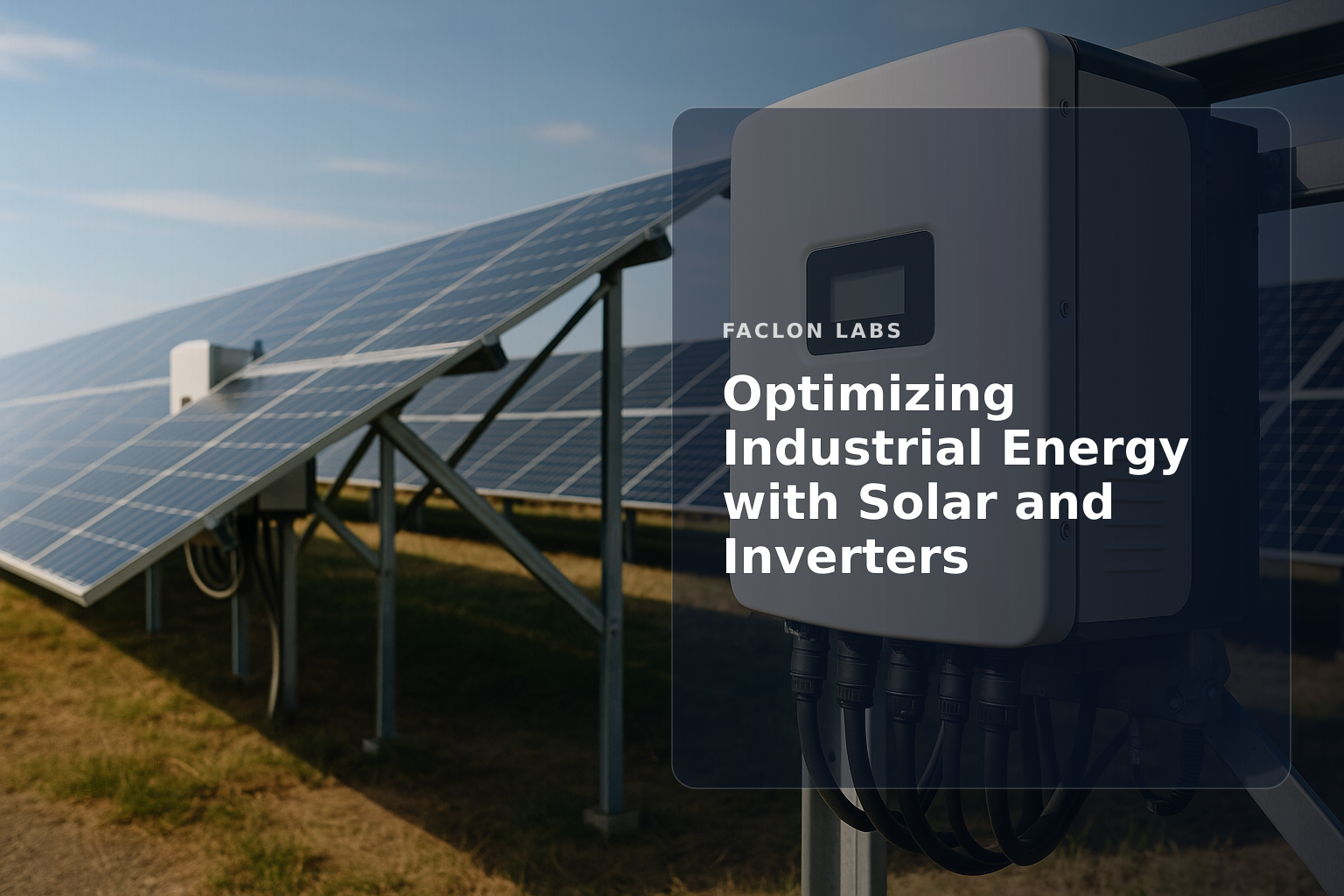
Industrial energy management is rapidly evolving as facilities face rising electricity costs, increasing grid instability, and pressure to meet sustainability targets. Solar photovoltaic (PV) systems coupled with advanced inverters offer a practical pathway to reduce energy expenses while enhancing operational independence. Understanding how to integrate these technologies effectively is crucial for plant operations leaders aiming to maximize return on investment and minimize downtime.
This guide outlines a structured process for industrial solar and inverter implementation, from initial assessment through ongoing optimization, emphasizing measurable metrics and industrial IoT (IIoT) tools that drive continuous improvement.
Industrial facilities consume significant power, often during peak grid demand periods when tariffs spike. Solar energy reduces dependence on the grid, lowering demand charges and exposure to price volatility. Inverters enable smooth integration of solar power into existing electrical systems, ensuring stable supply even during grid disturbances.
Solar PV systems allow companies to meet regulatory and voluntary carbon reduction targets. Using clean energy onsite reduces greenhouse gas emissions and supports corporate social responsibility initiatives. Inverters play a key role by optimizing energy conversion efficiency and facilitating grid export or storage.
Solar combined with inverters, especially hybrid types, can operate in grid-tied or off-grid modes. This flexibility improves resilience against outages or grid fluctuations, maintaining critical operations. Industrial sites gain greater control over energy supply, reducing downtime risk.
Solar panels generate direct current (DC) electricity, which industrial loads and the grid require as alternating current (AC). Inverters convert DC to AC, regulate voltage and frequency, and provide safety features such as anti-islanding protection. Advanced inverters also communicate with plant control systems to optimize energy use.
Hybrid inverters combine solar conversion with battery storage management and grid interaction. They enable peak shaving and load management, reducing demand charges and allowing energy use optimization during time-of-use tariff windows [[hybrid inverter ROI]].
Inverters not only convert power but also ensure compliance with grid codes and safety standards like the updated AS/NZS 4777.1:2024, which governs interface protection and installation requirements for solar inverters [[interface protection standard]].
Tools such as energy meters and thermal cameras identify consumption patterns, peak demand, and potential shading or thermal issues affecting solar panel placement. This baseline data informs system sizing and expected ROI.
Consider kWh consumption, peak demand, and load profiles. Choose inverter types and capacities aligned with energy goals. Factor in future expansion and integration capabilities.
Safety protocols and grid connection requirements must be strictly followed. Coordination with utility providers ensures compliance with local regulations and standards.
Deploy IIoT platforms and Computerized Maintenance Management Systems (CMMS) for real-time monitoring, fault detection, and predictive maintenance. Continuous data analysis enables performance tuning and early issue resolution [[installing solar and inverter systems]].
| Step | Activity | Tools / Metrics | Key Considerations |
|---|---|---|---|
| 1 | Energy Audit & Site Assessment | Energy meters, thermal cameras | Load profile, shading, thermal risks |
| 2 | System Design & Component Selection | kWh consumption, peak demand | Inverter type, capacity, scalability |
| 3 | Installation & Commissioning | Safety checklists, grid codes | Utility coordination, standards compliance |
| 4 | Monitoring & Maintenance | IIoT platforms, CMMS | Real-time data, predictive alerts |
IIoT sensors on solar panels and inverters feed continuous data to analytics platforms, enabling immediate detection of anomalies such as inverter faults or panel degradation.
AI algorithms analyze historical and real-time data to forecast component failures before they occur, reducing unplanned downtime and maintenance costs.
AI optimizes when to use solar power, store excess energy, or draw from the grid based on tariffs, weather forecasts, and operational schedules, maximizing cost savings.
Solar and inverter data integrate seamlessly with plant control systems, enabling centralized energy management and automated responses to grid or operational conditions Understanding Energy Consumption in Industrial Plants.
Solar generation offsets grid consumption, directly lowering energy bills. Hybrid inverters enable peak shaving, reducing demand charges that can constitute a large portion of industrial energy costs.
Many jurisdictions offer financial incentives for solar installations, including tax credits and accelerated depreciation, improving project payback periods [[understanding C&I inverter price]].
Beyond direct savings, solar adoption enhances corporate sustainability credentials, appealing to customers and investors focused on environmental responsibility.
A mid-sized manufacturing plant implemented a 1 MW solar PV system with hybrid inverters. After a thorough energy audit and phased deployment, the plant reduced grid energy use by 60%, cut peak demand charges by 30%, and achieved payback within 5 years while improving uptime during grid outages.
Industrial energy leaders seeking to optimize their solar and inverter systems should start with a comprehensive energy audit and carefully evaluate inverter options aligned with their operational needs. Leveraging IIoT and AI tools will unlock ongoing performance improvements and cost savings. Contact Faclon Labs to explore how our industrial AI platform can enhance your solar energy strategy and deliver measurable ROI.
A solar inverter is a crucial component in an industrial solar energy system that converts the direct current (DC) electricity generated by solar panels into alternating current (AC) electricity, which is the standard form of power used by industrial machinery and the electrical grid. It also often manages system performance, monitors grid interaction, and ensures safety.
The 'best' solar inverters for industrial use depend on specific needs, but common top choices include robust central inverters for large-scale systems, string inverters for modularity, and hybrid inverters for facilities requiring both grid-tied and backup power capabilities. Key considerations include efficiency, reliability, grid service features, and compatibility with IIoT platforms.
Industrial facilities can maximize efficiency by selecting appropriate inverter types, implementing advanced monitoring via IIoT platforms, utilizing predictive maintenance for components, optimizing energy storage solutions, and integrating with smart grid services. Regular performance audits and data-driven adjustments are also key.