Join Our Lunch & Learn: How Agentic AI Will Transform Industrial Operations | Register Now →
.svg)
September 21, 2026
6 Mins
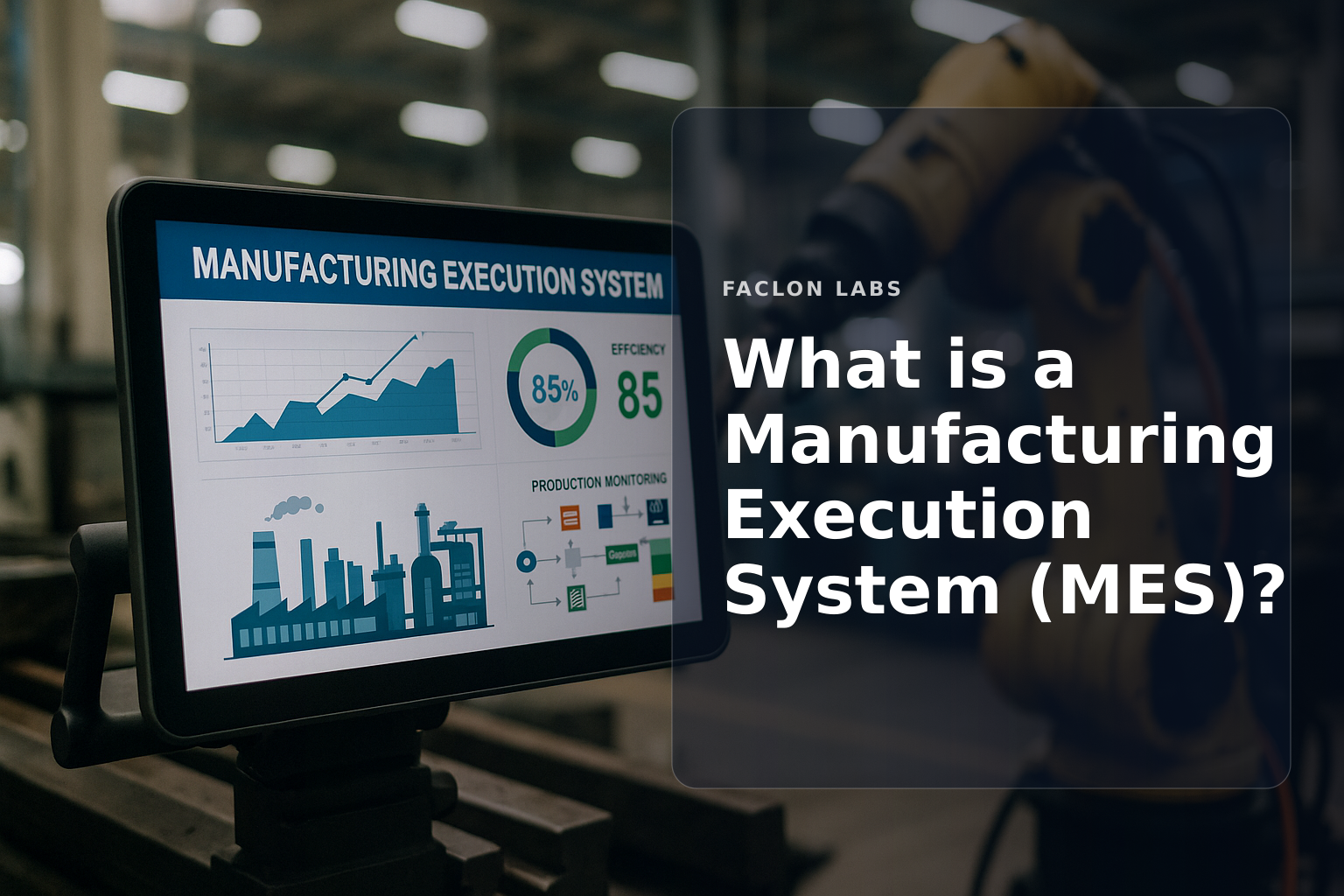
Manufacturing today demands precision, agility, and transparency across complex processes. As plants evolve with digital technologies, understanding what a manufacturing execution system (MES) is becomes essential for plant operations leaders seeking to optimize production outcomes. MES acts as the operational backbone, connecting planning systems with the realities of the shop floor.
This post explains the fundamentals of MES, why it is critical in modern manufacturing, its core capabilities, integration with other systems, and how to select the right solution. The goal is to provide a clear, practical overview for those new to MES and its role in industrial AI and IIoT environments.
A manufacturing execution system (MES) is a computerized system that operates at the critical interface between enterprise resource planning (ERP) systems and the plant floor’s control systems such as PLCs and SCADA. While ERP manages strategic planning — what to produce and when — and PLCs/SCADA handle machine-level control, MES fills the operational gap by executing production orders and providing real-time visibility into manufacturing activities.
The primary function of MES is to monitor and control manufacturing processes as they happen. It tracks the transformation of raw materials into finished goods by collecting data at every step, documenting production events, and enforcing process compliance. This ensures production runs according to plan, quality standards are met, and any deviations are immediately visible.
MES encompasses a range of functions essential for production management:
Together, these functions provide a comprehensive view of manufacturing operations The Importance of MES in Manufacturing Operations.
Manufacturers face persistent challenges such as inefficient workflows, inconsistent product quality, and limited visibility into real-time operations. Without MES, these issues often stem from disconnected systems and manual data collection, leading to delays, errors, and costly rework.
MES provides live data feeds from the shop floor, enabling operators and managers to make informed decisions quickly. This real-time insight helps identify bottlenecks, detect quality deviations early, and respond to equipment failures before they cause downtime.
By enforcing standardized processes and automating data capture, MES reduces human error and waste. It also supports compliance with industry regulations by maintaining detailed production records and traceability, essential for audits and quality certifications.
MES receives production schedules from ERP and breaks them down into actionable work orders, assigning tasks to specific machines or lines while optimizing sequencing.
It monitors the availability and condition of machines, tools, and personnel, dynamically adjusting assignments to maintain throughput.
MES collects granular data on equipment performance, enabling calculation of overall equipment effectiveness (OEE) and tracking downtime causes to drive continuous improvement.
Quality checkpoints and inspections are embedded within MES workflows, and every batch or unit is traceable back to raw materials and process parameters.
MES enforces process steps through digital work instructions and tracks WIP status, ensuring that production flows smoothly and deviations are flagged immediately.
| MES Capability | Description | Impact on Operations |
|---|---|---|
| Production Order Management | Scheduling and dispatching work orders | Streamlines workflow execution |
| Resource Allocation | Monitoring machine and labor availability | Maximizes equipment utilization |
| Data Collection & Analysis | Capturing performance metrics and downtime | Drives productivity improvements |
| Quality Management | Embedding inspections and traceability | Ensures consistent product quality |
| Process Enforcement & WIP | Guiding operators and tracking in-process inventory | Maintains process compliance |
MES acts as the operational executor of ERP plans, translating production schedules into tasks and providing feedback on actual production progress and inventory usage. This integration ensures alignment between business goals and shop floor reality.
MES connects downward to control systems like SCADA and PLCs, collecting machine data and sending commands to coordinate equipment actions. This direct link enables real-time control and monitoring of physical processes.
In an IIoT context, MES aggregates data from diverse connected devices and sensors, enabling advanced analytics and AI-driven insights that optimize manufacturing operations.
MES serves as a data hub, integrating with upstream and downstream systems to provide a unified, real-time view of production performance, quality, and resource status Designing Robust Industrial AI Platform Architectures.
These benefits collectively drive measurable ROI and support continuous improvement initiatives Top Manufacturing Execution Software for Industrial Plants.
Start by identifying pain points such as production delays, quality issues, or lack of visibility. Define clear objectives for what MES should achieve in your environment.
Evaluate MES solutions for their ability to scale with your operations, integrate with existing ERP and control systems, and provide intuitive interfaces for shop floor users.
Some MES platforms offer specialized features tailored to discrete manufacturing, process industries, or highly regulated sectors. Selecting an industry-aligned MES can simplify compliance and operational fit.
Successful MES deployment requires experienced vendor support for system configuration, training, and ongoing maintenance. Consider providers with proven track records in your industry Best Manufacturing Execution System (MES) Software: A Guide for Plant Operations Leaders.
Understanding what a manufacturing execution system (MES) is and how it fits into your industrial operations can unlock significant improvements in production control and quality. If you’re ready to explore MES options tailored to your plant’s needs, start by assessing your current challenges and seeking solutions that integrate seamlessly with your existing systems.
The primary function of an MES is to manage and monitor work-in-process on the factory floor, ensuring efficient and quality production. It tracks goods from raw materials through all stages of manufacturing to finished products, providing real-time data for operational control and decision-making.
While both are critical for manufacturing, ERP focuses on high-level business planning (e.g., finance, supply chain, sales), whereas MES operates at the shop floor level, executing and monitoring production processes in real-time. MES translates ERP's production orders into actionable tasks and feeds execution data back to ERP.
Implementing an MES leads to significant benefits, including improved operational efficiency, enhanced product quality, reduced manufacturing costs, better compliance with regulations, and increased visibility into production processes. It enables manufacturers to respond quickly to changes and optimize resource utilization.
Yes, a core strength of MES is its ability to integrate with various factory automation systems, such as SCADA, PLCs, and historians. This integration allows MES to collect real-time data directly from machines and processes, providing a comprehensive view of shop floor operations and enabling automated control.