Join Our Lunch & Learn: How Agentic AI Will Transform Industrial Operations | Register Now →
.svg)
August 10, 2026
5 Mins
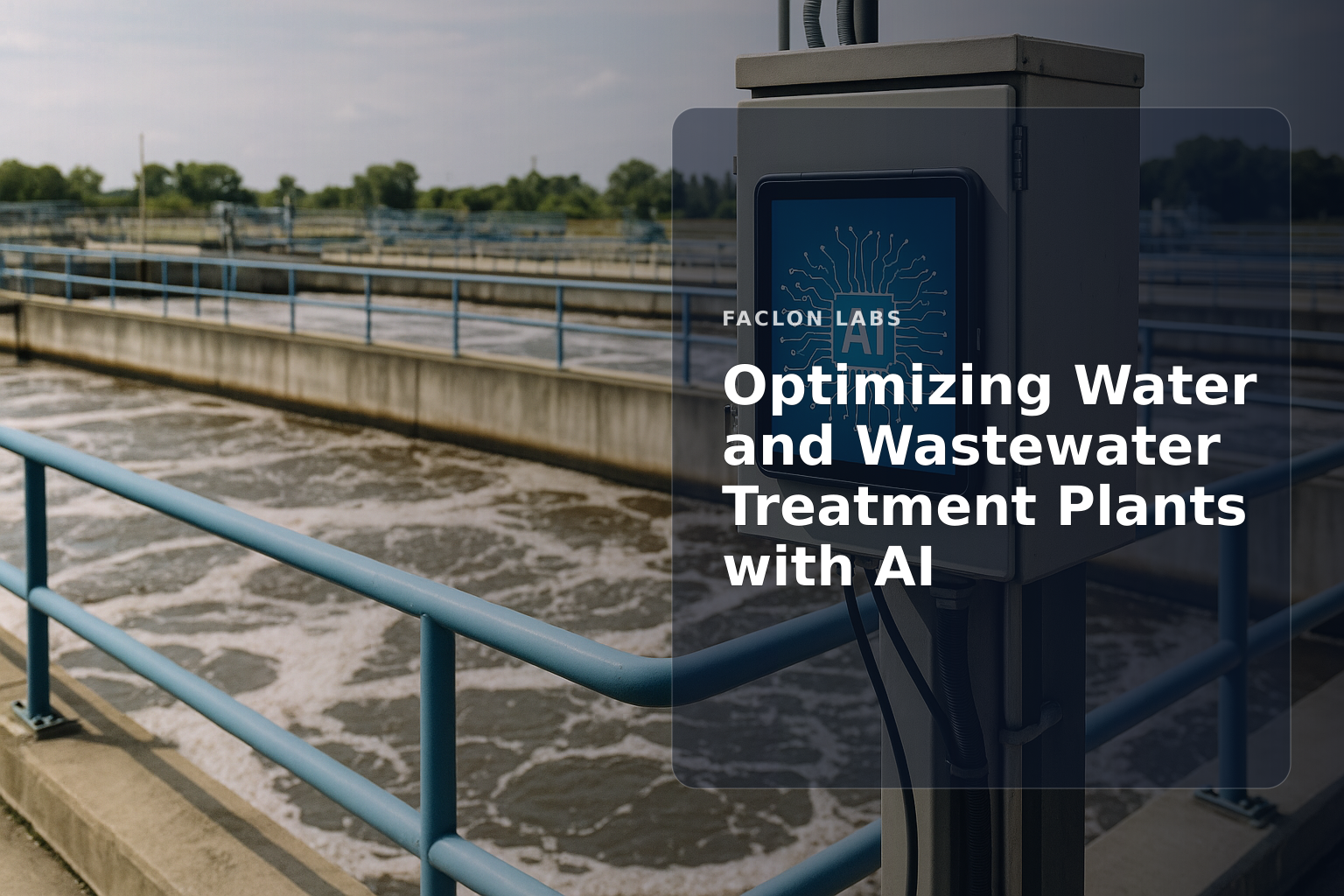
Water and wastewater treatment plants are critical infrastructure components that ensure safe water supply and protect public health and the environment. As these plants face increasing operational challenges—from aging equipment to stricter regulations—industrial AI offers new tools to improve efficiency, reliability, and sustainability. Understanding how AI applies to these complex systems helps plant leaders make informed decisions about digital transformation.
A water and wastewater treatment plant is a facility designed to process raw water or sewage to remove contaminants, making it safe for human use or environmental discharge. Water treatment plants focus on purifying drinking water, while wastewater plants treat sewage and industrial effluents to reduce pollutants.
These plants prevent waterborne diseases by removing harmful microorganisms and pollutants. They also protect ecosystems by ensuring discharged water meets regulatory standards, preserving aquatic life and natural water quality.
Operators contend with fluctuating influent quality, equipment wear, energy-intensive processes, and the need for continuous compliance monitoring. Manual adjustments and reactive maintenance increase operational risks and costs.
Many treatment plants operate with equipment past its design life, leading to frequent breakdowns and costly repairs. Limited real-time monitoring complicates early fault detection.
Water treatment is energy-intensive, often representing a major utility expense. Inefficient pump and aeration control can waste energy and increase carbon footprint.
Regulatory bodies continuously tighten discharge limits for nutrients, pathogens, and chemicals, requiring more precise process control and reporting.
Experienced operators are retiring, and new staff may lack deep operational knowledge. This gap hinders consistent plant performance and adaptation to new technologies.
AI refers to computer systems capable of performing tasks that normally require human intelligence, such as pattern recognition, decision-making, and learning from data.
AI systems can automate process adjustments, detect anomalies early, and optimize resource use, moving plants from reactive to proactive management.
Facilities report up to 20% energy savings, 30% reduction in chemical use, and improved compliance rates. AI reduces unplanned downtime and extends asset life, delivering measurable financial returns [AI and Data Analytics in Water Treatment: Smart Solutions Guide - Water & Wastewater].
AI analyzes sensor data to predict equipment wear or failure, enabling maintenance before breakdowns occur, reducing downtime and repair costs.
Machine learning models adjust chemical inputs dynamically based on water quality data, minimizing excess chemical use and improving sludge processing efficiency.
AI algorithms monitor operational parameters continuously, identifying deviations and triggering automatic corrective actions or alerts.
AI forecasts energy loads and optimizes pump and aerator schedules to reduce electricity consumption during peak periods.
Advanced analytics enhance detection of contaminants and ensure treatment processes meet regulatory standards consistently.
| AI Application Area | Benefits | Example Outcome |
|---|---|---|
| Predictive Maintenance | Reduced downtime, lower repair costs | 15% fewer pump failures |
| Chemical Dosing Optimization | Reduced chemical use, better sludge quality | 20% chemical savings |
| Real-time Process Control | Increased process stability, faster response | 10% improved effluent quality |
| Energy Optimization | Lower energy bills, reduced carbon footprint | 18% energy cost reduction |
| Water Quality Monitoring | Enhanced compliance, early contamination alerts | 99.9% regulatory compliance rate |
Evaluate existing sensors, data collection systems, and IT infrastructure to identify gaps and upgrade needs before AI deployment.
Start with targeted AI pilots—such as predictive maintenance on a single pump—to demonstrate value and refine models before scaling plant-wide.
Ensure secure integration of AI platforms with operational technology (OT) networks, protecting sensitive data and preventing cyber threats.
Invest in workforce development to familiarize staff with AI tools, enabling effective use and trust in automated decision support [Smart control systems: Make your AI/ML integration roadmap].
AI-driven optimization reduces resource consumption and pollutant discharge, supporting sustainability goals and lowering operational expenditures.
Digital twins and AI analytics enable predictive scenario planning, helping plants adapt to climate change impacts and population growth.
Industrial IoT platforms aggregate data from diverse sources, providing the foundation for AI applications across multiple treatment sites [Advanced Data Management for the Wastewater Industry (Technical Report) | OSTI.GOV].
Leading utilities have demonstrated improved regulatory compliance, reduced energy use, and enhanced operational reliability after AI adoption [AI from proof-of-concept to fully operational wastewater plant | Haskoning].
Optimizing your water and wastewater treatment plant with AI is a strategic step toward greater efficiency, sustainability, and regulatory compliance. Start by evaluating your current operations and data infrastructure to identify where AI can deliver the most immediate impact. Exploring pilot projects can build confidence and demonstrate ROI, paving the way for a smarter, more resilient water future.
The main goal of a wastewater treatment plant is to remove contaminants from wastewater, making it safe to discharge back into the environment or to be reused. This process protects public health and ecological systems from pollution and waterborne diseases.
While processes can vary, wastewater treatment typically involves four main stages: preliminary treatment (screening, grit removal), primary treatment (sedimentation to remove solids), secondary treatment (biological processes to break down organic matter), and tertiary treatment (advanced filtration, disinfection, and nutrient removal for higher water quality).
AI improves water treatment efficiency by enabling predictive maintenance to minimize downtime, optimizing chemical dosing for cost savings and better water quality, enhancing real-time process control to prevent operational upsets, and reducing energy consumption through smart scheduling and demand forecasting.
Types of wastewater treatment plants include conventional activated sludge plants, trickling filter plants, membrane bioreactors (MBRs), sequencing batch reactors (SBRs), and advanced oxidation process (AOP) plants, each designed to handle different types and volumes of wastewater with varying levels of treatment.