Join Our Lunch & Learn: How Agentic AI Will Transform Industrial Operations | Register Now →
.svg)
September 17, 2026
5 Mins
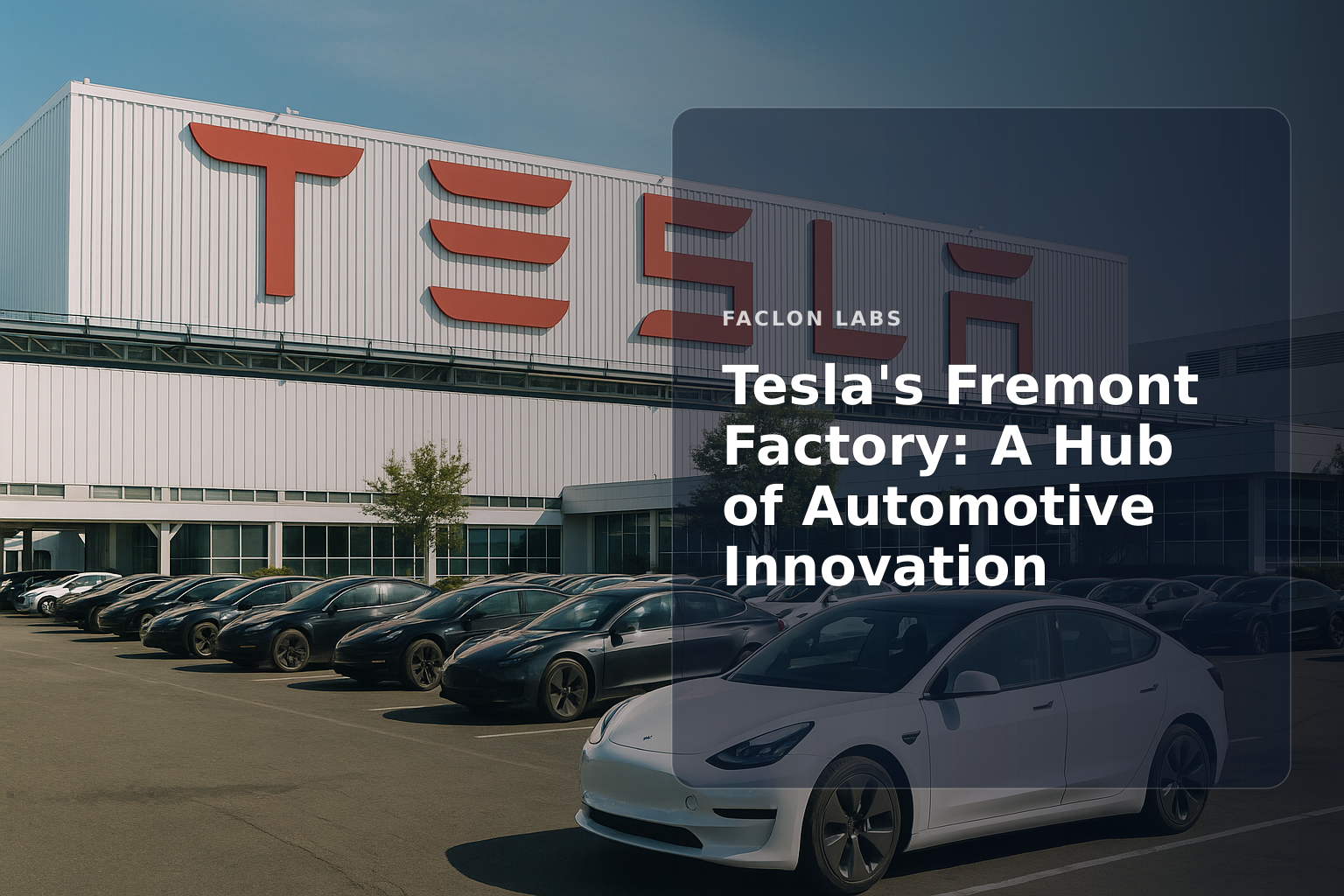
Tesla’s Fremont Factory stands as a pivotal site in the evolution of electric vehicle manufacturing. It represents both a physical and strategic transformation from a traditional auto assembly plant into a cutting-edge production center that supports Tesla’s ambitious growth in the automotive and robotics sectors. Understanding its origins, current operations, and future direction provides insight into how Tesla sustains its position as a leader in automotive innovation.
This post explores the Fremont facility’s history, production capabilities, technological advancements, economic impact, and future outlook, offering a comprehensive view for those new to the topic or curious about Tesla’s manufacturing footprint in California.
Before Tesla’s acquisition, the Fremont factory was known as NUMMI, a joint venture between General Motors and Toyota that operated from 1984 until 2010. NUMMI was notable for its pioneering lean manufacturing techniques and served as a model for efficient automotive production in the United States.
In 2010, Tesla purchased the shuttered NUMMI plant, marking a major milestone in its transition from startup to established automaker. The acquisition provided Tesla with a large, well-equipped manufacturing site critical for scaling production beyond its initial Roadster model.
Situated in the San Francisco Bay Area, the Fremont location offered Tesla proximity to Silicon Valley’s technology ecosystem and a skilled workforce. This geographic advantage supported Tesla’s innovation-driven culture and helped accelerate its Model S, Model X, and later Model 3 and Model Y production lines.
Today, the Fremont factory primarily produces Tesla’s high-demand Model 3 and Model Y vehicles, which represent the bulk of Tesla’s global sales volume. These models are central to Tesla’s strategy to offer more affordable electric vehicles at scale.
Beyond vehicles, Fremont is also a key site for the development and assembly of Tesla Optimus, the company’s humanoid robot project. This underscores Tesla’s expanding focus on robotics and AI-driven automation beyond traditional automotive manufacturing.
Historically, the Fremont factory was the assembly point for Tesla’s luxury Model S sedan and Model X SUV, both of which helped establish Tesla’s reputation for performance and innovation in electric vehicles.
Fremont employs sophisticated robotics to automate complex assembly tasks, improving consistency and reducing production time. Robots handle processes such as welding, painting, and component installation, enabling high throughput with quality control.
Tesla’s manufacturing philosophy at Fremont emphasizes vertical integration and rapid iteration. The factory combines in-house production of key components with agile manufacturing practices to quickly adapt to design changes and ramp up output.
Data analytics and AI play a critical role in optimizing Fremont’s operations. Real-time monitoring and predictive maintenance minimize downtime, while AI-driven quality control detects defects early, ensuring high standards and reducing waste.
The Fremont factory is a major employer in the region, providing thousands of jobs ranging from assembly line workers to engineers. Its presence supports local economies through direct employment and supply chain demand.
Tesla’s Fremont site has helped catalyze a regional cluster of automotive innovation and advanced manufacturing. It attracts talent and investment, reinforcing California’s role as a leader in clean transportation technologies.
Tesla maintains community ties through partnerships with local educational institutions and workforce development programs, fostering skills training aligned with the factory’s technical demands.
The Tesla Fremont Factory is officially located at:
| Address Line 1 | 45500 Fremont Boulevard |
|---|---|
| City | Fremont |
| State | California |
| ZIP Code | 94538 |
| Country | United States |
This site functions both as the primary manufacturing plant and as a showroom and service center, offering visitors a direct connection to Tesla’s production environment [Tesla Fremont Factory].
Tesla continues to invest in Fremont, expanding its production capacity and integrating new technologies. Plans include scaling robot-assisted assembly and potentially increasing the diversity of products manufactured on site.
Fremont remains a cornerstone of Tesla’s global manufacturing network, complementing Gigafactories in Nevada, Shanghai, and Berlin. Its adaptability and proximity to innovation hubs make it vital for Tesla’s long-term growth.
While Fremont faces challenges such as supply chain pressures and regulatory requirements, it also benefits from ongoing advancements in automation and AI, positioning it to maintain leadership in automotive manufacturing innovation [Tesla’s EV battery production and global gigafactory network].
If you want to understand how industrial AI and IIoT platforms can optimize complex manufacturing operations like those at Tesla’s Fremont Factory, explore our resources on smart factory solutions and data-driven production management Understanding Energy Consumption in Industrial Plants Understanding Performance Analytics for Manufacturing Operations High Tech Automotive Manufacturing: Innovations and Trends.
The Tesla Fremont Factory is primarily responsible for the production of the Model 3 and Model Y electric vehicles. It also plays a significant role in the development and manufacturing of the Tesla Optimus robot.
Tesla acquired the Fremont Factory in 2010. Prior to Tesla's ownership, the facility was known as New United Motor Manufacturing, Inc. (NUMMI), a joint venture between General Motors and Toyota.
While public tours of the Tesla Fremont Factory were available in the past, their availability can vary. It's best to check the official Tesla website or contact them directly for the most current information regarding factory tours or visitor access.
The number of employees at the Tesla Fremont Factory fluctuates, but it is one of California's largest manufacturing sites, employing thousands of individuals across various roles, including production, engineering, and administrative functions.