Join Our Lunch & Learn: How Agentic AI Will Transform Industrial Operations | Register Now →
.svg)
September 15, 2026
5 Mins
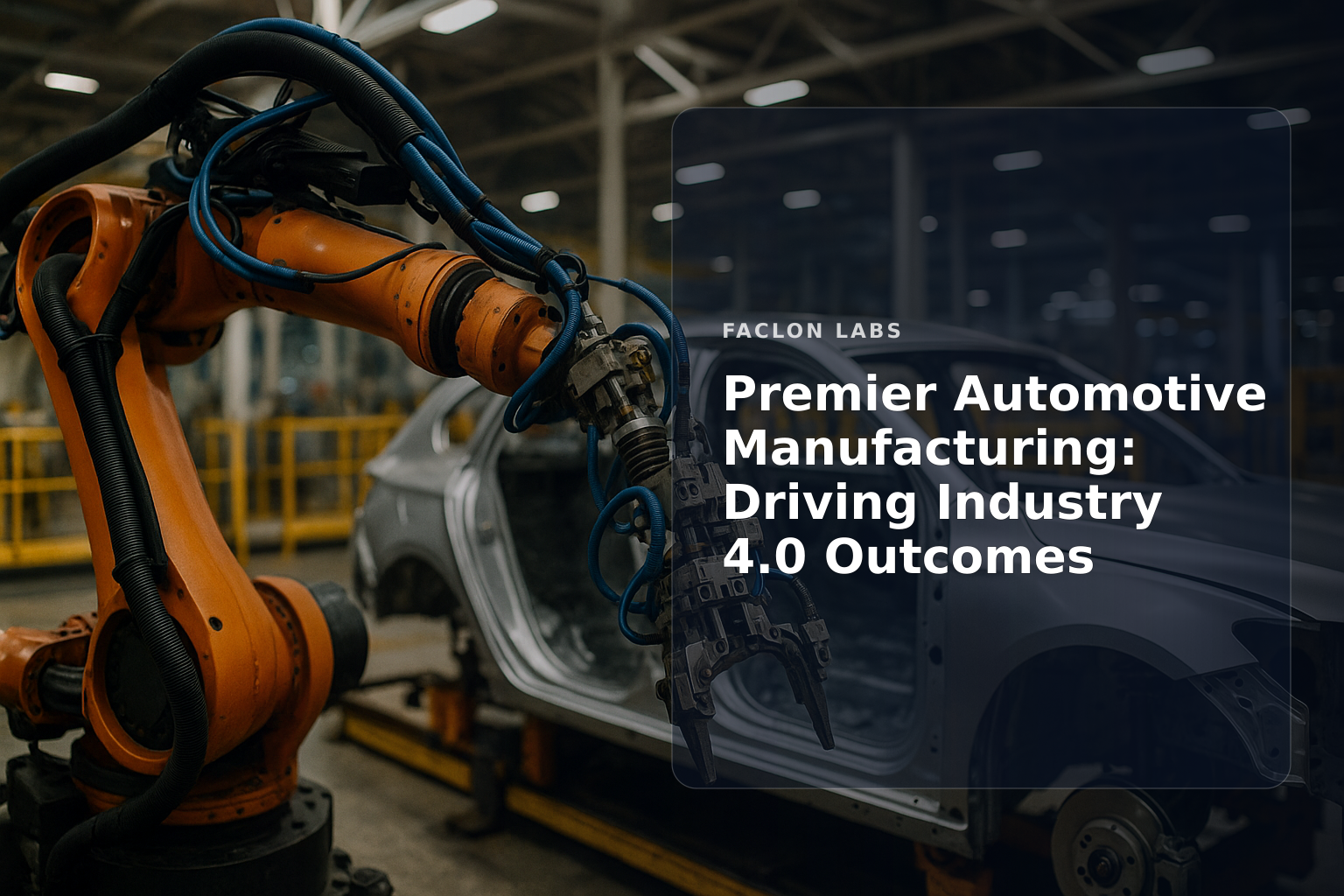
Premier automotive manufacturing today extends far beyond traditional vehicle assembly lines. It embodies a sophisticated integration of digital technologies that redefine how cars are designed, produced, and delivered. As the automotive industry navigates rapid technological and market shifts, embracing Industry 4.0 principles becomes essential for manufacturers aiming to maintain leadership and meet evolving customer expectations.
Industry 4.0, also known as the Fourth Industrial Revolution, represents a convergence of cyber-physical systems, automation, and data analytics. For premier automotive manufacturers, this means transforming factories into smart, connected environments that optimize every aspect of production. Understanding this transformation is crucial for plant operations leaders seeking to drive measurable performance improvements and future-proof their operations.
The term "premier automotive" in this context refers to manufacturers who lead through innovation, quality, and operational excellence—not just car dealers. These manufacturers adopt cutting-edge digital tools and processes to deliver superior vehicles while optimizing resource use and reducing waste.
Industry 4.0 integrates multiple advanced technologies:
Together, these pillars enable a shift from manual, siloed operations to interconnected, data-driven manufacturing.
Premier automotive manufacturers leverage Industry 4.0 to digitize production lines, enabling real-time visibility and control. This convergence allows for rapid response to market changes, improved product customization, and enhanced operational resilience.
In a competitive global market, Industry 4.0 adoption is no longer optional. It is vital to:
This digital evolution ensures premier manufacturers remain at the forefront of innovation and customer satisfaction.
IIoT connects equipment and sensors across the factory floor, enabling continuous data collection and real-time monitoring of machine health, production status, and environmental conditions.
AI algorithms analyze data to predict equipment failures, optimize processes, and detect quality anomalies, improving uptime and reducing defects.
Big data platforms aggregate and analyze operational data, turning raw information into actionable insights that guide decision-making and continuous improvement.
Robots perform repetitive or hazardous tasks with high precision and speed, increasing safety and throughput while freeing human workers for higher-value activities.
Digital twins create virtual models of physical assets or processes, allowing simulation, testing, and optimization without disrupting actual production.
| Technology | Primary Benefit | Example Use Case |
|---|---|---|
| IIoT | Real-time data connectivity | Monitoring machine vibrations |
| AI/ML | Predictive analytics and anomaly detection | Predictive maintenance scheduling |
| Big Data Analytics | Data-driven insights | Quality trend analysis |
| Robotics & Automation | Precision and speed | Automated welding and assembly |
| Digital Twins | Virtual simulation and optimization | Testing production line changes |
These technologies collectively empower premier automotive manufacturers to achieve unprecedented levels of operational intelligence and flexibility High Tech Automotive Manufacturing: Innovations and Trends.
Real-time monitoring enabled by IIoT helps identify bottlenecks and downtime causes, boosting OEE by maximizing equipment availability, performance, and quality rates.
AI-driven predictive maintenance anticipates failures before they occur, minimizing unplanned downtime and extending asset lifespan.
AI-powered vision systems and sensors detect defects and anomalies during production, ensuring consistent product quality and reducing scrap rates.
Data analytics provide visibility into supply chain status, enabling just-in-time inventory and reducing carrying costs.
Digital tools allow rapid reconfiguration of production lines to meet shifting market demands and enable mass customization.
These outcomes translate into measurable improvements in cost efficiency, product reliability, and customer satisfaction Benefits of Automated Maintenance Services for Industrial Plants.
Data flows from connected machines and sensors are collected, processed, and analyzed to inform operational decisions and strategic planning.
A scalable, secure data infrastructure supports high-volume data ingestion, storage, and processing, essential for IIoT platforms to function effectively.
Continuous feedback loops driven by data analytics enable manufacturers to refine processes, reduce waste, and innovate faster.
Protecting sensitive manufacturing data from cyber threats and ensuring its accuracy are critical to maintaining trust and operational continuity.
| Data Lifecycle Stage | Description | Importance |
|---|---|---|
| Collection | Gathering data from sensors | Foundation for all analytics |
| Storage | Securely storing data | Enables historical analysis |
| Processing | Cleaning and organizing data | Prepares data for insights |
| Analysis | Extracting actionable insights | Drives decision-making |
| Security | Protecting data integrity | Safeguards against cyber risks |
Effective data management is the backbone of Industry 4.0 success in premier automotive manufacturing Optimizing Industrial Burner Management Systems for Efficiency.
Challenges include integrating legacy equipment, bridging workforce skill gaps, and managing upfront investment costs.
Starting with pilot projects and scaling gradually helps mitigate risks and build organizational readiness.
Key performance indicators such as reduced downtime, higher throughput, and improved product quality quantify the financial and operational benefits.
Sustained Industry 4.0 adoption leads to innovation leadership, enhanced customer value, and resilience against market disruptions.
| Challenge | Mitigation Strategy | Expected Outcome |
|---|---|---|
| Legacy Systems | Retrofit with IoT-enabled devices | Increased connectivity |
| Skill Gaps | Training and hiring specialized staff | Better technology adoption |
| Initial Investment | Phased rollouts and ROI tracking | Controlled costs and proof points |
By systematically addressing these challenges, premier automotive manufacturers can secure strong returns and maintain market leadership Addressing Key Challenges in the Manufacturing Industry.
For plant operations leaders seeking to advance their manufacturing capabilities, understanding and adopting Industry 4.0 technologies is a strategic imperative. Explore how your facility can begin this transformation to deliver measurable improvements in efficiency, quality, and responsiveness. Reach out to experts in industrial AI and IIoT to start your journey toward premier automotive manufacturing excellence.
In manufacturing, 'premier automotive' refers to leading automotive companies that excel in innovation, quality, and efficiency, often by adopting advanced technologies like Industry 4.0 to maintain their competitive edge and deliver superior products.
Industry 4.0 improves efficiency by enabling real-time monitoring of production lines, predictive maintenance to prevent breakdowns, optimized resource allocation, and automation of repetitive tasks, leading to higher OEE and reduced waste.
Predictive maintenance in automotive manufacturing helps minimize unplanned downtime, extends the lifespan of critical machinery, reduces maintenance costs by scheduling interventions proactively, and ensures continuous production flow.
Yes, small to medium-sized automotive suppliers can adopt Industry 4.0. While full-scale implementation might be challenging, they can start with targeted solutions like IIoT for specific assets or data analytics for process optimization, scaling up as benefits are realized.