Join Our Lunch & Learn: How Agentic AI Will Transform Industrial Operations | Register Now →
.svg)
August 20, 2026
5 Mins
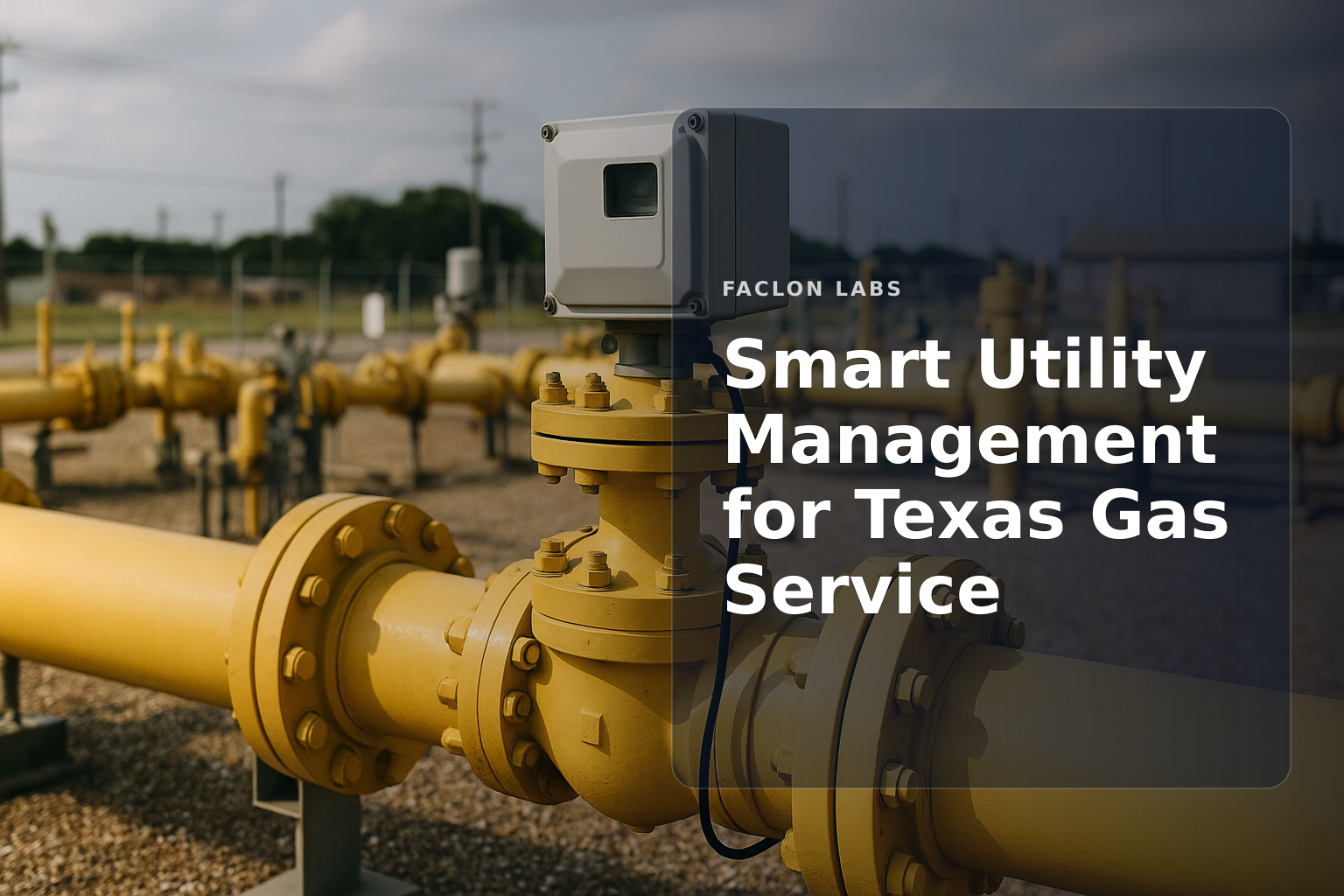
Texas Gas Service is a major natural gas distributor in Texas, responsible for delivering safe and reliable energy to hundreds of thousands of residential, commercial, and industrial customers. As energy demands grow and infrastructure ages, the utility industry faces increasing challenges that require modernization to maintain service quality and safety.
Smart utility management represents a transformative approach for utilities like Texas Gas Service. It leverages advanced technologies to improve monitoring, control, and decision-making across the gas distribution network. Understanding these concepts is essential for plant operations leaders and stakeholders who seek to grasp how modernization impacts natural gas service delivery.
Texas Gas Service is the third-largest natural gas distribution company in Texas, serving more than 884,000 customers across 100 communities. As a regulated public utility, it provides clean, safe, and reliable natural gas for residential, commercial, and industrial use. Its extensive network includes pipelines, meters, and control systems that require constant monitoring and maintenance to ensure uninterrupted service.
Natural gas distribution faces several challenges including aging infrastructure, leak detection, safety compliance, fluctuating demand, and the need for cost-effective operations. Traditional systems often respond reactively to issues, which can lead to service interruptions, higher maintenance costs, and safety risks.
Modernization through smart utility management helps utilities like Texas Gas Service transition from reactive to proactive operations. It addresses key challenges by enabling early detection of leaks, optimizing maintenance schedules, and improving operational visibility. This shift is essential to meet regulatory requirements, improve customer satisfaction, and support a sustainable energy future.
Smart utility management refers to the application of digital technologies to monitor, analyze, and control utility infrastructure in real-time. For natural gas, it means using interconnected devices and software to enhance network visibility, safety, and efficiency.
Traditional utility operations often rely on scheduled inspections and manual data collection. Smart utility management enables continuous monitoring and predictive maintenance, reducing downtime and preventing incidents before they occur.
Smart utility management streamlines operations by automating data collection and analysis. This reduces manual labor and enables more targeted maintenance, lowering operational expenses.
Advanced sensors and AI-driven analytics improve the detection of gas leaks and other safety hazards, allowing for quicker response and minimizing risk to customers and infrastructure.
Real-time monitoring helps prevent outages by identifying issues early, ensuring consistent gas supply to customers even during peak demand or adverse conditions.
Predictive maintenance extends the life of pipelines and equipment by addressing wear and tear before failures occur, optimizing capital investment and resource use.
| Benefit | Description | Impact on Texas Gas Service |
|---|---|---|
| Operational Efficiency | Automated data collection and analysis | Reduced costs and improved workflows |
| Safety Enhancement | Early leak detection and hazard identification | Increased safety for customers and employees |
| Reliability | Proactive issue resolution and downtime reduction | Continuous and stable gas supply |
| Resource Optimization | Predictive maintenance and asset management | Extended infrastructure lifespan and cost savings |
Smart meters provide detailed, real-time usage data to both the utility and customers. This enables better demand forecasting and customer engagement through usage transparency.
Sensors embedded along pipelines monitor pressure, temperature, and vibrations to detect anomalies. AI models predict potential failures, allowing maintenance before issues escalate.
GIS platforms visualize the entire gas network, integrating sensor data with geographic data. This aids in planning, emergency response, and asset management.
Centralized platforms collect and analyze data from multiple sources, providing operators with a unified dashboard for monitoring and control, enhancing decision-making speed and accuracy.
Successful adoption often involves pilot projects followed by gradual scaling. This approach allows for testing technologies, training staff, and refining processes before full deployment.
ROI can be measured through metrics such as reduced downtime, lower maintenance costs, improved safety records, and customer satisfaction scores. Clear KPIs help justify investments and guide continuous improvement.
| Challenge | Mitigation Strategy | Expected Outcome |
|---|---|---|
| Data Security | Cybersecurity protocols and encrypted communications | Protected operational data and system integrity |
| Legacy System Integration | Middleware and phased upgrades | Smooth transition and cost-effective modernization |
| Workforce Training | Comprehensive training programs | Skilled workforce and better technology adoption |
Smart utility management is essential for modernizing natural gas distribution and ensuring safe, reliable service for Texas Gas Service customers. For plant operations leaders, understanding these technologies and strategies is key to driving effective transformation. To explore how your utility operations can benefit from smart management, start by assessing your current infrastructure and identifying priority areas for digital integration. Effective Production Line Monitoring with Industrial IoT Benefits of Automated Maintenance Services for Industrial Plants Essential Tools for Data Analytics in Smart Manufacturing
Texas Gas Service is the third-largest natural gas distribution company in Texas, providing natural gas to over 700,000 residential, commercial, and industrial customers across the state. It is a regulated public utility and a division of ONE Gas, Inc.
Smart utility management improves safety by deploying IoT sensors for real-time leak detection, pressure monitoring, and infrastructure integrity assessments. This allows for immediate identification of anomalies and proactive intervention, significantly reducing the risk of incidents compared to traditional inspection methods.
AI in natural gas distribution provides benefits such as predictive maintenance for pipelines and equipment, optimized gas flow and pressure management, enhanced demand forecasting, and improved anomaly detection for potential leaks or operational inefficiencies. This leads to cost savings, increased reliability, and better resource utilization.